
Key points
▶ On October 14, the Intellectual Property Office’s Special Judicial Police for Technology Leakage and the Daejeon Regional Prosecution Service said they had indicted in custody former production management team leader A, 45, on charges of violating the Unfair Competition Prevention Act and the Act on the Prevention of Divulgence and Protection of Industrial Technology. A allegedly used probe card technology, a core semiconductor testing technology, in overseas production. Two former engineers, B and C, both 40, were indicted without detention.
▶ The three moved to an overseas manufacturer in November 2023 after former executive D, who fled overseas, offered them twice their previous salaries.
▶ They passed the victim company’s design drawings to a Korean design firm for modification, then used them to make prototypes in December 2025 and supply them to a major overseas semiconductor company. The victim company estimated it could lose 40 billion won in annual revenue if it lost its overseas market.

Three former employees have been indicted for taking overseas a key semiconductor testing technology that had been successfully developed in Korea, manufacturing products with it abroad and selling them.
On October 14, the Intellectual Property Office (Commissioner Kim Yong-sun) Special Judicial Police for Technology Leakage and the Daejeon Regional Prosecution Service (Chief Kim Do-wan), through its Serious Crimes Prosecution Division 2, announced that former production management team leader A, 45, had been indicted in custody for violating the Unfair Competition Prevention Act and the Act on the Prevention of Divulgence and Protection of Industrial Technology. Former engineers B and C, both 40, were indicted without detention.
This is the first case in which the Intellectual Property Office’s technology police have arrested a suspect in an overseas technology-leakage case and the Prosecution Service has indicted the suspect since the Prosecutors’ Office was reorganized as the Prosecution Service.
◆ An offer of twice the salary, and an overseas company set up by a former executive
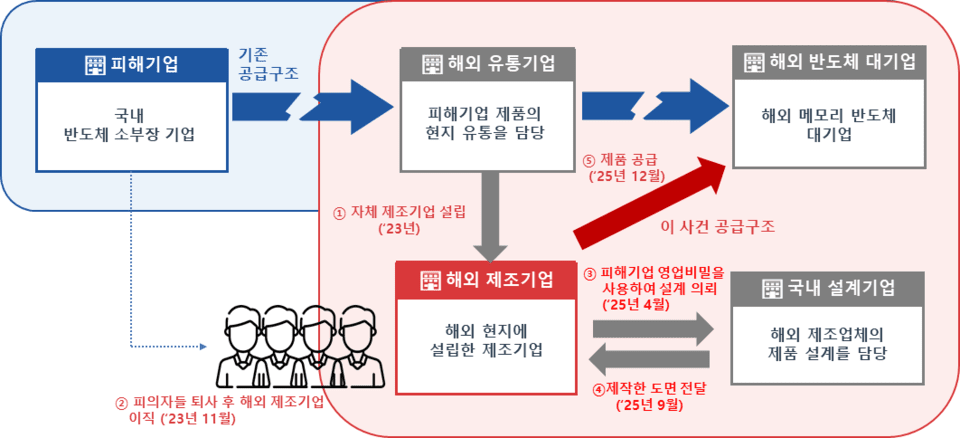
According to the technology police, A and the others allegedly conspired with a distributor responsible for the victim company’s overseas sales to establish a foreign manufacturing company. From November 2023 through February this year, they allegedly used the victim company’s probe card design drawings and technical data to make products and supply them overseas.
The scheme began with former executive D, 58. While still working at the victim company, D planned to establish a local manufacturing company with an overseas distributor. In August 2023, D offered A a job, and A recruited B and C. The three moved to the overseas manufacturer in November 2023 in exchange for twice their previous salaries. D became president of the company.
They passed the victim company’s design drawings to a Korean design firm and instructed it to modify them, completing product drawings. In December 2025, they used those drawings to make prototypes and supply them to a major overseas semiconductor company. The victim company estimated that losing its overseas market could cost it 40 billion won in annual revenue.
◆ Technology developed in Korea in a market dominated by the United States and Japan
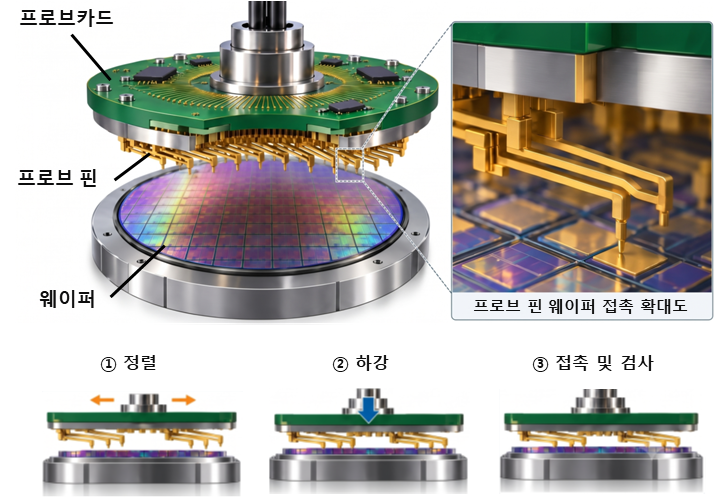
A probe card is equipment used to test memory semiconductors such as HBM and DRAM for defects while they are still on the wafer, after the manufacturing process is complete.
Thousands to tens of thousands of pins make direct contact with the chip to transmit and receive electrical signals. Key design factors include the precision of pin placement, durability under repeated contact, and the ability to manufacture and assemble tens of thousands of pins at once.
Companies in the United States and Japan have long dominated this field. The victim company successfully developed the technology domestically and went on to develop equipment for testing HBM, supplying it to major semiconductor companies in Korea and abroad.
According to market research firm TechInsights, growing demand for HBM driven by AI is expected to expand the global memory probe card market from 758.7 billion won in 2023 to 1.3475 trillion won this year. The domestic market is also projected to grow over the same period, from 386.4 billion won to 920 billion won.
◆ Raids during Lunar New Year visits to Korea; investigators traced altered drawings back to their source
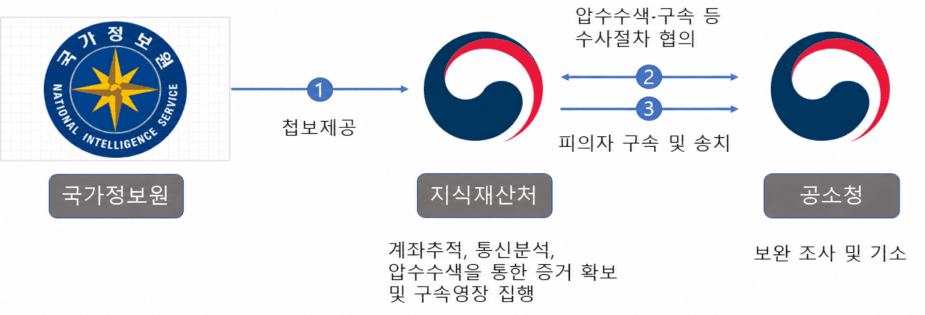
The technology police began investigating in July 2025 after receiving intelligence from the National Intelligence Service. Because the suspects were overseas, investigators had difficulty taking action. When A, B and C returned to Korea for the Lunar New Year holiday in February this year, investigators searched their premises and barred them from leaving the country. They questioned the three from March through June and analyzed seized materials.
A crucial lead came from the domestic supply chain. Working with the National Intelligence Service, the technology police uncovered indications that the overseas manufacturer had outsourced procurement and design work to Korean companies. In July, they raided a Korean design firm and seized the victim company’s drawings and technical materials used by the suspects.
The materials had been altered to remove identifying details, such as the victim company’s name, or edited to make them appear to belong to the overseas manufacturer. On the surface, it was difficult to determine which company’s technology they contained. The technology police conducted a detailed analysis with specialist investigators experienced in semiconductor industry research and development, as well as additional investigators assigned in June. They established that the materials with their source information removed had been created and modified using the victim company’s technology.
A was arrested in September and the case was referred to prosecutors; the Prosecution Service indicted the suspects in October. Investigators have requested an Interpol Red Notice for D, who is abroad and evading the investigation. They said they would investigate him as soon as he is brought into custody.
◆ Five of 33 overseas technology-leakage cases last year involved semiconductors
Technology leakage overseas is increasing. According to figures from the Korean National Police Agency’s National Office of Investigation, 179 cases of technology leakage were detected last year, up 45.5% from the previous year, and 378 people were apprehended.
Of the 33 cases involving overseas leakage, semiconductors accounted for the most, with five cases, followed by displays with four and secondary batteries with three. The destinations were China in 18 cases, Vietnam in four, and Indonesia and the United States in three each.
In May last year, a former employee of a semiconductor materials company who allegedly attempted to take HBM packaging technology to China was arrested at Incheon International Airport as he was about to depart.
Jeong Yeon-woo, a deputy commissioner at the Intellectual Property Office, said that once core technology leaves the country, the damage cannot be undone, making prevention more important than arrests. Jeong added that the office would pursue institutional reforms to increase penalties for overseas technology leakage and make it possible to punish foreign companies involved in such crimes.