
China will impose a 2% consumption tax on lithium-ion batteries starting September 1. The decision ends a tax exemption that had been in place since 2015 to support the industry, and the rate will rise to 4% on September 1, 2027.
Sodium-ion batteries, solid-state batteries and fuel cells will remain exempt from taxation until the end of 2028. The dual-track structure keeps support in place for technologies still at an early commercialization stage while subjecting mature products to normal taxation.
The export refund system will remain in place for products bound for overseas markets. As a result, Chinese battery prices abroad are not expected to rise by the full amount of the tax, limiting the immediate impact on South Korean industry.
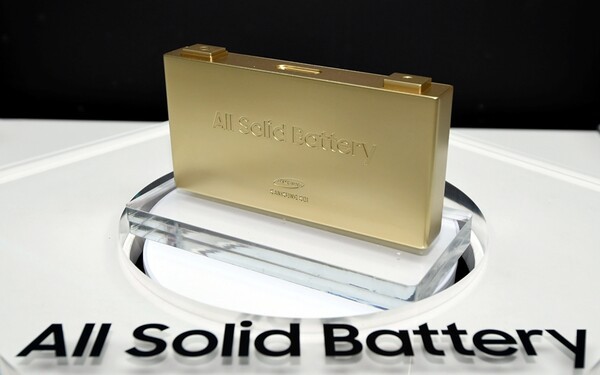
The longer-term variable is competition in next-generation technologies. Samsung SDI is aiming for mass production in the second half of 2027, while LG Energy Solution and SK On are targeting 2029 for solid-state battery production. There are also views that China’s tax incentives could encourage local companies to step up development investment.
◆ 11-year tax exemption ends, lithium-ion batteries taxed while next-generation products are excluded
China will begin levying a consumption tax on lithium-ion batteries starting September 1. It is ending, after 11 years, a tax exemption that had been left open for industry development when batteries were added to the taxable list in 2015. On the 16th, China’s Ministry of Finance, the General Administration of Customs and the State Taxation Administration issued a notice titled “Announcement on Adjusting Certain Battery Consumption Tax Policies.”
The tax rate will start at 2% in the first year and rise to 4% beginning September 1, 2027. In addition to lithium-ion batteries, lithium primary batteries and nickel-metal hydride batteries will also be included among taxable items.
Consumption tax is a levy on specific goods. It is imposed during the manufacturing stage and is reflected in the final price, effectively raising product costs.
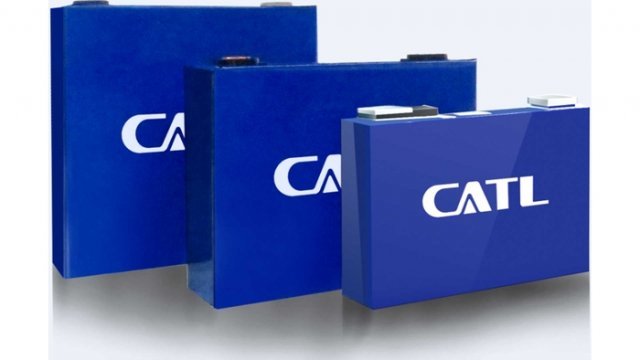
The tax scope is broad. It includes the entire lithium-ion battery family, from lithium iron phosphate (LFP), widely used in Chinese electric vehicles, to ternary (NCM) batteries, a mainstay of South Korean manufacturers. The move appears to be less about targeting a specific technology and more about shifting the entire mature product group to normal taxation.
Next-generation products remain exempt. Fuel cells, sodium-ion batteries and solid-state batteries will not be subject to the consumption tax until December 31, 2028. To qualify for the exemption, they must meet China’s national standards.
◆ Oversupply and tax revenue
Oversupply is being cited as the backdrop for the tax reinstatement. In the first half of this year, China’s production of power and energy-storage batteries reached 1,068.9 GWh, up 53.3% from a year earlier. With production outpacing demand, companies have kept cutting prices, and the Chinese government has treated the issue as one requiring industrial restructuring.
There is also analysis that revenue considerations were part of the calculation. China’s consumption tax from the electric machinery industry, including batteries, stood at 5.4 billion yuan, or about 1.2 trillion won, in 2023. Local media have suggested that this figure could rise sharply as the exemption ends.
For South Korea’s industry, the immediate focus is on price changes in the Chinese domestic market. Once the tax is added, Chinese companies must either raise selling prices or absorb the burden themselves. That could reduce the room for lower-priced, aggressive sales strategies, especially for companies with weak profitability.
Overseas markets are different. The refund and exemption system for export products will continue as before. Since Chinese batteries sold abroad will not rise by the amount of the tax, it is unlikely that South Korean companies will see an immediate improvement in export competitiveness.
The point drawing the most attention is the medium- to long-term outlook. By leaving tax benefits in place for solid-state and sodium-ion batteries, China could channel more development investment from local companies into these fields. The exemption will not solve technical challenges, but it may shift the direction of funding and manpower.
◆ Solid-state commercialization timeline: Samsung SDI in 2027, LG Energy Solution and SK On in 2029
A solid-state battery uses a solid material instead of liquid electrolyte, the substance that carries electricity inside the cell. By addressing the weakness of liquid electrolytes, which can catch fire more easily at high temperatures, it reduces fire risk. It can also store more power in the same size, helping extend the driving range of electric vehicles. Sodium-ion batteries are lower-cost products that use sodium, which is cheaper than lithium and more abundant.
In South Korea, Samsung SDI has the fastest schedule. It is sending samples made on its pilot production line, known as the “S-line,” to existing customers and global automakers for performance evaluation. Its target for mass production is the second half of 2027. The target performance is 900 Wh per liter, a measure of energy density, meaning how much power can be stored in the same volume. The higher it is, the farther a car can travel on a single charge.
LG Energy Solution is targeting commercialization in the second half of 2029 and is developing a product that combines sulfide-based solid electrolyte with an anode-free design. SK On completed a pilot plant in Daejeon last year. Its target is 2029, with a plan to raise energy density from 800 Wh/L to 1,000 Wh/L.
Materials companies are also moving. EcoPro BM is operating a pilot plant for sulfide-based solid electrolyte with an annual capacity of 40 tons and is discussing trial production with customers. If demand is confirmed, it plans to begin mass production around 2027. Chemical materials company Isu Specialty Chemical completed its lithium sulfide plant, a raw material for solid electrolytes, earlier than scheduled last month. It was designed with an initial annual capacity of 150 tons, scalable to 500 tons.
◆ The key battleground is mass production capability; “It is not time to be alarmed, but it is worth watching”
The remaining challenge is moving from pilot production to mass production. The prevailing view is that the companies that secure yield, cost and lifespan, and translate that into orders from automakers, will win the market, rather than those that merely announce the earliest production year. Yield refers to the share of products that pass inspection; if it is low, running the factory becomes a losing proposition.
Experts are taking a cautious view. Lee Deok-hwan, professor emeritus at Sogang University, said, “Sodium-ion batteries are not yet at a fully verified stage, and solid-state batteries cannot yet be regarded as being in full-scale commercialization. At the moment, it does not seem like demand will suddenly emerge.”
He added, “China has not often led major shifts in advanced technology direction, but the situation seems a little different now. It is something worth watching closely, but I am not sure there is reason to be overly alarmed yet.”
This revision is being viewed as a factor that will affect both the competitive environment in the existing lithium-ion market and the flow of investment into next-generation technologies. South Korean industry is expected to focus its preparations less on short-term price fluctuations and more on the race to mass-produce next-generation batteries, which will intensify after 2027.