
Many non-alcoholic beers sold in convenience stores and online still contain alcohol, usually at levels of about 0.03% to 0.5% depending on the product. Products with no alcohol at all are classified as alcohol-free (0.00), while products containing less than 1% are classified as non-alcoholic (0.0).
There are two main production methods. One skips fermentation altogether so alcohol is never created in the first place, while the other removes alcohol from finished beer through vacuum distillation or reverse osmosis.
Under the Liquor Tax Act, products containing less than 1% alcohol are classified as beverages, not liquor. They are not subject to liquor tax and can also be purchased online. Industry officials say the alcohol content of non-alcoholic products is comparable to that found in fermented foods such as kimchi and bread.
The domestic market has grown about ninefold over the past 10 years. The expansion is attributed to a broader culture of moderate drinking and, following a 2024 revision to the Liquor Tax Act, permission for sales in restaurants.
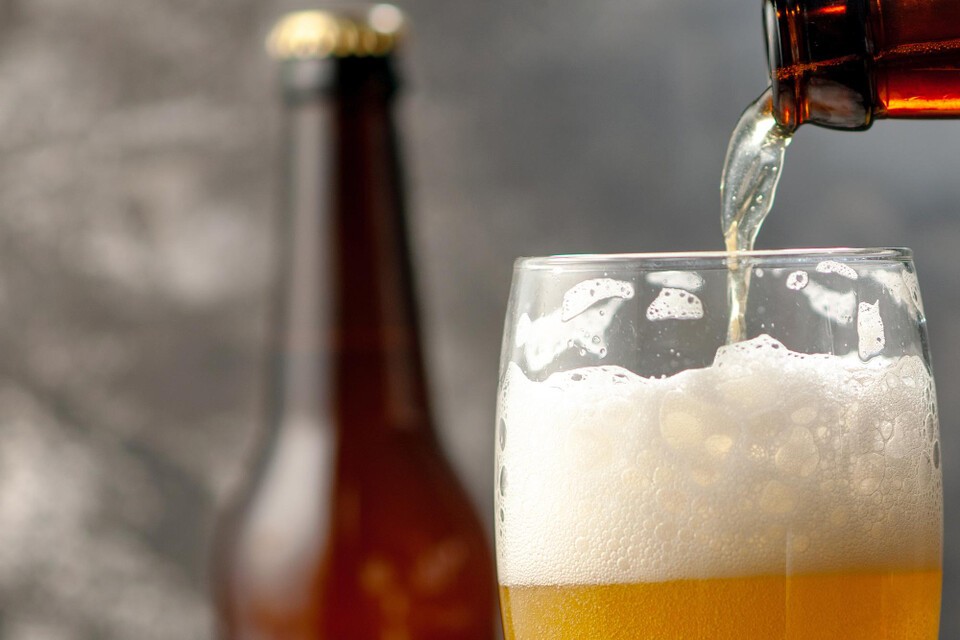
Among the non-alcoholic beers sold in convenience stores and online, a significant number contain alcohol. The amount varies by product, ranging from 0.03% to around 0.5%. That means the 0.0 printed on the label does not always mean zero alcohol.
Korea’s alcohol-free and non-alcoholic beer market has grown roughly nine times in the past decade. As the culture of moderate drinking has spread, these beverages have become a substitute for drinking occasions.
As the market has expanded, consumer interest has also grown in whether non-alcoholic beer truly contains no alcohol and how it manages to taste like beer.
◆ 0.00 and 0.0: a single decimal place makes the difference
The classification depends on just one factor: alcohol content. If it contains no alcohol at all, it is alcohol-free; if it contains less than 1%, it is classified as non-alcoholic or non-alcoholic beer. On product labels, alcohol-free usually appears as 0.00, while non-alcoholic products are commonly marked 0.0.
There are several names because the law does not use one unified term. “Non-alcohol” is a shortened form of “non-alcoholic” and is not a legal term. In the market, alcohol-free, non-alcoholic, and non-alcoholic beer are often used interchangeably, but under food-labeling standards, only products with no alcohol at all may call themselves alcohol-free.
The legal standard is set by the Liquor Tax Act. Under the law, beverages with less than 1% alcohol are not considered liquor. They are classified as carbonated drinks or mixed beverages, and food-related laws apply instead. Products such as Hite Zero 0.00 are referred to as beer-flavored drinks rather than beer for the same reason: it is difficult to use a liquor name unchanged for a non-liquor product.
Looking at products on the market makes the difference clear. Hite Zero 0.00 and Terra Zero are alcohol-free products with no alcohol added at all. By contrast, Heineken 0.0 contains 0.03% alcohol, and Cloud Non-Alcoholic contains up to 0.3%. Some products, such as Hite Non-Alcoholic 0.7%, include the alcohol content in the product name.
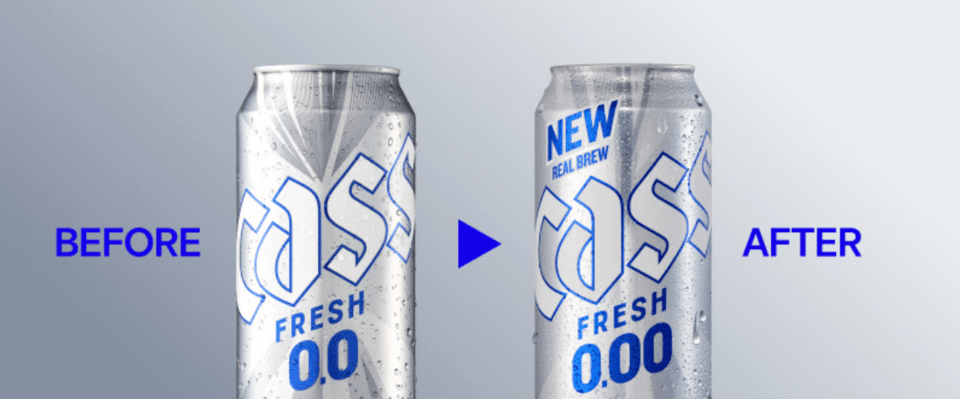
Even within the same brand, labeling can differ. The original Cass 0.0 contained less than 0.05% alcohol, while this year’s redesigned Cass Zero claims 0.00%. In other words, a difference in just one decimal place reflects a difference in the production method.
Standards also vary by country. In some countries, including the United States, the term “non-alcoholic” is allowed for products containing less than 0.5% alcohol. That means the same name can refer to different alcohol-content thresholds depending on the country.
Ultimately, the most reliable way to check whether alcohol is present is to read the decimal figure and the ingredient list. Checking the 0.00 marker together with the ingredients can help determine whether alcohol is included.
◆ Either block fermentation or remove alcohol from finished beer
The four basic ingredients of beer are water, malt, hops, and yeast. Malt is made by germinating and drying barley, and it provides sweetness and color. Hops give beer its characteristic bitterness and aroma. Non-alcoholic beer uses the same ingredients, which is why it looks and smells like beer.
Regular beer is completed through fermentation, during which yeast consumes the sugars produced from malt and creates alcohol and carbon dioxide. Fermentation is also the backbone of beer flavor. Yeast produces not only alcohol and carbon dioxide but also aromatic compounds such as esters, which create fruity notes.
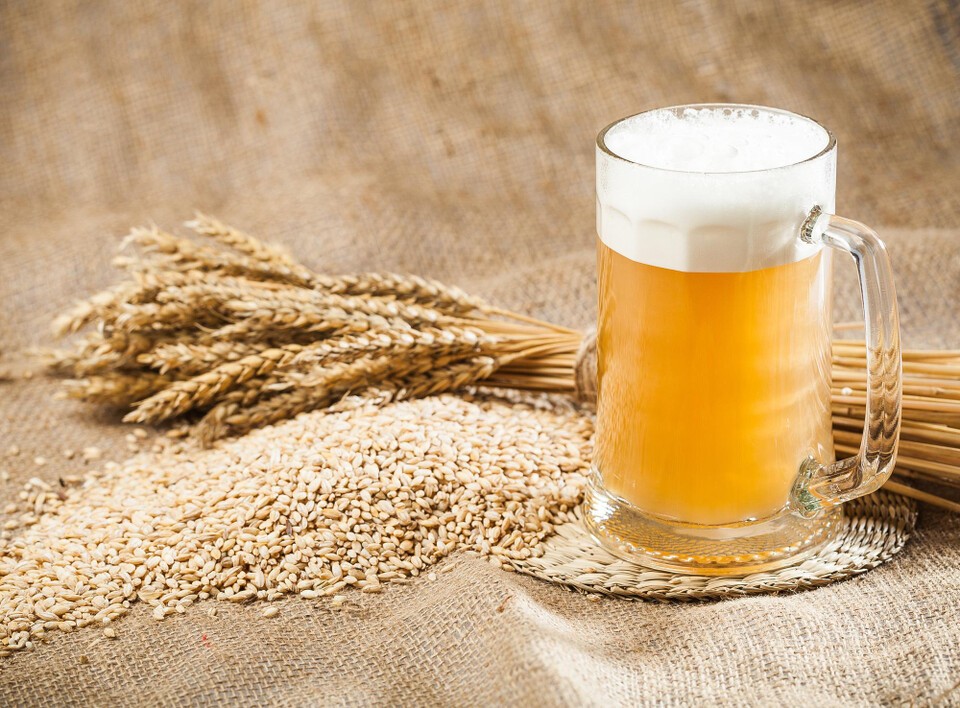
Non-alcoholic beer production methods are broadly divided into non-fermentation methods and alcohol-removal methods, depending on how this fermentation stage is handled.
The non-fermentation method skips fermentation entirely. Malt extract is saccharified, filtered, and then flavored with hops. Because yeast is not involved, alcohol is never created. This is the method used to produce domestic alcohol-free products such as Hite Zero 0.00.
The strength of this method is that it can achieve 0.00% alcohol. However, because the characteristic beer flavor created during fermentation is missing, some products add flavorings or sweeteners to compensate.
The alcohol-removal method, by contrast, first completes ordinary beer and then removes only the alcohol. The representative technology is vacuum distillation. By lowering the pressure, the boiling point drops, allowing alcohol to evaporate at a low temperature inside a vacuum device. Because high heat is avoided, it is considered better at preserving heat-sensitive aromatic compounds.
Reverse osmosis is also used. Similar to a water filter, this technology passes beer through a semipermeable membrane with tiny pores, separates alcohol and water, and then adds water back into the remaining concentrate.
Another approach is to control fermentation conditions to suppress alcohol production itself. This can be done by limiting fermentation temperature and time or by using yeast that produces less alcohol.
The two types of methods each have clear strengths and weaknesses. With methods that remove or suppress alcohol, it is difficult to bring the content all the way down to zero. That is why commercial non-alcoholic products still contain 0.03% to 0.5% alcohol. On the other hand, because they undergo fermentation, they tend to reproduce beer flavor more faithfully. That is part of why Heineken 0.0, made by removing alcohol from fermented beer, is considered closer to the original beer taste.
The technology continues to evolve. In rebranding Cass Zero this year, OB Beer said it introduced a 0.00% non-alcoholic beverage made with the same brewing process as regular beer. That is seen as an attempt to combine fermented beer flavor with zero alcohol.
Calories are generally lower than those of regular beer. Many commercial products contain about 60 to 70 kcal per 330 ml can, or around 20 kcal per 100 ml, placing them among the lower-calorie beverages. Some new products remove not only alcohol but also calories, sugar, and sweeteners.
While many domestic alcohol-free products use the non-fermentation method, European brands generally use the post-fermentation removal method. That difference in process is said to explain why the flavors of the two types of products feel different. Consumers now have a wider range of choices depending on their purpose and the ingredients and production method they prefer.
◆ Alcohol in kimchi and bread is present, but not enough to cause intoxication
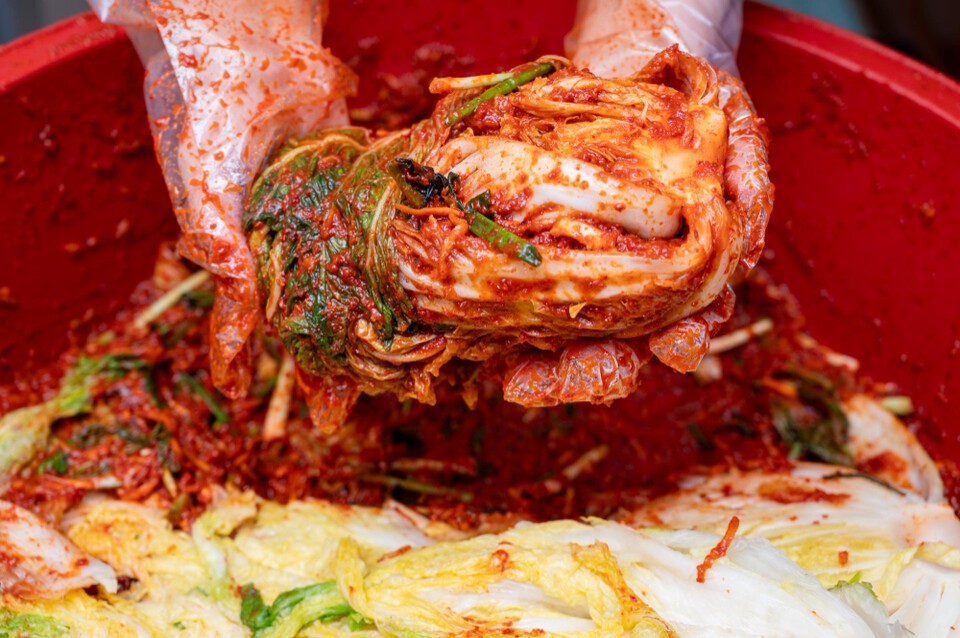
The alcohol left in non-alcoholic beer is often compared with that found in fermented foods. Lotte Chilsung Beverage explained that the actual alcohol content of Cloud Non-Alcoholic is no more than 0.3%, a level similar to the alcohol found in fermented foods such as kimchi, bread, soybean paste, and gochujang, as well as in kombucha.
Fermented foods naturally produce trace amounts of alcohol during the fermentation process. Bread contains alcohol while the dough rises, and small amounts can also be detected in well-aged kimchi and fruit juice. Most of it disappears during baking or cooking, but not all of it is completely removed.
For that reason, the industry’s common view is that it is effectively impossible to get drunk from non-alcoholic beer. The amount consumed is far below the body’s normal alcohol breakdown rate.
There are also many questions about driving. In a typical amount consumed, the trace alcohol in non-alcoholic products is unlikely to have a meaningful effect on blood alcohol concentration, according to industry explanations. However, that does not guarantee safety in cases of drinking large quantities over a short period, so if the situation is sensitive, choosing a 0.00 product is the better option.
There are also cases that require caution. People with alcohol allergies who may experience reactions such as rashes or difficulty breathing even from tiny amounts should distinguish between alcohol-free and non-alcoholic products when choosing. Those in the process of quitting alcohol, or those abstaining for religious reasons, are also advised to confirm the 0.00 label.
For pregnant women, additives are often considered a more important issue than alcohol itself. Even with alcohol-free products, it is recommended to check the ingredients list for hop extracts, flavorings, sweeteners, and caffeine, and to limit intake accordingly.
The classification as a non-liquor beverage also affects distribution and price. Non-alcoholic beer is exempt from the ban on online liquor sales, so it can be ordered online. Unlike regular beer, which is subject to liquor tax and education tax of around 800 won per liter, it is not taxed as liquor, so its price is generally lower. In the distribution industry, adult verification is often applied on a voluntary basis out of concern for minors.
Some products are sold at about half the price of regular beer. It is also reported that consumers who want the feeling of drinking beer rather than the effect of intoxication often buy these products in bulk online.
◆ A market that grew nine times in 10 years, built on beverage status rather than liquor
The domestic market is growing rapidly. According to Nielsen IQ Korea, Hite Zero 0.00 recorded sales of about 20.8 billion won last year, up 21.8% from the previous year. With a 36.8% share by sales, it ranks first in Korea’s alcohol-free and non-alcoholic beer market.
New products are also performing strongly. Terra Zero, launched in March by HiteJinro, sold an average of about 40,000 cans per day within 100 days of release, setting a record for the fastest-ever sales pace among domestic non-alcoholic beer-flavored beverages. The company has recently added 330 ml and 500 ml bottled products and is also targeting restaurants and bars.
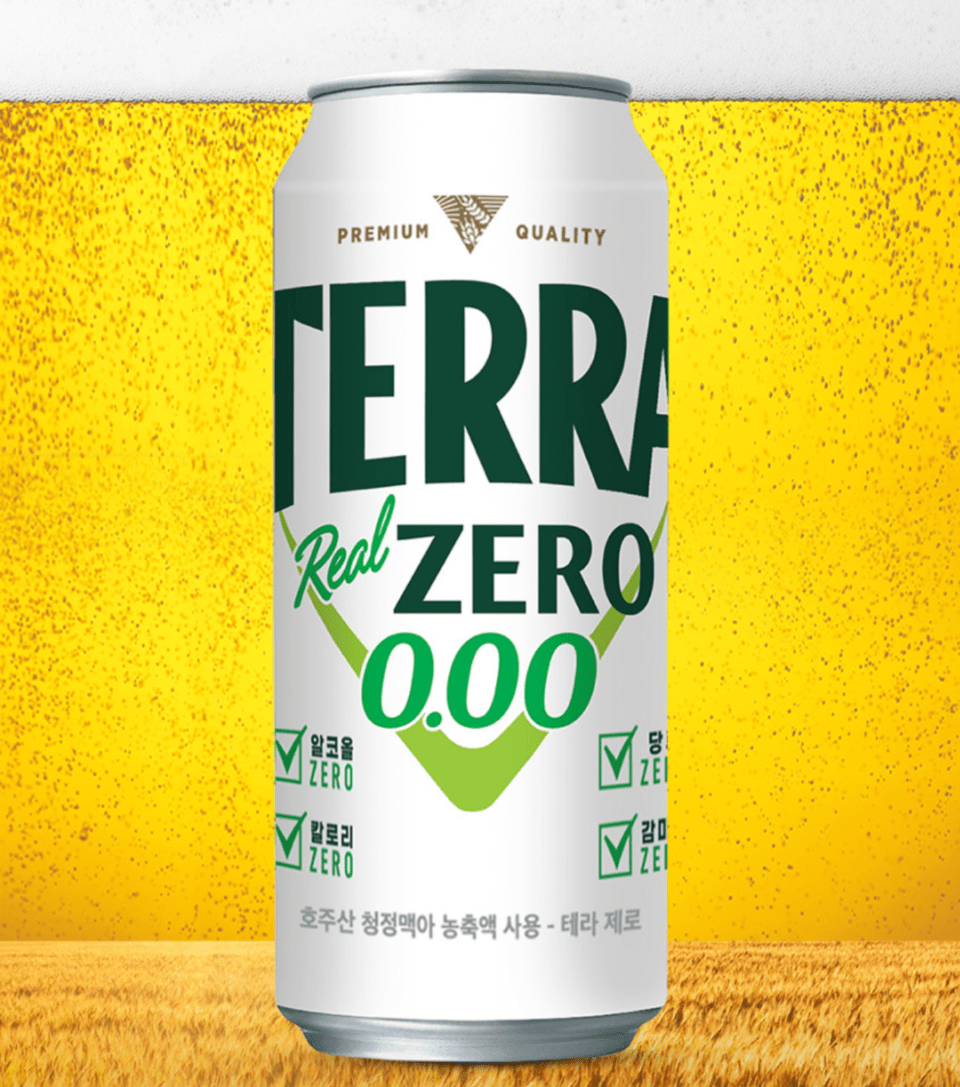
Competition among the major liquor companies is intensifying. HiteJinro has expanded its lineup with Hite Zero 0.00 and Terra Zero. OB Beer is operating a renewed Cass Zero, along with Hoegaarden Zero and Budweiser 0.0. Lotte Chilsung Beverage has introduced Cloud Non-Alcoholic following Cloud Clear Zero. Imported brands such as Heineken 0.0 and Tsingtao Non-Alcoholic are also competing on the shelves of convenience stores and large supermarkets.
The biggest driver of growth is changing drinking culture. The “sober life” trend, meaning a lifestyle not dependent on alcohol, and “sober curious,” which encourages people to regulate drinking depending on the situation, are spreading. In the first quarter of this year, the average monthly household spending on alcoholic beverages in real terms was 13,000 won, down 9.0% from a year earlier.
Institutional change has also helped. A 2024 revision to the Liquor Tax Act made it possible to sell products containing less than 1% alcohol in restaurants and entertainment venues, opening the foodservice channel. That is what made it possible to order non-alcoholic beer instead of alcohol at company dinners. Industry observers say non-alcoholic beer has established itself as an independent beverage market, beyond simply serving as a substitute for liquor.
As liquor consumption declines, non-alcoholic beer is becoming a new source of revenue for beverage companies. Launch strategies that preserve existing beer brand names, such as Terra Zero and Cass Zero, are seen as an effort to use brand familiarity to their advantage.
The global outlook is also bright. Market research firm Business Research Insights expects the global non-alcoholic beer market to grow from $7.8 billion last year to about $8.5 billion this year.
Experts say that as the market grows, consumers need the habit of checking alcohol-content labels. Since the difference between alcohol-free and non-alcoholic products comes down to a single decimal place, choosing a product that suits one’s physical condition and purpose is the starting point for properly enjoying non-alcoholic beer. Alcohol content can be checked on the back label of cans and bottles.