
Toyota plans to transform its factories with 400,000 robots, beginning in 2028.
The company is creating a robotics unit reporting directly to its head of production. Its in-house-developed, 50-kilogram wheeled robot is called ELEY.
Key points
▶ Starting in 2028, Toyota will gradually deploy 400,000 robots across 60 factories in its group.
▶ The plan calls for 150,000 robots at Toyota factories and 250,000 at group companies and partner firms. Toyota expects to spend 1 trillion yen (about 940 billion won) a year and is setting up a dedicated robotics unit reporting to its chief production officer.
▶ Toyota’s main robot, ELEY, weighs about 50 kilograms and moves on wheels rather than two legs. Workers can teach it to move parts by demonstrating the task while wearing a hand-shaped device.
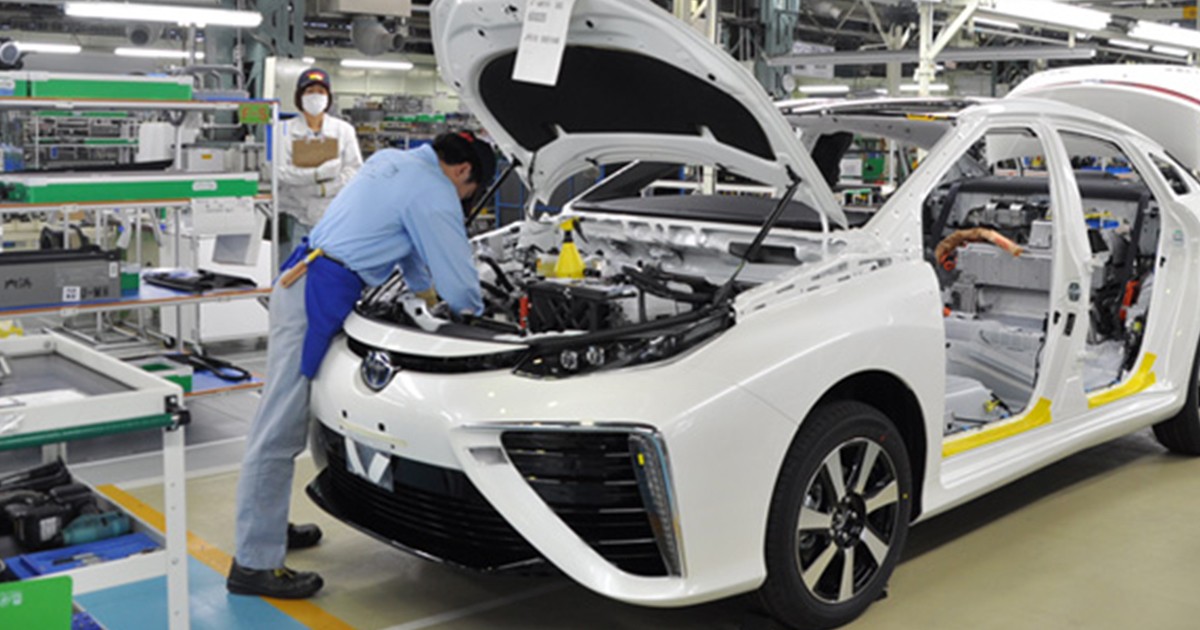
Toyota has put its factory robotics business before investors. The Financial Times reported on Oct. 26 that Toyota executives had begun briefing global investors on plans to commercialize robots the company has researched for nearly 20 years. The effort is part of a broader plan to overhaul factory automation, compete with China and expand beyond the automotive industry.
On Sept. 18, Toyota announced that it would gradually deploy 400,000 robots of its own design across 60 factories in its group starting in 2028. Of these, 150,000 are planned for Toyota factories and 250,000 for group companies and partner firms.
The estimated investment is 1 trillion yen (about 940 billion won) a year, a group-wide figure that includes humanoid robots and the replacement of existing equipment. Toyota plans to establish a dedicated robotics unit reporting directly to its chief production officer. It will first address labor shortages at its automotive plants before considering sales to outside customers.
◆ A humanoid that doesn’t walk
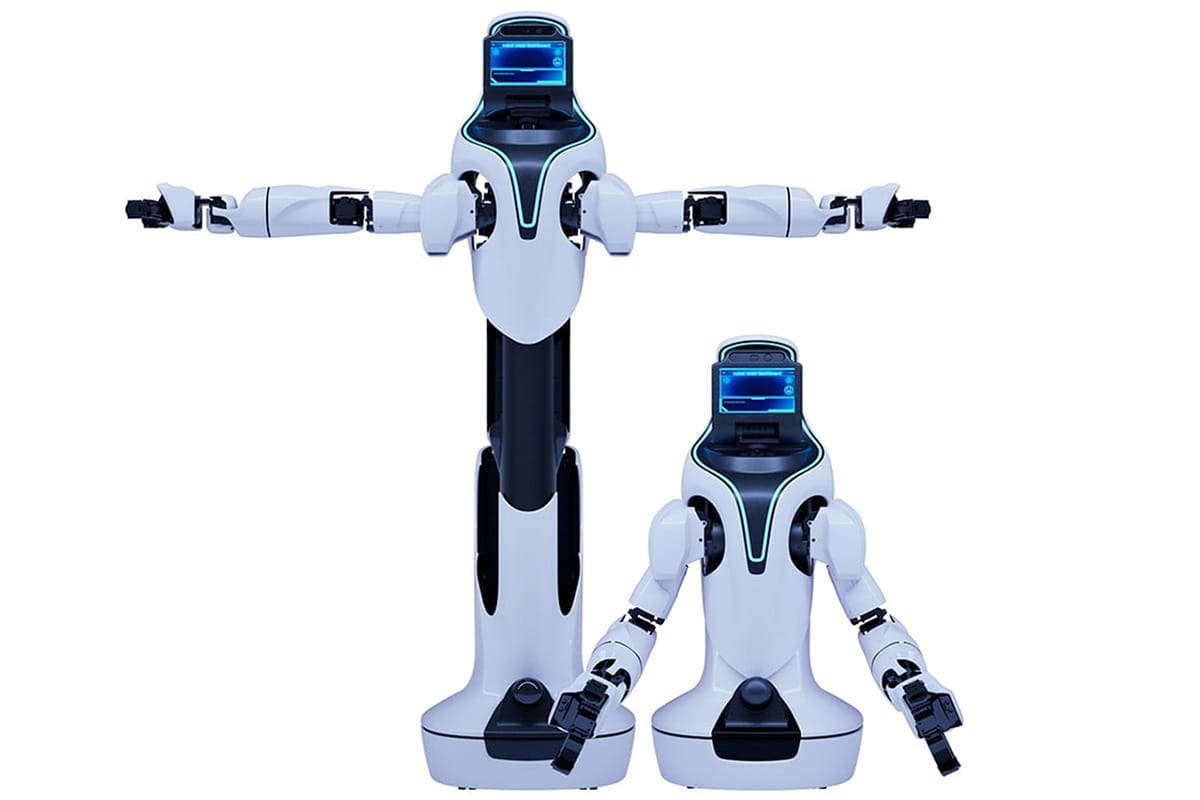
Toyota’s main robot for factory deployment is ELEY. It weighs about 50 kilograms, moves on wheels instead of two legs, and can run on either battery power or an external power supply.
With two-finger grippers, it can take parts out of boxes and move them, as well as fold fabric. Its joints are sized to match the average build of an adult Japanese man. To make the robot yield if it collides with a person, Toyota used actuators with a low gear ratio. It also added a shoulder-blade axis—absent from its predecessor, the HSR—to expand the arms’ range of motion.
Its learning method is key. A worker wears a hand-shaped device and demonstrates how to move parts, and the robot learns from the movement. In mid-September, at Toyota’s European headquarters in Belgium, ELEY folded a T-shirt after two weeks of practice and 1,500 repetitions.
Toyota collects the data the robots learn at its headquarters and loads it into new robots. The company has about 18,000 skilled craftspeople, known as “takumi,” many of whom are nearing retirement. Toyota aims to transfer their manual skills to robots. Toyota Vice President Hiroki Nakajima said the goal of deploying robots is “coexistence, not replacement.”
◆ The brain in California, the body in Boston and Cambridge
The robots’ AI is a “Large Behavior Model” (LBM) developed by the Toyota Research Institute (TRI) in California. Like a language model that learns from text, it learns actions from videos of people demonstrating tasks, translating high-level decisions into real-time joint control. The same model is also being used in Atlas, the humanoid robot made by Hyundai Motor Group’s Boston Dynamics. The two companies began joint research in October 2024.
Russ Tedrake, who led the Large Behavior Model work at TRI, founded Walden Robotics in Cambridge, Massachusetts, in January this year. On July 16, Walden raised $300 million in a funding round led by Toyota and Deviation Capital, putting its valuation at $1.1 billion. Nvidia, Boeing, Samsung Ventures and CoreWeave Ventures also participated.
Walden’s robot has a human-shaped upper body and a wheeled lower body. The company says wheels are more predictable when the robot stops near people, making it easier to meet safety standards. After two months of pilot operation at a Toyota plant in North America, the robot entered actual production in February.
Toyota also uses robots made by other companies. In February, it signed an agreement to introduce Agility Robotics’ bipedal Digit robot at a factory in Canada. In April, its in-house-developed basketball robot, CUE7, demonstrated dribbling and shooting in Tokyo.
◆ In South Korea, labor-management agreement comes first
The race to bring humanoid robots into factories is now underway among automakers. Tesla is testing Optimus at its own factories, with goals of producing 1 million units a year and pricing them at $20,000 to $30,000.
BMW is testing robots from Figure, while Mercedes-Benz is testing robots from Apptronik. Hyundai Motor Group unveiled Atlas at CES in January and said it would build a robot factory in the United States by 2028, then introduce the robots gradually into production.
In South Korea, unions pose a hurdle. In January, the Hyundai Motor union said, “Not a single robot will be allowed onto the shop floor without an agreement between labor and management.” The union has pointed to the cost calculation: keeping a production line running around the clock with workers earning 100 million won a year costs 300 million won annually, whereas robots incur only initial and maintenance costs.
Toyota’s approach makes workers the robots’ teachers. Workers on the factory floor demonstrate the tasks for the robots to learn, and the resulting data becomes a company asset. Alongside the question of whether to introduce robots, a new issue is emerging: who teaches them, and who owns the data.