
Key points
▶ On November 25 (local time), the U.S. Federal Communications Commission (FCC) approved SpaceX’s plan to deploy and operate “Starmind,” an orbital artificial-intelligence (AI) data center system comprising one million satellites.
▶ SpaceX must launch its first satellites by 2033, deploy 100,000 by 2035 and reach one million by 2040.
▶ The European Southern Observatory (ESO) and the American Astronomical Society (AAS) issued statements expressing concern. They warned that deploying one million satellites could disrupt optical, radio and infrared observations.
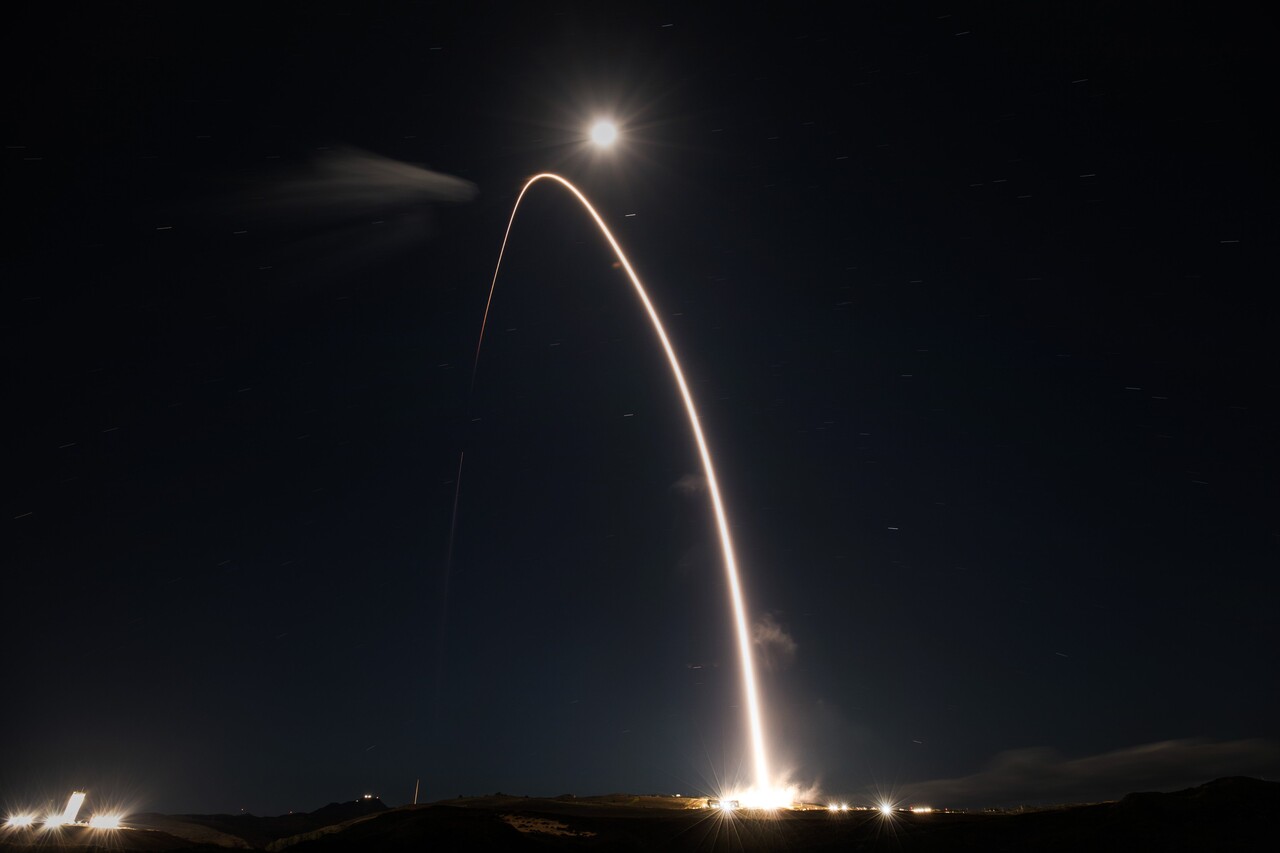
U.S. communications regulators have approved a plan to build a space data center using one million satellites. On November 25 (local time), the FCC authorized SpaceX to deploy and operate Starmind, an orbital AI data center system.
FCC Chairman Brendan Carr said on social media platform X that the commission had approved an application for a one-million-satellite constellation for the first time in its history. European and U.S. astronomy organizations quickly issued statements warning that such a massive deployment could harm astronomical observations.
Deploying one million satellites by 2040
Starmind is a large constellation in which each satellite functions as a small data center. AI computations normally performed in data centers on Earth would instead be processed in space, with the results transmitted back to the ground.
SpaceX has argued that the system could reduce costs and energy use compared with terrestrial data centers because solar energy is more consistently available in orbit. The company submitted its business plan to the FCC earlier this year.
The approval sets deadlines for deployment in stages. SpaceX must launch its first satellite by November 25, 2033. It must deploy 10% of the planned constellation—100,000 satellites—by November 25, 2035, and increase that number to 500,000 by 2038. The final deadline is November 25, 2040.
The satellites are expected to operate in low Earth orbit at altitudes of about 500 to 1,000 kilometers. According to the ESO, more than 14,000 satellites were operational in Earth orbit as of July. If the Starmind plan is completed, the number of satellites deployed would be about 70 times the current operational total.
The FCC reportedly deferred a decision on how satellites in orbits above 600 kilometers should be disposed of at the end of their service lives.
SpaceX CEO Elon Musk said the approval would be a major asset for the United States and the world. In June, he had dismissed concerns about satellite congestion, emphasizing that space is vast.
Potential effects on astronomical observations
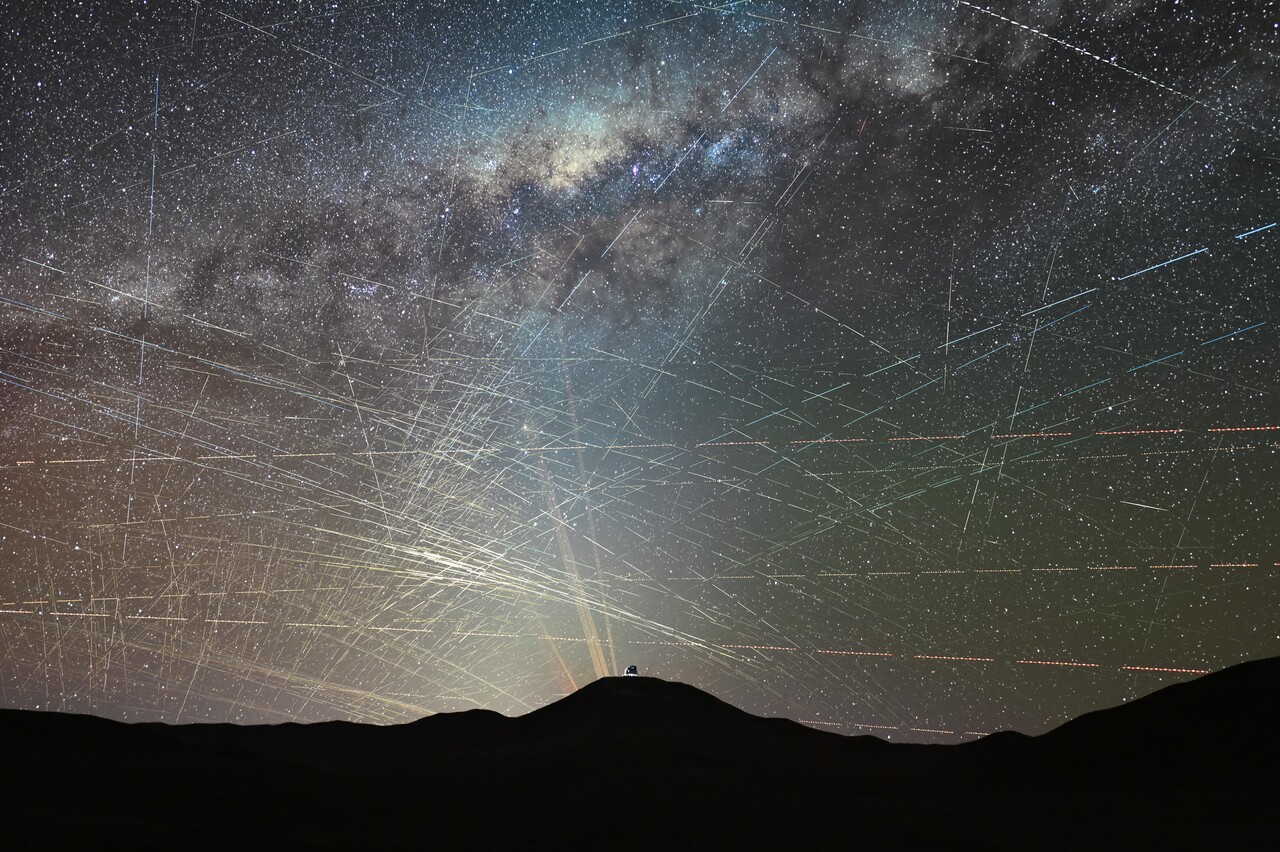
The European Southern Observatory, which operates major astronomical facilities in Chile, issued an official statement on November 26. ESO Director General Andreas Kaufer warned, “If implemented as approved, this plan would have a profound impact on astronomy and fundamentally change the night sky for everyone on Earth.”
The ESO had submitted comments to the FCC before the approval. Astronomy organizations in other countries also raised concerns about the impact of the satellite deployment on observations.
A research team led by ESO astronomer Olivier Hainaut published an analysis of the effects of large satellite constellations on astronomical observations in the journal Astronomy & Astrophysics.
The analysis found that if one million Starmind satellites were deployed, dozens of satellite trails could appear in a single image taken by the Very Large Telescope (VLT). Two hours after nightfall, up to 28% of the telescope’s field of view could be affected. This estimate assumes the satellites would be too faint to see with the naked eye.
If the satellites were brighter, the Vera C. Rubin Observatory could find most of the images it captures over several hours each night difficult to use. The analysis also suggested that members of the public could see hundreds or even thousands of satellites with the naked eye at night.
The researchers proposed a ceiling of 100,000 satellites to limit the impact on astronomical observations, provided their brightness is kept below magnitude 7—the threshold for naked-eye visibility. Hainaut said a limit of around 50,000 satellites would be preferable.
Satellite manufacturers have been improving designs to reduce reflected light. The ESO said that even if the brightness of individual satellites were lowered, a constellation of one million would still be difficult to prevent from causing widespread disruption to observations.
The effects could extend to observations of distant galaxies, Earth-like exoplanets and asteroids that might pose a threat to Earth.
Radio and infrared observations also at risk
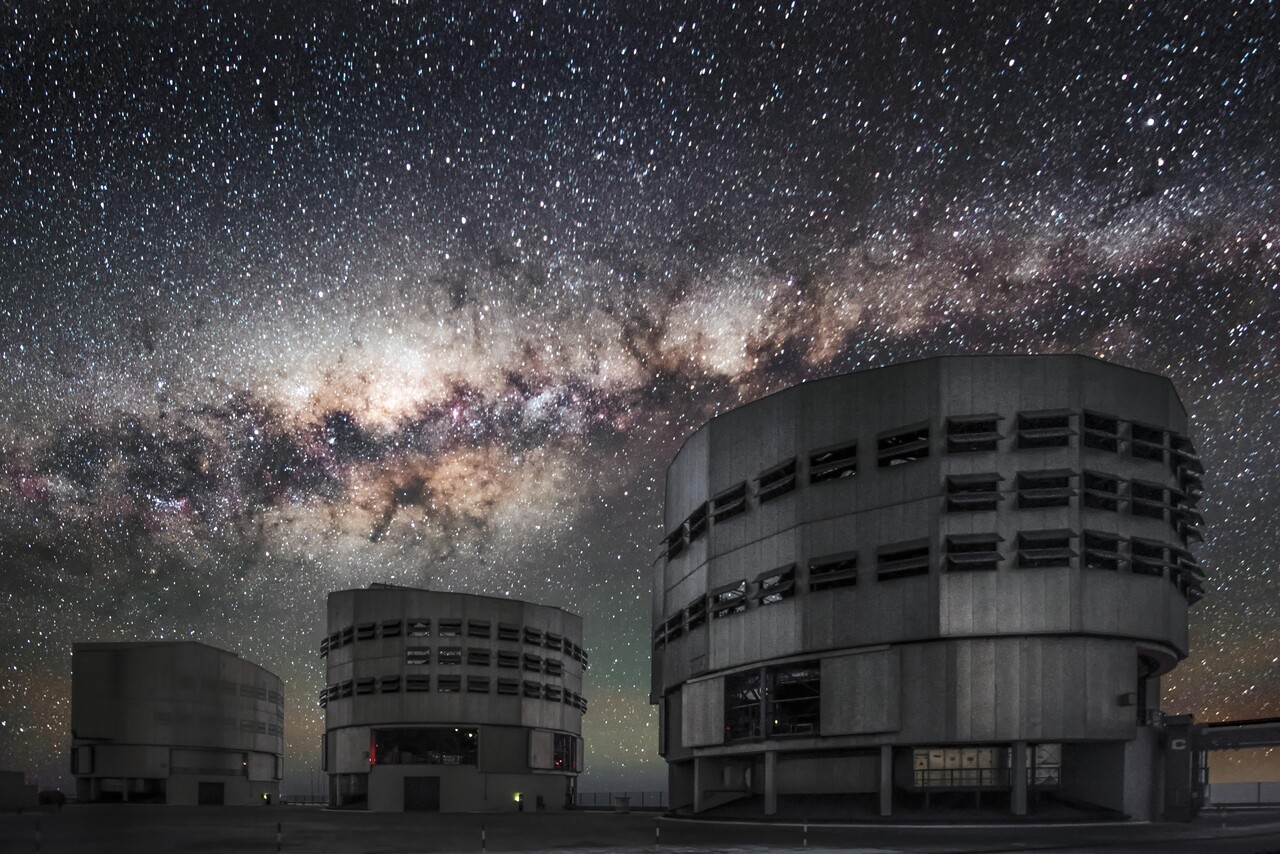
The American Astronomical Society issued a statement on the day of the FCC approval, expressing deep disappointment and concern. It warned that the decision could damage astronomical facilities and research infrastructure built through decades of U.S. government investment.
The AAS noted that Starmind satellites would be larger and brighter than existing communications satellites, and that the constellation would be much bigger. Their relatively high orbital altitudes and inclinations could also mean they remain visible in the night sky for longer periods.
Radio emissions from the satellites could interfere with radio astronomy. Waste heat generated during AI computations is another concern. If thermal radiation from the satellites raises the infrared background of the night sky, the performance of sensitive infrared instruments could decline.
Other major concerns include atmospheric pollution from large-scale satellite launches and reentries, as well as the risk of collisions in orbit.
The AAS has worked with SpaceX to reduce the effects of Starlink satellites on astronomical observations. SpaceX has also modified satellite designs to make them less bright. The society said, however, that an orbital data center constellation of one million satellites presents fundamentally different challenges from the company’s existing communications satellite business.
Calls for an international review framework
Astronomers also questioned the regulatory framework for assessing the effects of large satellite deployments. The FCC reportedly determined that impacts on the environment and astronomical observations fell outside its jurisdiction.
The AAS pointed out that the approval did not require formal consultation with the U.S. National Science Foundation (NSF). With no separate licensing body to assess harm to astronomical observations, it called on the FCC to include protections for optical and infrared astronomy in its review process.
The ESO said the issue requires an international approach. Director General Kaufer stressed the urgent need for an international mechanism to assess the effects of decisions by individual countries on a shared resource that crosses borders and belongs to all humanity.
According to the ESO, proposals have been made to deploy more than 1.7 million satellites worldwide. The U.S. nonprofit Secure World Foundation counted nine companies pursuing orbital data center projects, five of them based in the United States.
Specific details of the project’s scale—including the size and heat output of Starmind satellites, and the number of launches and associated costs required for the full deployment—have not been confirmed. Details of the FCC approval conditions on satellite brightness and radio-frequency protection, as well as the position of South Korea’s astronomy community, also remain to be established.