A hand warmer opened on the way to work may still be warm after you arrive at the office. But once opened, it keeps producing heat—even when you no longer need it indoors. By the time you head home, it may have gone cold, prompting you to take out a new one.
What if you sealed a hand warmer after using it? Limiting the time it is exposed to air can slow its heat-producing reaction. The method takes advantage of how disposable hand warmers work: iron powder reacts with oxygen to generate heat.
◆ Why does it get warm without electricity or a flame?
Disposable hand warmers generate heat as the iron powder inside oxidizes when it comes into contact with oxygen in the air. Water and salts help speed up the oxidation reaction. (Photo: Solution News Magnific)
Disposable hand warmers contain iron powder, water, activated carbon, salts and other materials. Iron powder is the key ingredient. Heat is generated as the iron oxidizes when it comes into contact with oxygen in the air.
Heat is also released when iron rusts. Under normal conditions, the reaction is so slow that it is difficult to notice a change in temperature. Hand warmers are designed to speed up oxidation by using iron powder with a large surface area and adding water and salts.
This is also why hand warmer packaging has two layers. The outer wrapper keeps out air, while the inner pouch has tiny holes that let air through. Once the outer wrapper is opened, oxygen enters and heat production begins. No power source or charging is needed.
◆ What happens if you put it in a zip-top bag?
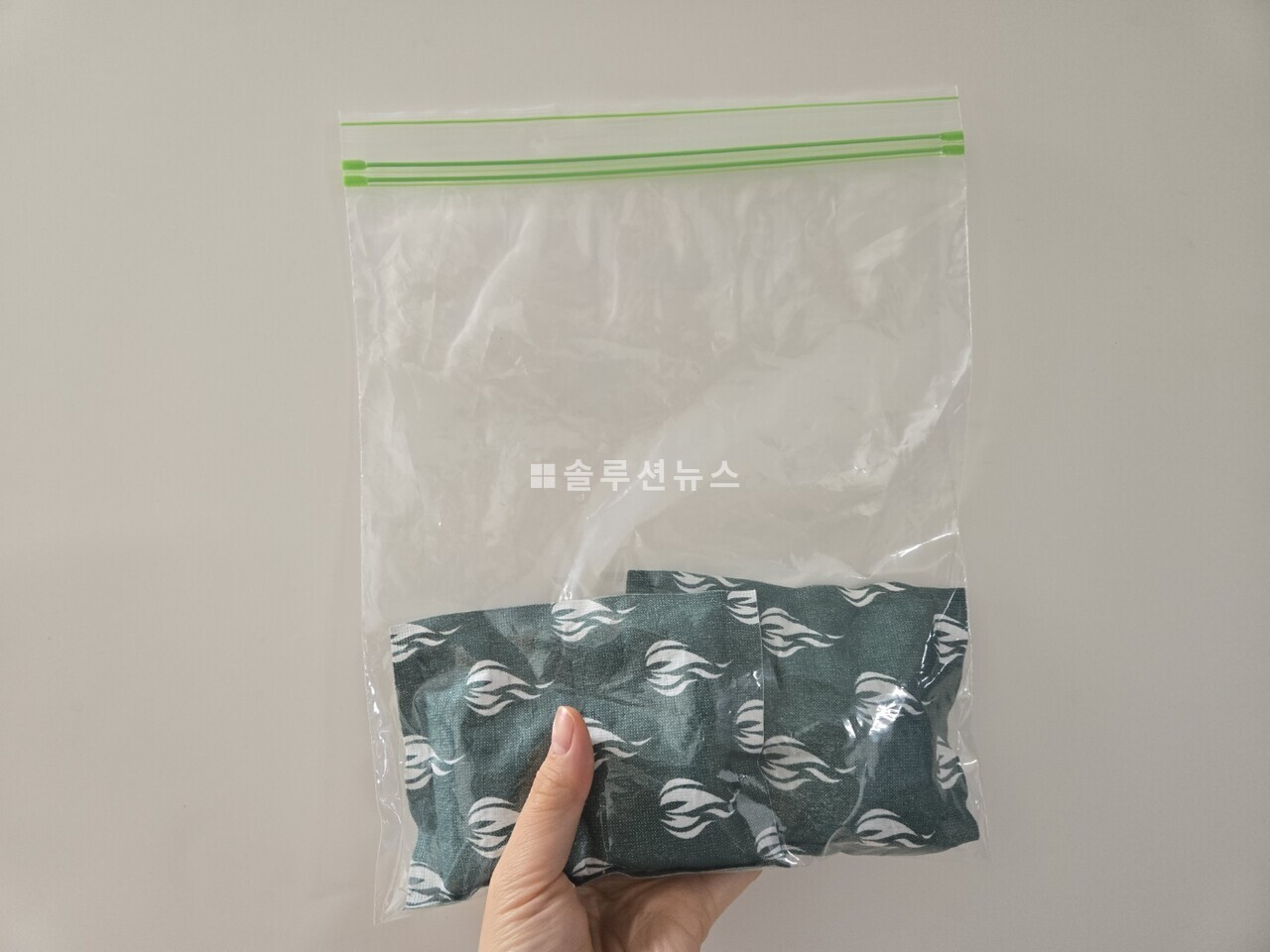
In January last year, Japan’s nonprofit Institute for Environmental Economics (IEEI) recommended sealing disposable hand warmers as a way to use them more efficiently. The method is to put a used hand warmer in a zip-top bag and remove as much air as possible. Sealing the bag reduces the supply of oxygen from outside. This slows the oxidation of the iron powder and lowers the hand warmer’s temperature.
When you want to use it again, take it out of the bag and expose it to air. If some iron powder has not yet oxidized, it may produce heat again. For example, you could use a hand warmer on your way to work, seal it in the office, and take it out again for the journey home. This can also be useful for people who only need a hand warmer for short outings.
A zip-top bag is more suitable than an ordinary plastic bag because its opening can be sealed. If too much air remains inside or the bag is not properly sealed, the heat-producing reaction may continue.
◆ Can you use it again the next day?
If enough iron powder remains unoxidized when the hand warmer is sealed, and the oxygen supply is effectively cut off, it may still produce heat the next day. The amount of iron powder, heat level and air permeability vary by product. The amount of heat left also depends on how well the bag is sealed.
For example, suppose a hand warmer is designed to last 12 hours and you use it for one hour on the way to work and one hour on the way home. You need two hours of heat per day. If you can slow oxidation during the hours you are not using it, you may be able to make use of the remaining heat-producing capacity. The actual heating time will depend on how much oxidation occurs while the hand warmer is sealed and on the product’s characteristics.
A hand warmer that has finished producing heat will not warm up again just because it is sealed. Oxidized iron powder cannot be restored to its original state by putting it in a zip-top bag.
Take care with adhesive hand warmers, too. Japan’s Institute for Environmental Economics says they are not suitable for sealed storage because the adhesive surface may stick to the bag or lose its stickiness.
◆ Warm hand warmers can still cause burns
The main injury to watch out for when using a hand warmer is a low-temperature burn. According to the National Fire Agency, hand warmers can reach temperatures of up to 70°C. Even prolonged exposure to heat of 40–50°C—slightly above body temperature—can damage skin tissue. Low-temperature burns may not cause severe pain at first, so caution is needed.
In a KBS disaster-safety report on the 26th, Lee Shin-ae, a professor of burn surgery at Hallym University Hangang Sacred Heart Hospital, explained that the length of time skin is exposed to heat, as well as the temperature, affects the risk of burns. When a hand warmer is pressed against the body, heat has less chance to escape, which can make the injury deeper.
The Korea Consumer Agency recommends checking for the KC mark and a safety verification report number when buying hand warmers. Avoid applying them directly to bare skin or using them on the same area for a long time. Remove them before going to sleep, and do not use them together with other heating products such as electric blankets.
Extra care is needed for infants and young children, older adults, people with diabetes, and others who may have reduced skin sensation or difficulty noticing temperature changes.
◆ How should you dispose of a used hand warmer?
Once it has stopped producing heat, a hand warmer contains oxidized iron powder mixed with activated carbon, salts and other materials. Dispose of it without removing the contents, in accordance with your local household-waste rules.
There have also been efforts to recycle used hand warmers. From February to May 2025, Kobe City in Japan conducted a pilot collection project with Kobayashi Pharmaceutical. The project set up 36 collection points and tested ways to recycle the iron in the hand warmers.
Avoid tearing open a hand warmer at home and sprinkling its contents in a flowerpot or garden. The mixture contains salts and other substances in addition to iron powder, and could affect the soil and plant growth.
◆ How to make one hand warmer last a little longer
Once opened, a disposable hand warmer keeps producing heat while it is in contact with oxygen. Sealing it when not in use is a practical way to limit the oxygen supply and make use of its remaining heat-producing capacity. A zip-top bag can reduce contact with air without any special equipment.
There is no universal standard guaranteeing how well a hand warmer will work after being sealed and stored. Follow the product’s instructions and safety precautions. Do not put a hand warmer in a microwave or heat it directly in an attempt to reuse it.