
One-minute news
▶ OpenAI Chief Financial Officer Sarah Friar said in a CNBC interview on Nov. 6 (local time) that the company would continue investing in infrastructure despite opposition to data centers highlighted by the U.S. midterm elections.
▶ OpenAI announced a community agreement under which it will cover the costs of expanding the power grid and disclose electricity and water use at each facility.
▶ OpenAI has raised $11 billion at a valuation of $1.25 trillion. It is also seeking additional investment.
Despite the opposition to data center construction evident in the U.S. midterm elections, OpenAI has decided to maintain its infrastructure investment plans. The company believes expanding data centers is essential to meet surging demand for artificial intelligence (AI).
In an interview with CNBC on Nov. 6 (local time), OpenAI CFO Sarah Friar said, “Even in light of the midterm election results, we have to consider that we need to continue investing to meet customer demand.”
“Demand for AI is real,” she stressed. Her remarks came shortly after candidates who campaigned to restrict or oppose data center construction won in key areas in the U.S. midterm elections on Nov. 3.
Democratic gubernatorial candidates who pledged to halt data center construction won in Texas, Georgia and Ohio. In some areas, ballot measures to limit data center development also passed.
The AI industry’s efforts to secure the electricity, water and land needed for expansion are encountering a new obstacle: opposition from local communities.
“1.2 billion weekly users”
Friar cited the rapid growth in users and enterprise customers as grounds for continuing investment.
OpenAI products have 1.2 billion weekly active users. The company’s business grew 70% in the third quarter compared with the previous quarter, while revenue from enterprise customers doubled.
Individual and enterprise customers each account for about half of total revenue. The company has also signed up major corporate clients, including JPMorgan Chase.
Demand is growing so quickly that, because of limited computing resources, some new features are being offered to enterprise customers first, she said.
Friar said the midterm election results would not fundamentally change the company’s investment direction.
She said that if the results signaled a need to focus more on the relationship between data centers and local communities, OpenAI would continue its efforts in that area.
Her remarks suggested that OpenAI intends to keep expanding its data centers while adjusting how it does business to reduce conflict with local residents.
Covering power-grid costs and disclosing water use
OpenAI also announced measures to reduce the burden data center construction places on local communities.
Key concerns include electricity bills, water use and noise. The measures are intended to address concerns that data centers could strain local power grids and raise residents’ living costs.
Friar said OpenAI would ensure its data center operations do not increase local residents’ electricity bills. The company also plans to contribute directly to power-grid expansion.
On water use, she said that a large facility uses an amount equivalent to two Olympic-size swimming pools and recirculates the water.
The company has also installed noise-reduction features. At its data center in Georgia, it built an earth berm 300 feet (about 91 meters) high, she said.
OpenAI is also supporting local communities. It has backed free school meal programs and park development projects, and held events to help small businesses use AI.
On Nov. 5, the day before the interview, OpenAI announced a “National Community Agreement” that includes these measures. Under the agreement, OpenAI will cover the electricity costs and power-grid expansion costs for data centers it owns and operates. It will also provide financial guarantees to ensure that residents are not left paying related costs if a project is canceled.
The company will disclose electricity and water use at each facility and publish annual reports on how the agreement is being implemented in each community. It will also generally end the practice of requiring local officials to sign nondisclosure agreements (NDAs), with exceptions for matters involving security or trade secrets.
OpenAI also outlined planned local investments: $80 million in Effingham County, Georgia, and $40 million in Pike County, Ohio.
$1.25 trillion valuation
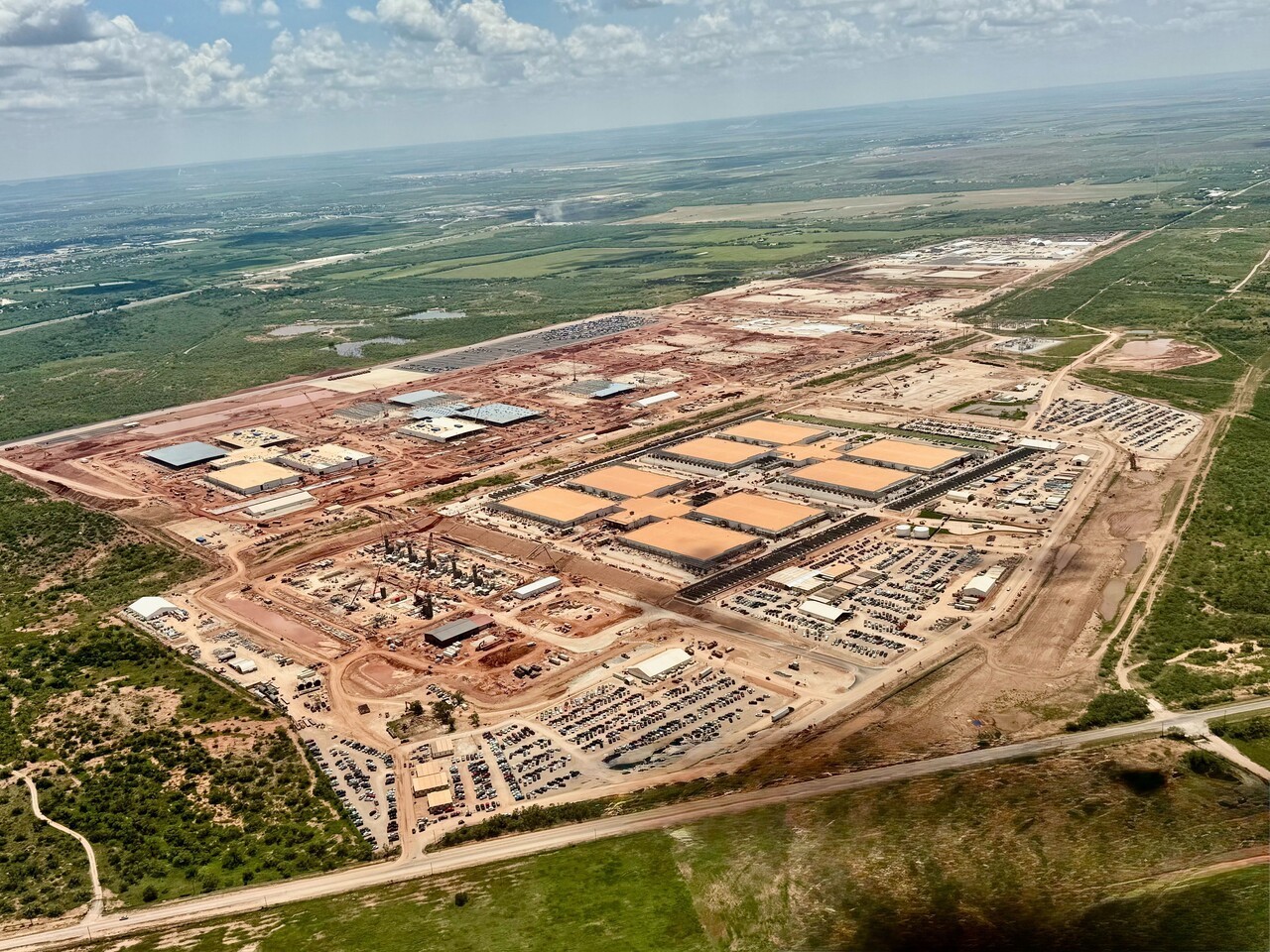
OpenAI is also continuing to secure funding for data center investments. Friar confirmed that the company has raised $11 billion so far at a valuation of $1.25 trillion.
The latest funding round is still underway. The valuation is about 47% higher than the $852 billion valuation assigned to the company in its previous funding round in March. Earlier, reports suggested OpenAI was seeking to raise $30 billion at a valuation of $1.4 trillion.
Friar said those figures originated in media reports and were not officially announced by the company. Potential investors reportedly include Japan’s SoftBank and UAE investment firm MGX.
OpenAI is also considering an initial public offering (IPO). Friar said the company continues to examine the possibility of going public next year, but no specific timetable has been set.
Rival Anthropic disclosed its securities registration statement on Oct. 26 and is pursuing a Nasdaq listing in mid-November.
In August, Friar told employees that it would not be a problem if OpenAI went public later than Anthropic. As both companies invest heavily in computing infrastructure, securing long-term funding has become a key management priority.
Local acceptance remains a variable
The political landscape surrounding data center construction has also shifted since the U.S. midterm elections.
In an interview with The New York Times, U.S. President Donald Trump said he was willing to accept the election results and could work with Democrats to find common ground.
As AI companies accelerate data center expansion, residents’ concerns about electricity bills, water supplies and environmental impacts are becoming political issues. OpenAI’s pledge to cover power-grid costs and disclose operational information reflects this broader trend.
There are lessons for South Korea as well. Local governments and developers seeking to attract AI data centers need to consider not only electricity and water supplies but also the costs residents may bear and the benefits they may receive.
In particular, how much responsibility developers take for power-grid expansion costs and how much operational information they disclose could become major issues in future site-selection and community consultation processes.
It remains to be seen how much the agreement announced by OpenAI will actually reduce the burden on residents. The final size and closing date of the funding round, the IPO timetable and the list of facilities covered by the agreement have not yet been disclosed.