
Key points
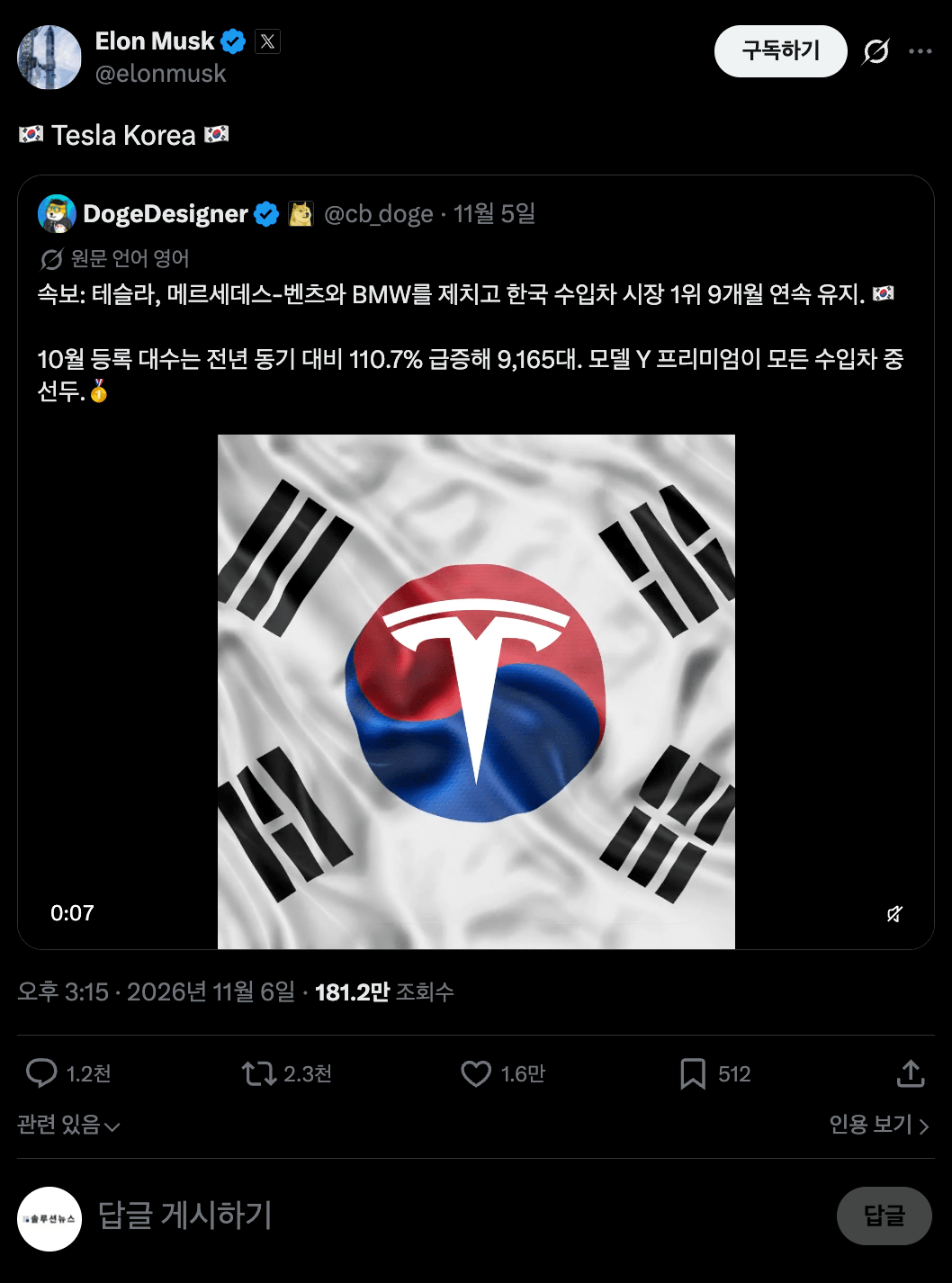
▶ On November 5, Tesla CEO Elon Musk posted “Tesla Korea” on X and shared a user’s post.
▶ The post featured a video of the South Korean flag fluttering in the wind, with Tesla’s “T” logo composited into the red-and-blue taegeuk at its center.
▶ The post said Tesla had held off Mercedes-Benz and BMW to remain South Korea’s top imported-car brand, with October registrations surging 110.7% year over year to 9,165 vehicles.
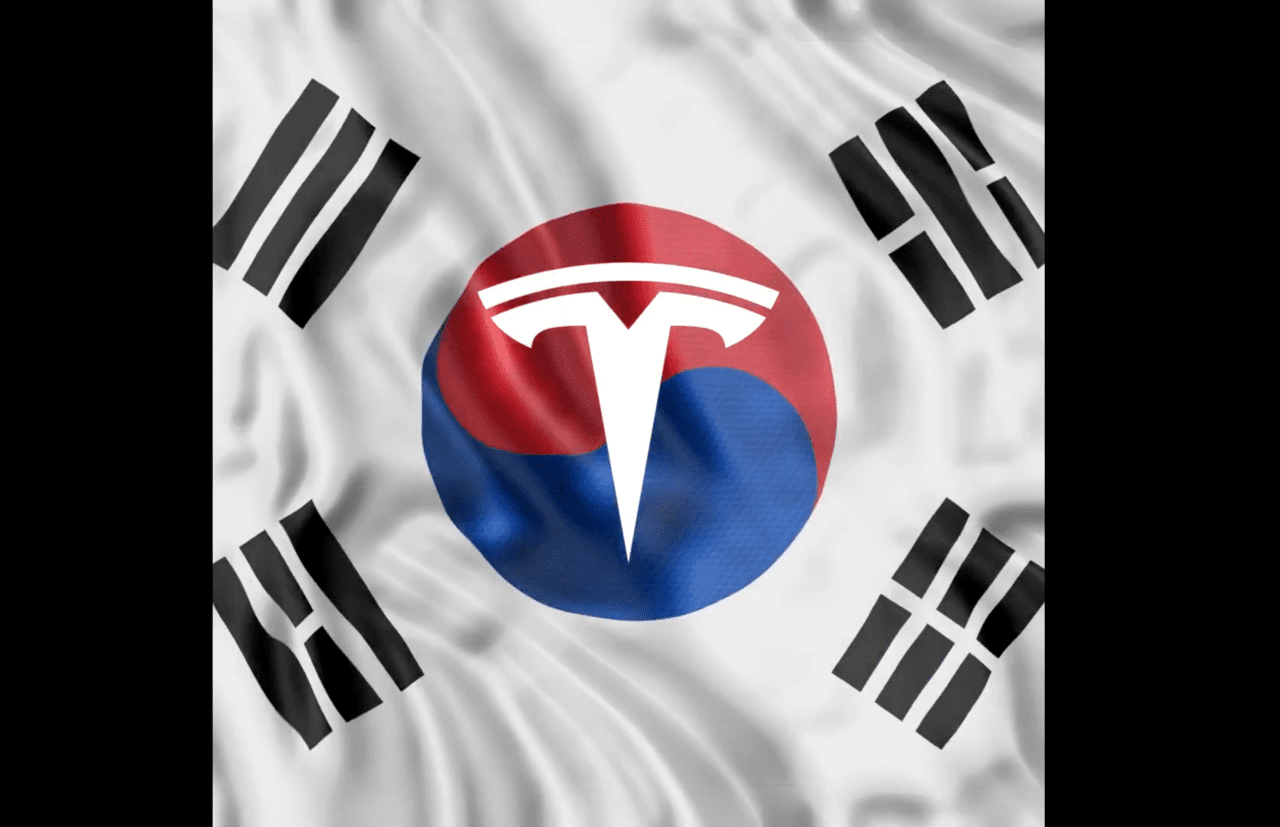
Tesla CEO Elon Musk celebrated the company’s top position in the South Korean market with an image of the Tesla logo placed on the national flag.
On November 5 local time, Musk posted “Tesla Korea” on X while sharing a user’s post. The post featured a video of the South Korean flag waving in the wind, with Tesla’s signature “T” logo composited into the red-and-blue taegeuk at its center.
The post’s author wrote, “Tesla has held off Mercedes-Benz and BMW to remain No. 1 in South Korea’s imported-car market,” adding that “October registrations jumped 110.7% year over year to 9,165.” Musk shared the post, drawing attention to the company’s performance in Korea.
◆ One in three imported cars is a Tesla
According to the Korea Automobile Importers & Distributors Association (KAIDA), new registrations of imported passenger cars totaled 31,117 in October, up 29.3% from a year earlier. Tesla accounted for 9,165, or 29.5% of the total. Mercedes-Benz ranked second with 6,744 vehicles, followed by BMW with 5,633. Volvo, China’s BYD and Lexus followed with 1,682, 1,594 and 1,346 vehicles, respectively. Tesla has been the top-selling imported-car brand for nine consecutive months since February.
The gap is even wider in the year-to-date figures. Tesla registrations from January through October totaled 98,313, up 105% from a year earlier. That represented 31.6% of the 310,846 imported vehicles registered overall. BMW ranked second with 63,562, followed by Mercedes-Benz with 49,993.
By model, the Model Y led with 78,631 registrations, 3.7 times the 21,034 for the second-place Mercedes-Benz E-Class. In October alone, the Model Y Premium topped the single-model rankings with 5,501 vehicles, while 3,553 Model 3s were also sold.
◆ October cooled, with sales falling below 10,000 for the first time since February
Tesla registrations in October fell by 3,207, or 25.9%, from 12,372 in September. Monthly registrations dropped below 10,000 for the first time since February. Total imported-car registrations also fell 10.8%, from 34,904 in September, while BYD registrations declined 39%. KAIDA Vice Chairman Jung Yun-young attributed the decreases to lower electric-vehicle sales at some brands and supply shortages.
The broader shift toward electric vehicles, however, remained unchanged. Imported EV registrations in October reached 14,424, or 46.4% of the total, edging past hybrids at 14,272, or 45.9%, for the first time. For January through October, EVs also outnumbered hybrids: 147,006, or 47.3%, compared with 134,883, or 43.4%. Tesla accounted for 9,165 of the 14,424 imported EVs registered in October, or 64%.
◆ Why Tesla is selling well in Korea
Tesla sales fell by nearly 30% in Europe and 8% in the United States last year. In South Korea, by contrast, sales grew by more than 100% to a record high. Last year, Tesla introduced a Model Y made at its Shanghai factory for 49.99 million won, a price that qualified for the full EV subsidy.
After subsidies, the price in Seoul comes to around 47 million won, comparable to the Hyundai Ioniq 5 Long Range. From January to November last year, Tesla ranked first in imported-car registrations among buyers in their 20s to 40s. Demand at times exceeded supply, with delivery waits reaching as long as a year.
This is not the first time Musk has celebrated Tesla’s results in Korea. In June, when the Model Y became South Korea’s best-selling passenger car for the month, surpassing even domestic models, Musk shared a related post and wrote, “Korea is awesome.”
In February, he posted a Tesla recruitment notice alongside a South Korean flag emoji, writing, “If you live in Korea and want to work in chip design, fabs, or AI software, apply to Tesla.” South Korea is both a customer market and a source of talent for Tesla.