
Nongshim’s Shin Ramyun has entered all branches of the three major convenience stores, despite competing with 1,000 other products.
Shin Ramyun Tumba reached 53,000 stores within a year of its launch.
“Achieving a 40% market share in markets where there was no spicy noodle market.”
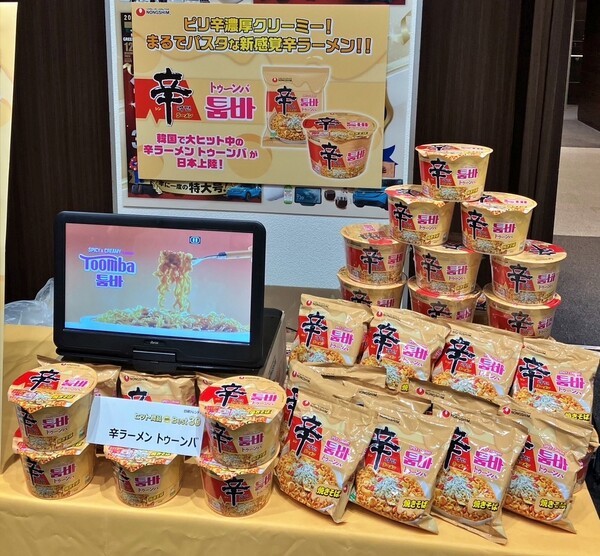
Currently, only two brands have secured ‘year-round regular sale’ contracts in Japanese convenience store shelves, both being Nongshim products. Samyang Foods’ Buldak Bokkeummyeon, along with hundreds of local Japanese brands, have yet to achieve this feat. This happened in a market that commercialized ramen for the first time and where over 1,000 varieties compete weekly.
Last March, Nongshim began officially supplying Shin Ramyun Tumba to around 53,000 Seven-Eleven, FamilyMart, and Lawson stores nationwide. It’s been 10 years since Shin Ramyun first entered all branches of the top three Japanese convenience stores in 2015, and the second brand has repeated this record. This is a result achieved within a year of Tumba’s launch.
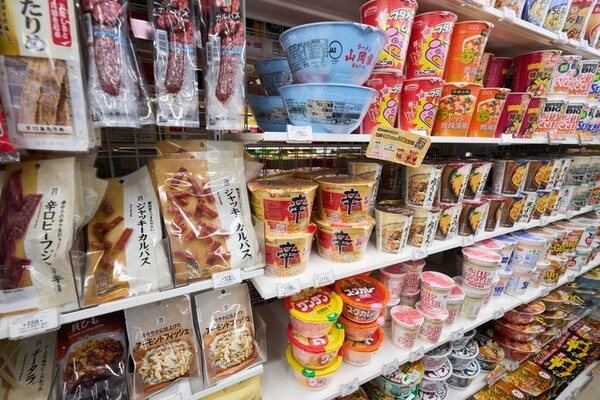
Japanese convenience stores serve as a life infrastructure, handling utility bill payments and parcel services. Seven-Eleven, FamilyMart, and Lawson dominate about 90% of the entire convenience store market. Placing a product on these channels means it reaches most Japanese consumers’ paths. Thus, the competition is extreme.
After entry, it only gets harsher. Convenience store buyers analyze the weekly sales trend and repurchase rate for a month after bringing in new products. If the numbers fall below standard, a different product takes its place the next month. Most products disappear this way.
Nongshim made its first steps into Japan in 1981. Initially, the aim was more about acquiring technology than expanding business. At that time, Japan surpassed Korean companies in every aspect of instant ramen manufacturing technology and facilities. The Tokyo office served as a base to gather information for new product development.
The turning point was the 1986 Asian Games and the 1988 Seoul Olympics. The spicy flavor trend began in Japan, and Nongshim aggressively marketed with Shin Ramyun and Neoguri. They started supplying to 250 Seven-Eleven stores in Tokyo in 1997 and expanded to over 2,800 stores in the Kanto region.
At that time, the spicy flavor category in the Japanese ramen market was virtually absent. The prevailing local reaction was, “This kind of spiciness won’t sell.” Nongshim knocked on that door for over 20 years. Ultimately, they created the spicy ramen category themselves, and now they hold 40% of that market.
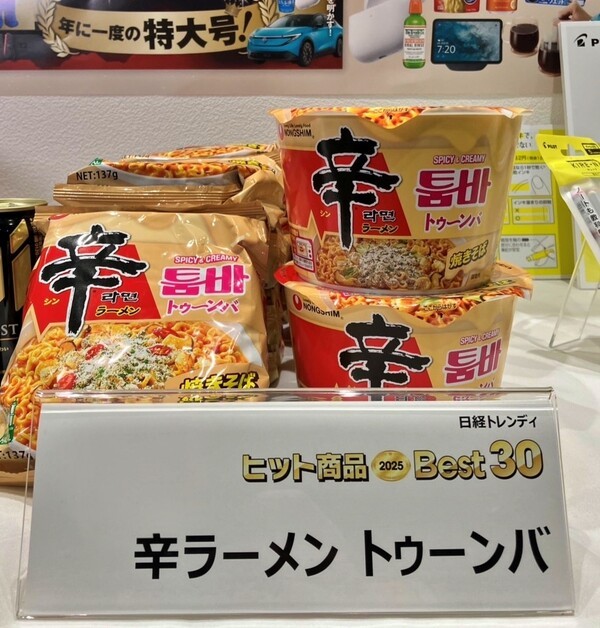
Shin Ramyun Tumba was first introduced in Japan in April 2024. The initial batch of 1 million units launched at Seven-Eleven sold out within two weeks. The subsequent additional stock also sold out in three rounds. As the repurchase rate exceeded the standard, FamilyMart and Lawson signed formal sales contracts this March.
The Japanese instant ramen market is about 7 trillion yen annually. The taste genres are subdivided into miso, soy sauce, shio, etc., and consumers thoroughly evaluate the depth of the soup, noodle texture, and cooking method. The reason Tumba was chosen in this market is due to two product differentiations.
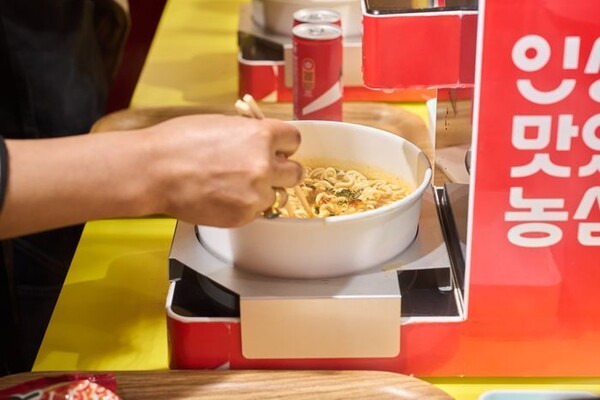
The first is the microwave cooking method. It is rare in the Japanese cup noodle market and can replicate a rich flavor similar to packet noodles rather than traditional cup noodles. The second is the water drainage feature. This removes unnecessary moisture after cooking, maintaining a consistent concentration. These two aspects received high evaluations during buyer demonstrations.
While Samyang Foods’ Buldak Bokkeummyeon is considered a symbol of the global K-food boom, it still has not achieved the year-round, regular sale contracts across all top Japanese convenience store branches. This highlights that brand recognition and securing convenience store distribution networks are entirely different issues.
The rapid spread of Shin Ramyun Tumba was supported by the brand assets that Shin Ramyun has built over 40 years. As of 2025, Nongshim’s sales in Japan are 16.5 billion yen. It has achieved over 20% growth annually for the past five years, and its cumulative sales have surpassed 1 trillion won. The trust Shin Ramyun built in Japan’s spicy ramen market contributed to lowering the entry review standards for Tumba.
Nongshim Japan’s sales trajectory supports this. The sales, which were 7.1 billion yen in 2019, increased to 9.4 billion yen in 2020, 11.1 billion yen in 2021, and maintained an annual growth rate of 17%, surpassing 20 billion yen by 2025. Nongshim aims to reach 50 billion yen in sales by 2030 and enter the TOP5 of the Japanese instant ramen industry.
A brand that has endured 40 years in the ramen origin market produced results with a new product in just one year. Companies considering entering overseas food markets must note that the priority is not speed but order in this formula. Brand trust comes first, followed by product innovation. Nongshim’s 40 years in Japan stand as one of the clearest examples of that order.