
Musk visited Nvidia’s headquarters on the day Jensen Huang returned.
Nvidia could shift from a company that uses AI technology to one that supplies AI infrastructure.
◆ What’s happening now
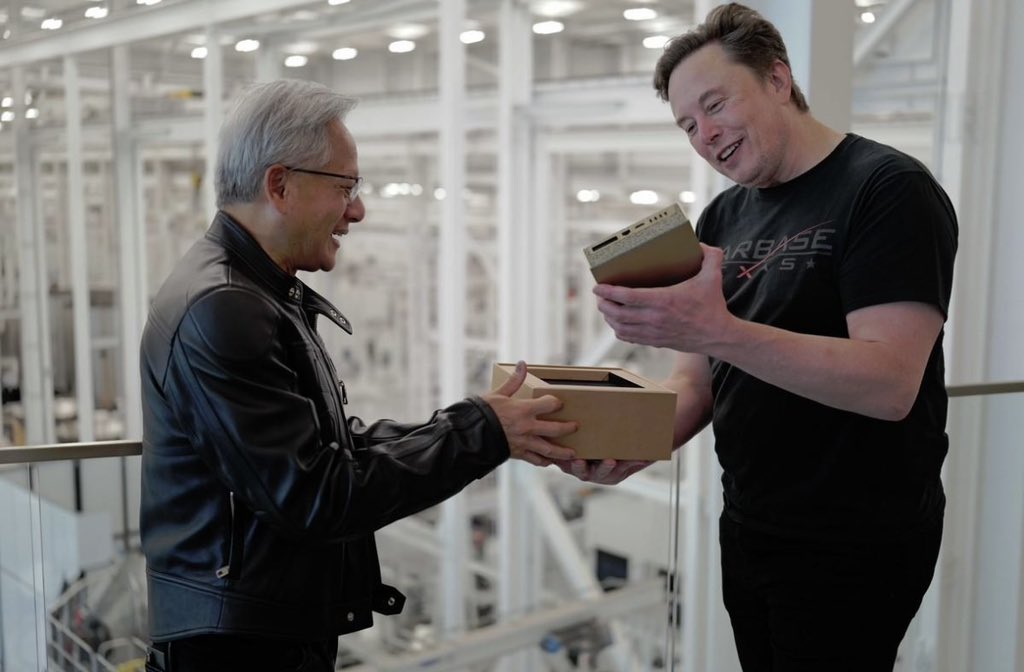
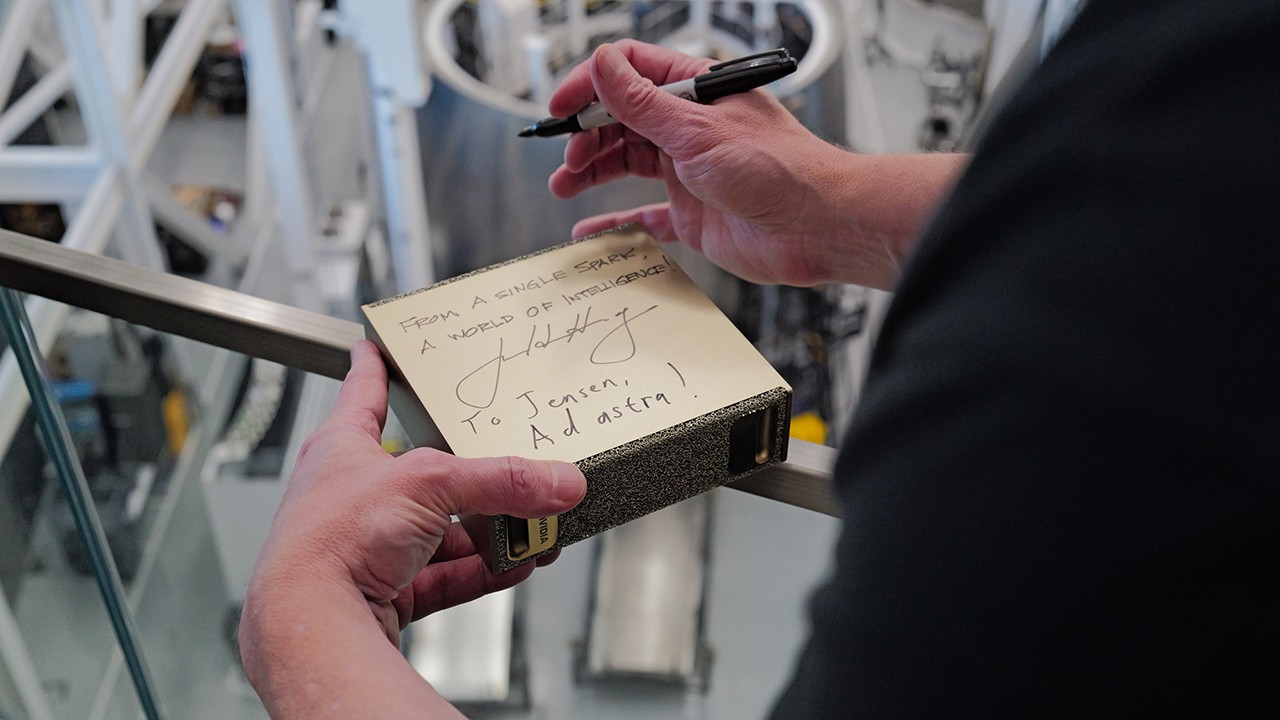
Elon Musk visited Nvidia’s headquarters in Santa Clara, California, on the 24th (local time). It was the day Nvidia CEO Jensen Huang returned to work. According to U.S. news outlet Business Insider, Musk visited the headquarters with his two sons. He also took a commemorative photo with Huang.
Recently, claims surfaced on social media that Musk had paid $800 billion to secure a 25% stake in Nvidia—about 1,100 trillion won. An unverified claim had also circulated on the 22nd that he might acquire a 50% stake in the company.
No official evidence has emerged to support the acquisition rumors. Details of any negotiations or how they might be financed are also unknown.
◆ What happened between the two
Musk publicly criticized Nvidia’s decision when Jensen Huang stepped away from his leadership role. In response to a social media post suggesting Huang be brought in as CEO, Musk said it would be an honor. He also joined a petition calling for Huang’s return.
The two have worked together in the AI industry for many years. In August, Musk said during a SpaceX earnings presentation that he planned to build data centers on the ground and in space. He also disclosed plans to use Nvidia chips for them.
As Musk’s AI business expands, his ties to Nvidia are likely to grow. It is worth examining why rumors about an acquisition involving the two keep resurfacing.
◆ The reporter’s view
Musk’s businesses have something in common. They span a range of fields, including cars, robotics, artificial intelligence, space and satellite communications. AI is the core technology connecting them. Improving AI performance requires enormous computing power.
Tesla collects vast amounts of driving data to develop autonomous-driving technology. It trains AI on the many different situations vehicles encounter on real roads. As autonomous-driving technology advances, the volume of data that must be processed also grows.
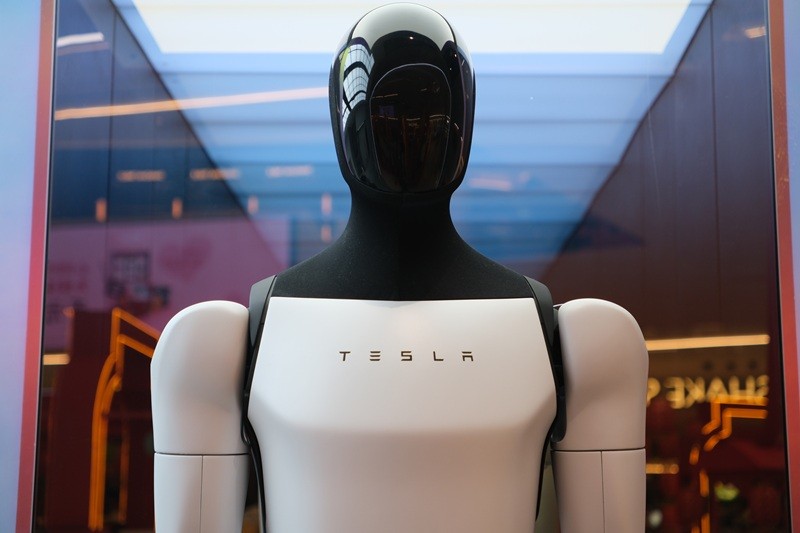
The same is true of Optimus, the humanoid robot. A robot must perceive its surroundings and distinguish between objects. It also needs the ability to make decisions and move independently. Developing these capabilities requires extensive training and repeated testing.
Generative AI system Grok is even more directly tied to computing resources. Developing AI models requires large-scale GPU capacity. Computing resources must continue to be deployed even after a service launches. As the number of users grows, so does the burden of operating data centers.
SpaceX’s plans for space-based data centers follow the same logic. The idea is to use launch vehicles and satellite technology to build AI computing facilities beyond Earth. If the technology proves feasible and economically viable, it could open up a new market for semiconductors.
Musk uses AI to create products and services. Nvidia supplies the technology needed to develop and operate AI. That is why Nvidia matters to Musk.
◆ What Nvidia means to Musk
Nvidia has software and networking technologies in addition to GPUs. It also has platforms for robotics development and autonomous-driving technology. Its strength lies in its ability to connect a range of technologies needed to develop AI.
One of its best-known technologies is CUDA, a software platform that enables developers to use GPUs for complex computing tasks. Many AI companies and research institutions have developed programs based on it. This is one reason switching to other chips can be difficult.
Networking technology is also important in data centers. Training large AI models requires many GPUs to work simultaneously, exchanging data quickly. Nvidia also has the technology to connect them.
In robotics and autonomous driving, Nvidia provides technology for creating virtual environments. Real roads, factories and logistics facilities can be recreated in a digital space, where developers can test a variety of scenarios. This allows AI to be trained before it is deployed in real-world products.
These technologies intersect with most of Musk’s businesses. They can connect everything from semiconductors and AI training to virtual testing and the development of real-world products. Nvidia’s strategic value comes from this technology ecosystem.
◆ If Musk were to gain control of Nvidia
Suppose Musk acquired a substantial stake in Nvidia and gained influence over its management. The biggest change would be the ability to closely integrate AI chip development with finished-product development.
Technology needed for Tesla’s autonomous-driving systems and Optimus could be incorporated at the chip-design stage. Grok, too, could be developed alongside its computing systems. Data center investment plans could also be aligned with the launch schedule for next-generation chips.
The companies could establish a long-term partnership in semiconductor supply. As competition among AI companies to secure GPUs intensifies, a stable supply chain becomes an important competitive advantage. The key question would be how much development time and investment costs could be reduced.
A new business structure could also emerge in the space industry. SpaceX has launch vehicle and satellite communications technologies. Nvidia supplies AI chips and computing systems. If space-based data centers become a reality, launch services, communications and data processing could all be connected.
A bigger change could come in the scope of the business. Musk’s companies currently use AI technology to develop cars, robots and software services. Nvidia sells the infrastructure other companies need to develop AI.
If the two groups of businesses were combined, Musk could expand his influence in the global AI infrastructure market as well. In effect, his businesses would expand from using AI technology to supplying the foundations of the AI industry.
◆ Potential industry impact
Major Nvidia customers include Microsoft, Google, Amazon and Meta. Some of these companies compete with the AI businesses Musk is building. If Musk gained influence over Nvidia’s management, conflicts of interest could become an issue.
Competitors would likely pay close attention to chip supply, pricing and access to next-generation technology. They might speed up efforts to develop their own chips to secure reliable computing resources. They could also increasingly diversify their suppliers.
Competitors in the semiconductor industry, including AMD, could find new opportunities. If more companies seek to reduce their dependence on Nvidia, the AI chip market could also change.
Nvidia is a key supplier underpinning the global AI industry. If a major stake acquisition were actually pursued, it could affect semiconductor supply chains and data center investment. The competitive landscape among global AI companies could also shift.
◆ Practical hurdles
Securing a 25% stake in Nvidia would require an astronomical amount of money. A substantial portion of Musk’s personal wealth is tied up in company shares. Raising a large amount of cash could require selling shares, attracting outside investment and obtaining financing.
Gaining control of the company is a separate matter. Even with a 25% stake, the authority Musk could exercise would depend on the composition of the board and the interests of other shareholders. Antitrust regulation and conflicts of interest involving competitors would also need to be addressed.
Semiconductor manufacturing is also linked to an external supply chain. Nvidia specializes in chip design, while actual production depends on outside manufacturers such as TSMC. High-bandwidth memory (HBM) and advanced packaging are also handled by external suppliers.
Even if Musk gained influence over Nvidia’s management, it would be difficult to control the entire semiconductor supply chain. The AI chip industry depends on a network of companies involved in design, manufacturing, memory and packaging.
◆ What to watch going forward
A practical way for Musk to secure reliable computing resources would be long-term supply agreements. Cooperation on technology development and data center investment is also possible. These approaches could deliver technological synergies at a lower cost than acquiring a major stake.
In-house chip development is another key factor. Tesla has developed its own AI chips for autonomous driving. Securing chips optimized for specific tasks could reduce reliance on outside suppliers.
Musk’s businesses also represent a new market for Nvidia. The company could expand the use of its chips beyond AI data centers into cars, robotics and the space industry. Musk needs computing technology, while Nvidia could gain new customers and markets.
What matters going forward is the semiconductor supply agreements and joint development plans the two groups of companies actually enter into. The scale of data center investment and the direction of in-house chip development are also important. The extent to which plans for space-based data centers take shape is another point to watch.
Competition in the AI industry is expanding beyond models and services to a race to secure computing resources. Musk’s ventures in cars, robotics, AI and space ultimately depend on computing power. As these businesses grow, Nvidia’s strategic value could become even greater.