
In brief
▶ Tesla CEO Elon Musk said the company plans to expand its Starlink satellite internet service to vehicles sold to the general public.
▶ Musk replied on X to a user waiting for Starlink to be built into Tesla vehicles, saying, “I hope we can offer it around the end of next year.”
▶ Musk said Starlink will play an important role in fully self-driving vehicles that do not require driver supervision. The plan is to let passengers use high-speed internet for work, video streaming and other activities, including in areas beyond the reach of cellular networks.
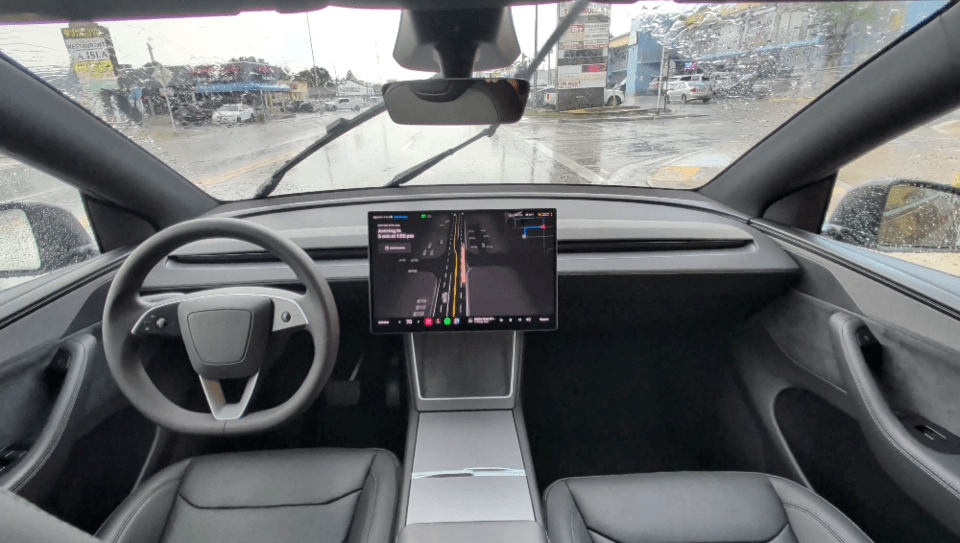
Tesla CEO Elon Musk said he plans to expand SpaceX’s Starlink satellite internet service to vehicles sold to the general public.
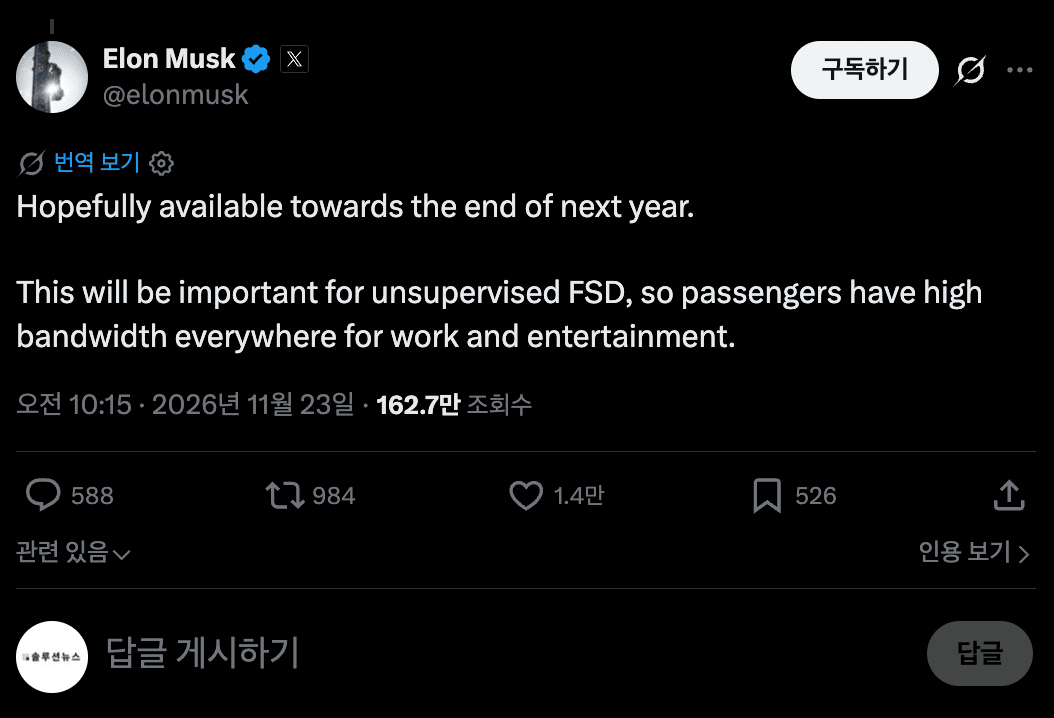
On November 22, Musk responded on X to David Marcus, a former PayPal president, who said he hoped Starlink would be built into all Tesla models, not just the Cybercab. “I hope we can offer it around the end of next year,” Musk replied.
He added that the service would be “important for unsupervised FSD,” explaining that it would give passengers access to high-speed internet for work and entertainment wherever they are.
Musk said in August that he expected Starlink to eventually be built into all cars. This time, he gave a specific target of late 2027. He did not disclose which models would get the feature, how much it would cost, or whether it would be available for vehicles already on the road.
Starlink to debut in the Cybercab
The first Tesla model to feature Starlink is the Cybercab, a two-seat robotaxi with no steering wheel or pedals. It recently began carrying members of the public in Dallas, Texas.
The Cybercab has a flat Starlink terminal built into the rear of the vehicle. It was designed to connect to satellite internet without requiring a separate external antenna.
Ashok Elluswamy, Tesla’s head of AI, previously said Starlink in the Cybercab is used for fleet management, navigation and customer support. The service is reportedly not yet available for passengers to use.
Musk plans to expand the satellite internet service, currently used to operate vehicles, to passengers in the future.
Driverless autonomy and satellite internet
Tesla vehicles currently connect to the internet through cellular networks. In the United States, the company offers its Premium Connectivity service for $9.99 a month. Some internet-based features may be limited in areas without cellular coverage.
Reliable connectivity is even more important in vehicles without drivers. A network connection is needed to monitor a vehicle’s location and status and to provide remote assistance when unexpected situations arise. It also connects passengers with customer service.
Starlink can connect vehicles to the internet via satellite, even in areas with limited cellular infrastructure. It could supplement existing cellular networks for fleet management and passenger internet access.
Tesla has said that its self-driving features can operate without an internet connection. Starlink would serve as communications infrastructure for autonomous vehicle operations and passenger convenience.
Tesla’s FSD currently available to private owners requires drivers to continuously monitor road conditions. The company began rolling out its new FSD version, V15, to some users on November 21. Autonomous driving that does not require driver intervention is currently offered on a limited basis in some robotaxi operating areas.
Adapting existing vehicles remains a challenge
Adding Starlink to vehicles sold to the general public will require space for an antenna. The Cybercab was designed from the outset to have a satellite internet terminal built into its body.
To add the feature to existing models such as the Model 3 and Model Y, Tesla would need to assess antenna placement and vehicle structure. The company is reportedly also pursuing patents related to built-in Starlink antennas for vehicles. The specific installation method has not been disclosed.
Availability is also expected to vary by country because of local telecommunications regulations. Musk said Starlink cannot be used in China, where the service has not received authorization to operate.
Starlink officially launched service in South Korea on December 4 last year. Tesla’s supervised FSD is also available for some vehicles in the country.