
AI cheating raises fundamental questions
Students who relied on AI for answers actually saw their test scores fall, prompting a reassessment of foundational skills and study habits
College degrees retain economic value, while the ability to apply knowledge and gain practical experience is becoming more important
◆ What’s happening
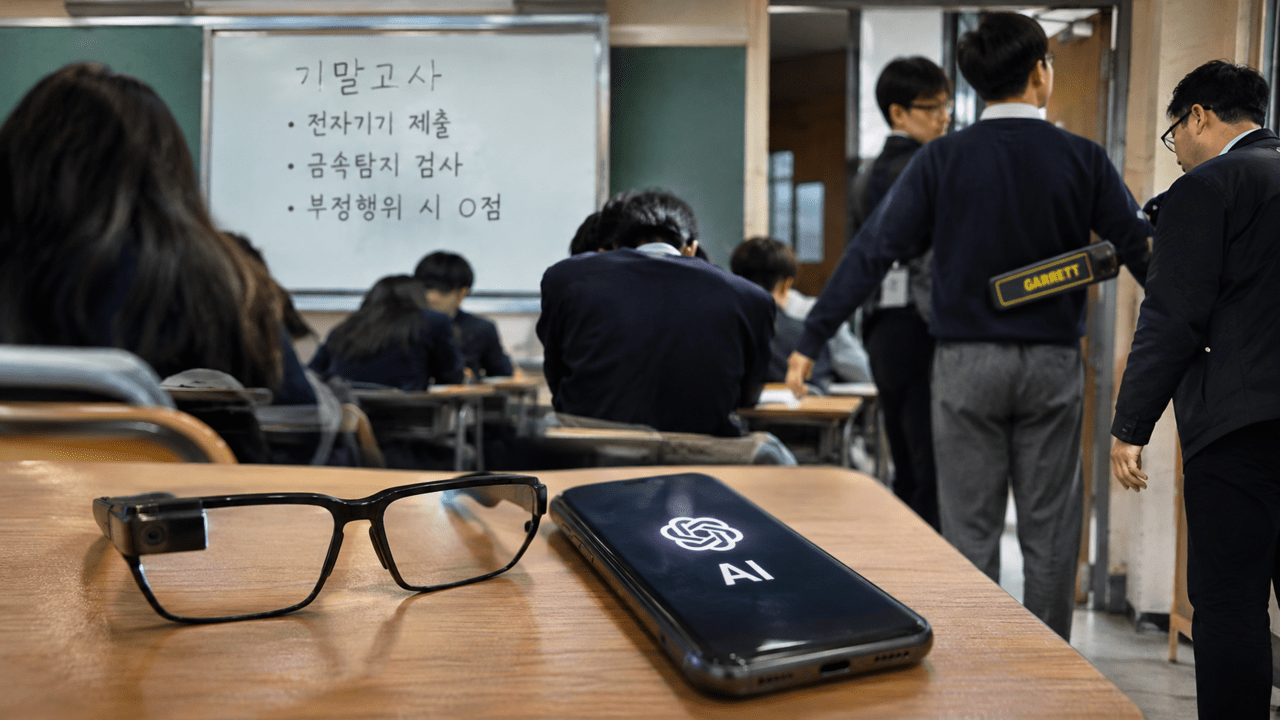
High school final exams are beginning to look like the College Scholastic Ability Test (CSAT). Before receiving their exam papers, students are screened with metal detectors and have their glasses and clothing checked. School Wi-Fi is also shut down. The measures are intended to prevent cheating with AI. On the 24th, the Ministry of Education briefed the Cabinet on measures to counter cheating with smart devices during middle and high school exams.
Before exams, students must hand in their phones and other electronic devices. Bags are kept away from exam rooms, such as in the school auditorium. Schools are also advised to recommend clothing without buttons, where tiny cameras could be concealed. Glasses and clothing are checked before each exam session, and students’ use of their own writing instruments is restricted. The measures also include having hallway supervisors use smartphone apps to check for Wi-Fi and Bluetooth signals.
Penalties are also set to become harsher. Four cases of cheating with smart glasses were detected in school exams this year. The Education Ministry will recommend that schools give students caught cheating zeroes in every subject taken that day and impose disciplinary measures ranging from suspension to expulsion. Schools will need to amend their own rules before the measures can be applied.
National technical qualification exams are also set to change. The Ministry of Employment and Labor and the Human Resources Development Service of Korea have proposed extending the period during which offenders are barred from taking exams from three to 10 years, and increasing the maximum prison term from two to five years. They also plan to reform exams that focus on written tests by increasing the weight of practical tests and interviews.
Ensuring fair exams is an immediate priority. In South Korea, where school grades and CSAT scores directly affect university admissions, a loss of trust in exams could destabilize the entire admissions system.
But this situation raises a fundamental question that goes beyond eliminating cheating: In an era when AI can solve exam questions almost perfectly, what should our children be studying for?
◆ A closer look
AI performance also drew attention during the 2027 CSAT, held on the 19th. In an experiment conducted by the JoongAng Ilbo using the latest AI models, ChatGPT and Claude achieved perfect scores in Korean, math and English. A report also said that AI solved the CSAT math questions—which are allotted 100 minutes— in 109 seconds. The questions and conditions varied across individual experiments.
Students spend years preparing for these exams, from elementary through high school. AI can provide answers and explanations in a short time. Now that machines have acquired the problem-solving skills needed to score highly on the CSAT, it is time to reconsider the learning methods that South Korean education has long emphasized.
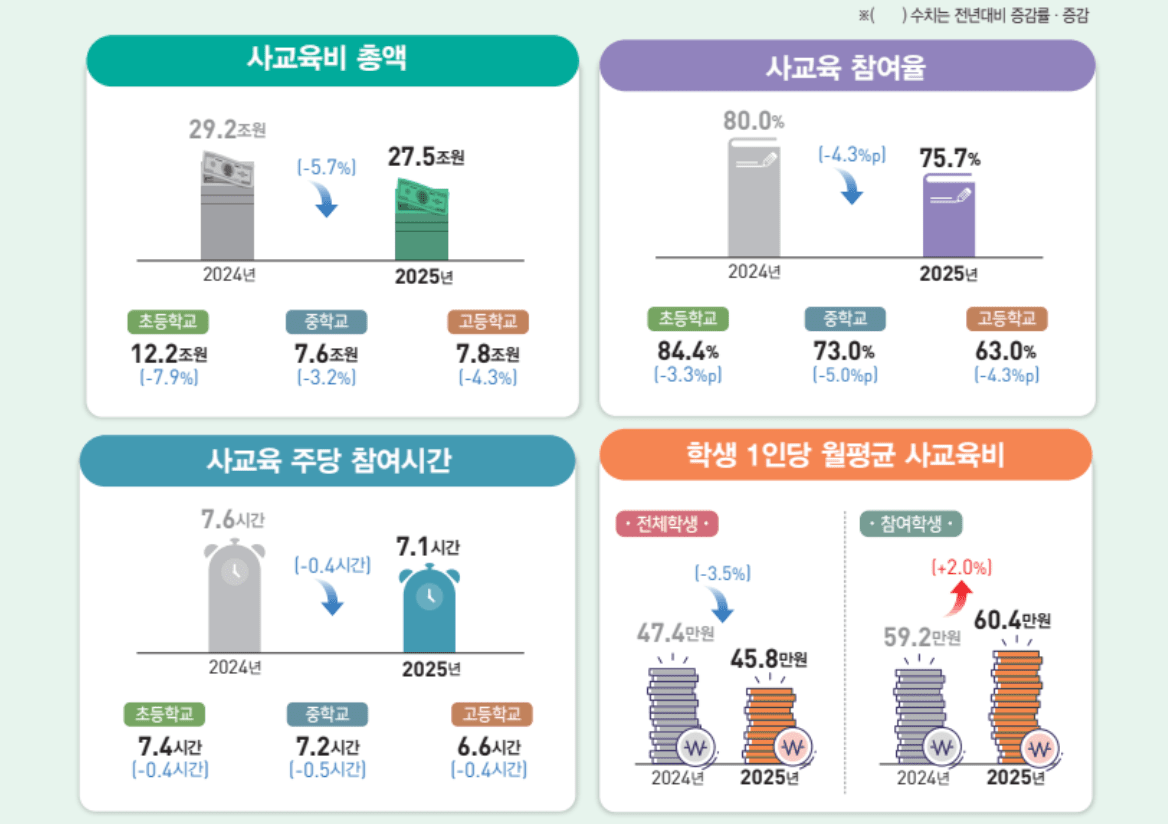
According to a survey of private education spending in 2025, released this year by the Education Ministry and the National Data Office, total spending on private education was 27.5 trillion won, down 5.7% from the previous year. The rate of participation in private education also fell to 75.7%. However, students who did participate spent an average of 604,000 won per month, up 2%.
In South Korea, studying is both a way to build knowledge and a means of competing for university places and majors. The university a student can attend depends on their school grades and CSAT scores. University admission also affects later employment and career paths. That is why students and parents cannot easily step away from the admissions race, no matter how capable AI becomes.
Starting with the 2028 university admissions cycle, South Korea will introduce an integrated CSAT with no elective subjects in Korean, math, social studies or science, along with a five-tier high school grading system. Subject knowledge and exam scores will remain important evaluation criteria. Today’s students must study under the existing admissions system while also preparing for a society in which they will work alongside AI. It is worth considering how closely the abilities demanded by admissions align with those needed in the future.
◆ The reporter’s view
AI is changing long-held assumptions about studying. In the past, people who knew a great deal and could apply that knowledge quickly had an advantage. Fluency in a foreign language and the ability to solve complex math problems were also valuable individual assets. Now, AI can help with many of these tasks.
That can make it seem as though there is less need to study. People can ask AI about things they do not know, translate foreign languages in real time, and delegate complex calculations and document writing. The learning environment has changed from an era when people had to remember all information and do every task themselves.
One distinction is important: the ability to use AI to produce a good result is not the same as a person’s own knowledge and reasoning skills. Getting a math problem right is not the same as understanding the underlying mathematical principles. Even if AI writes a report, the user still needs to review it, find errors and explain its contents to others.
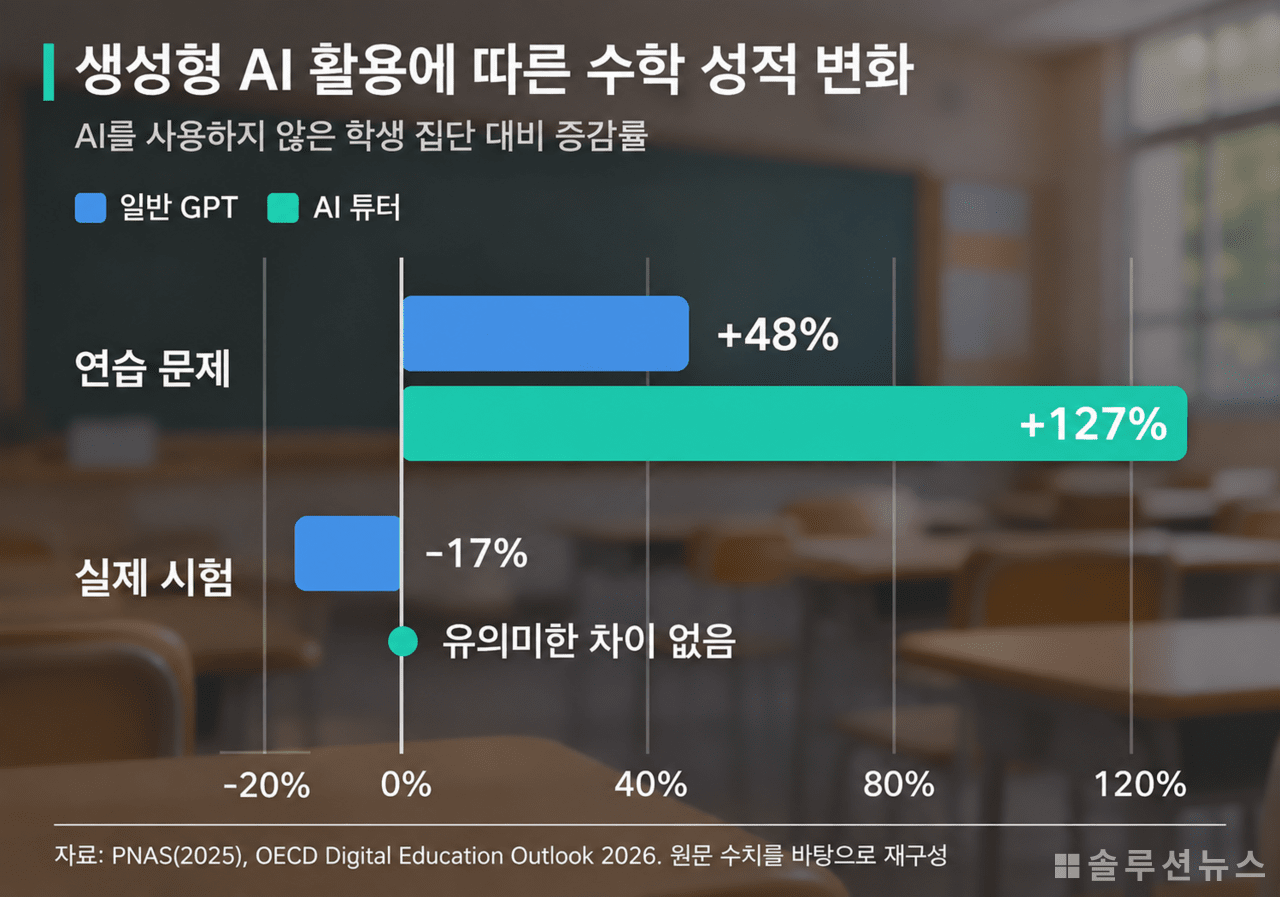
Researchers at the University of Pennsylvania analyzed the effects of using AI to learn math among about 1,000 Turkish high school students. The study was published last year in the Proceedings of the National Academy of Sciences (PNAS). Students who had unrestricted access to ChatGPT scored 48% higher on practice problems than students who studied without AI. But when they later took a test without AI, their scores were 17% lower.
Students who used an AI tutor designed to provide hints instead of answers scored 127% higher on practice problems. They did not experience a significant drop in scores on the test taken without AI. In other words, learning outcomes differed between students who left problem-solving to AI and those who used AI to learn how to solve problems.
Other research has found that using AI appropriately in education can improve learning. A study published in May in the journal Frontiers in Psychology combined and analyzed data from 36 empirical studies on higher education involving 7,229 participants. Overall, AI-assisted education had positive effects on comprehension and creative thinking. The greatest benefits were seen in collaborative learning, where students discuss and solve problems together.
This is a familiar experience for South Korean students. They may think they understand a problem after an instructor solves it at a private academy, only to get stuck when they try it alone. The same applies to answers and explanations provided by AI. What students learn becomes genuine ability only when they can explain it in their own words and apply it to new problems.
That is why studying remains important in the AI era. The cost of getting an answer is falling. But individuals still need to judge what questions to ask, verify whether an answer is accurate and apply it to real situations. These abilities, too, are built on a foundation of knowledge and learning experience.
◆ Differing perspectives
Changing assessment methods in South Korea first requires addressing fairness. The CSAT evaluates students nationwide against a common standard. Exams based mainly on multiple-choice questions have clear grading criteria and make results easy to compare. They are also an efficient way to administer university admissions nationwide.
Expanding oral exams and project assessments could offer a wider view of students’ understanding and reasoning. But differences in grading among evaluators and the potential for subjective judgment must also be considered. Students who are comfortable with presentations could have an advantage, and new demand for private tutoring to prepare for interviews and debates could emerge.
There is also disagreement about whether oral exams accurately show an individual student’s learning ability. They could disadvantage students with severe test anxiety or difficulty expressing themselves verbally. Even students with solid knowledge could receive low marks if they are nervous or unaccustomed to speaking about what they know.
AI-detection software also has limitations. In 2023, researchers at Stanford University analyzed seven AI detectors and found that, on average, they incorrectly flagged writing by people whose first language was not English as AI-generated about 61% of the time. Schools should be cautious about holding students responsible for cheating based solely on detector results.
More varied assessment methods would also increase teachers’ workloads and the time needed to evaluate students. Differences in the AI services and device performance available to students must also be taken into account. A key challenge for South Korean education is to find ways to assess students’ reasoning and actual understanding while preserving the fairness and efficiency of existing exams.
◆ Should students keep studying Korean, English and math as they do now?
AI can write, calculate and translate. It is worth reconsidering why students should spend so many years studying Korean, math and English. Whether it is still appropriate to teach and assess every subject in the same way is a separate question.
Korean could become even more important in the AI era. Literacy—the ability to read and understand meaning and context—is needed to review material generated by AI. The same is true of distinguishing fact from opinion and identifying logical errors. The ability to frame questions precisely to get the result one wants also begins with language comprehension.
Math is not just about calculation; it is the study of understanding relationships between numbers and finding ways to solve problems. Even if AI takes over complex calculations, people will still need to decide what calculations are needed and judge whether the results make sense in the real world. Mathematical thinking is needed across fields such as economics, finance, science and engineering.
The purpose of learning English could change significantly. As real-time translation technology advances, people can read foreign materials and talk with people overseas without being proficient in another language. Understanding a language directly can still help people grasp context and cultural nuances that might be lost in translation. The approach of focusing on test-oriented grammar and vocabulary memorization may need to be reconsidered.
Science and social studies also provide the knowledge base needed to judge information from AI. Understanding scientific principles helps people evaluate medical and environmental information. Knowledge of economic and social structures is needed to interpret information about policy and finance. The questions people ask are also shaped by what they already know and have experienced.
Education for future generations could focus on solid grounding in core subjects while providing more opportunities to apply knowledge. Some of the time spent repeatedly solving the same types of problems could be devoted to understanding concepts, discussion, experiments, writing and inquiry-based activities. It is important to assess not only what students know, but also how they can use what they have learned.
◆ Will private education decline?
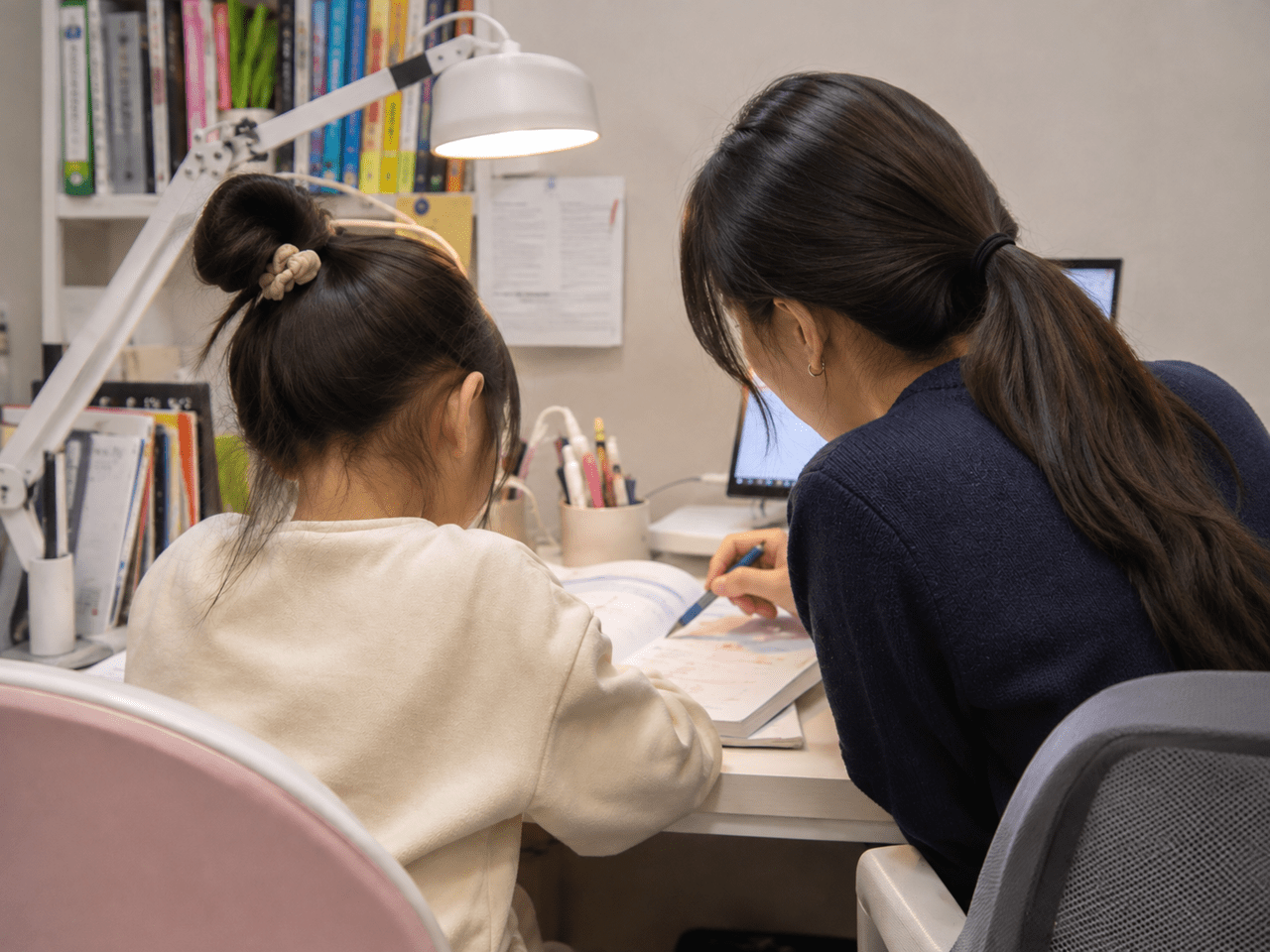
AI is a new variable in South Korea’s private education market. Students can take a photo of a math problem they do not understand and check the solution step by step. They can practice speaking English when they need a conversation partner, or get difficult science concepts explained at a level suited to their learning. They can ask the same question repeatedly until they understand.
AI can now offer the kind of personalized explanations that once required a private tutor. As learning becomes possible regardless of time or place, some demand for supplementary instruction could shift to AI. It could also create new learning opportunities for students who cannot afford private tutoring.
South Korea’s private education market serves many needs beyond learning school subjects, including admissions information, grade management, university counseling and advanced problem-solving. As long as competition for places at top universities continues, it is unclear whether wider access to AI alone will significantly reduce private education spending. New forms of admissions education and private tutoring products built around AI could also emerge.
Educational inequality also needs attention. Learning outcomes could vary depending on access to high-performance AI services, guidance from teachers, parental support and students’ ability to use the technology. Even when using the same technology, students who use AI to develop independent thinking may achieve different results from those who rely on it to do their assignments for them.
Parents need to consider not only how much their children should study, but also which subjects and skills deserve their time and money. They need to distinguish between areas where AI can provide sufficient support and areas that children need to experience and learn for themselves.
◆ Will a degree from a good university still be valuable?
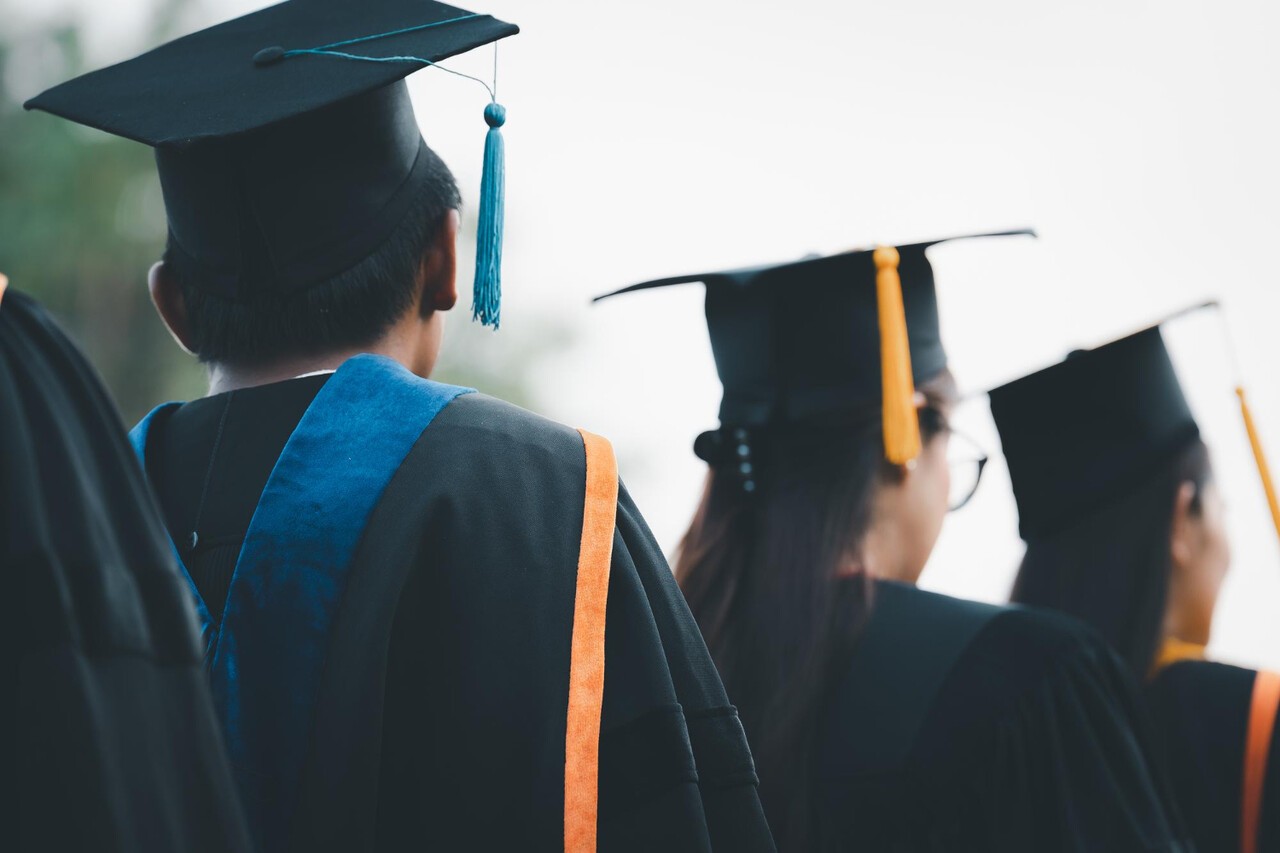
It is difficult to discuss why studying matters in South Korea without addressing university admission. If AI can explain specialized knowledge and even create reports and programs, is it still worthwhile to spend years competing for a place at a good university? A good place to start is by looking at the effect a university degree has on employment and income.
According to Education at a Glance 2025, published by the Organisation for Economic Co-operation and Development (OECD), 71% of South Koreans aged 25 to 34 have completed higher education—the highest rate among OECD member countries. The OECD average is 48%. This means that a large share of young people have a university education.
There is also a wage gap by education level. OECD data show that South Korean workers who completed higher education earn an average of 31% more than workers who completed only high school. The employment rate among 25-to-34-year-olds with higher education was 80%, below the OECD average of 87%. The figures point both to the economic benefits of higher education and to the challenge of providing enough job opportunities to match the population’s high level of education.
Advances in AI may also affect the relationship between university education and the labor market. AI is already performing some tasks traditionally assigned to new employees, such as research, document writing, translation and basic coding. The way companies hire and train new employees could also change.
In this environment, what people can actually do will matter alongside what they studied at university. Hiring practices that assess academic achievement, relevant work experience, project skills, problem-solving ability, communication and collaboration experience together deserve attention.
The value universities provide could also change. Lectures and specialized knowledge are now more accessible through AI. But hands-on experiments and research, guidance from experts, and the experience of collaborating with peers on projects remain important.
In South Korea, where education has long focused on which university a student gets into, more attention should also be paid to what students learn and what experiences they gain after enrolling. Whether the time and money spent earning a degree translate into real skills and career opportunities could become an important consideration for future generations.
◆ Around the world
AI-assisted cheating is not a problem unique to South Korea. Concerns about cheating with smart glasses have also grown in Taiwan, China and elsewhere. As wearable AI devices become smaller and more capable, it could become harder to prevent cheating using conventional exam-supervision methods.
Princeton University in the United States decided this year to end its 133-year tradition of unsupervised exams and introduce proctored tests. Stanford University also changed its assessment policy to allow in-person proctoring. These moves are intended to check students’ individual knowledge and learning levels.
Handwritten work and oral exams are also attracting renewed attention. At the University of California, Berkeley, use of handwritten “Blue Book” exam booklets has increased. At some universities, students explain their assignments in person to a professor or teaching assistant and answer questions to demonstrate their understanding. It has become harder to tell how much a student has actually learned from the finished assignment alone.
Some universities in Australia and the United Kingdom are distinguishing between assessments that restrict AI use and those that allow it. Basic knowledge and individual learning ability are assessed without AI. For tasks resembling real-world work, students are allowed to use AI, and the process of checking the results is also evaluated.
Some South Korean universities are also asking students to verify drafts written by AI or submit a record of the prompts they entered alongside their assignments. These efforts broaden assessment beyond the finished product to consider what questions students asked and what evidence they used to reach their conclusions. This is an approach worth considering for South Korean education. There are many options between banning AI in every exam and allowing unrestricted use in every assignment. Knowledge students must acquire on their own can be assessed separately, while their ability to solve problems with AI can be evaluated in other ways.
◆ How should future generations study? (Solutions)

For students preparing to enter university now, studying for school exams and the CSAT is important. Learning according to current assessment standards can give them the opportunity to enter the university and major they want. For children such as elementary and middle school students, who still have a long time before entering the workforce, it is worth thinking about their learning direction from a long-term perspective.
Learn foundational knowledge independently. Even if AI can provide all the information, students need existing knowledge to understand new material and judge whether it contains errors. Daniel Willingham, a cognitive scientist at the University of Virginia, has also emphasized the importance of students developing their own abilities in a subject before using AI. Reading and learning core subjects remain essential ways to build knowledge and thinking skills together.
Ask AI for explanations rather than answers. Try to solve a math problem alone first, and ask AI for a hint if you get stuck. You can also ask which part of your solution is wrong. After hearing the explanation, try a similar problem again without AI to check whether you really understood it.
Explain what you have learned in your own words. If you get a problem right, practice describing the principles you used to solve it. In Korean and social studies, students can discuss their ideas with AI and examine different perspectives and supporting evidence. The ability to organize what they know logically and communicate it to others is another skill they need to develop through study.
Build experience applying knowledge in practice. This could mean using principles learned in science class in an experiment, or applying math to solve everyday problems. It is also important to investigate subjects of interest and work on projects with friends. If you use AI, it can help to keep a record of what you asked, which sources you reviewed and what you changed.
Parents can also change the questions they ask their children. Along with asking how many questions they got right, they can ask what principles they used and whether they can apply what they learned to other problems. It has become important to identify the gap between the answers provided by AI and what children actually understand.
◆ What kind of education will we pass on to future generations?
High school final exams this fall will be the first test of how the Education Ministry’s measures against cheating with smart devices work in schools. It remains to be seen how effectively metal detectors, clothing checks and communications blocking will be implemented. Reforms to national technical qualification exams have also been announced, including a greater emphasis on practical tests and interviews.
The Education Ministry’s measures focus on management, supervision and tougher penalties to ensure fairness. They do not include changes to the assessment system itself. Preventing cheating with technology and creating an education system suited to the AI era need to be discussed together.
Children who entered elementary school this year will graduate from high school in 2038. If they go to university, they will enter society in the early 2040s. It is difficult to predict exactly what jobs will exist then and which tasks will be automated. Even occupations and technologies considered promising today could change significantly.
That is why education that focuses only on teaching skills for specific jobs is not enough to prepare students for the future. They need the ability to learn new things, adapt to changing environments and understand complex problems. It is also important to connect knowledge learned in one field to other fields and to gain experience working with others.
Studying will remain necessary in the AI era. But the standards for judging what abilities are developed through the time, effort and money spent on education need to change. It is time to consider how much time should go toward repeatedly learning tasks machines can perform, and how much should be devoted to areas where people need to understand and make judgments for themselves.
For a long time, South Korean education has asked what students should study to get into a good university. Now it must also ask what kind of people they will become after entering university and what problems they will be able to solve once they join society.
We are entering an era in which AI can get a perfect score on exams. The education future generations need is education that builds abilities that remain after the exam is over.