
Gyms offer exercise equipment and indoor facilities, while running lets you choose when and where to work out.
You can start exercising at home without paying a facility fee, though you may want to buy shoes and other equipment.
The most common reason people do not exercise is a lack of time; accessibility matters as much as cost.

Editor’s note: On the way home from work, we face the same familiar questions: What should I have for dinner? Should I exercise when I get home? When will I finish the chores I’ve been putting off? In the morning, we think about all the things we’ll do after work, but once we get home, the urge to rest often takes over.
Ordering delivery can easily cost more than 10,000 won for one meal, while cooking means shopping for ingredients and doing the dishes. The gym membership we bought in hopes of exercising just ticks away unused. We lie down to rest for a moment and look at our phones, and before we know it, it is time to sleep.
The days pass without anything out of the ordinary, but by the end of the month we have spent more than we expected, and it is hard to remember what we did for ourselves. Still, it is not realistic to expect ourselves to be productive every day.
How do we spend our money and lose our time during the hours after work? We ran the numbers to see how the choices we make every day can add up to a significant difference over the course of a month.
Deciding to exercise after work brings its own set of questions: Should you join a gym, run near home, or spread out a mat in the living room? Each option comes with different costs and takes a different amount of time.
We assumed a three-month period with exercise three times a week. At 13 weeks for three months, that comes to 39 sessions. If each session lasts one hour, you will spend a total of 39 hours exercising over the three months.
We calculated the costs of going to a gym, running, and exercising at home. We also looked at the exercise environment, travel time, and the advantages and drawbacks of each option.
How much does it cost to go to the gym?

Gym fees vary depending on the area, the size of the facility, and the length of the membership. For this calculation, we used a monthly fee of 30,000 to 100,000 won at a typical privately run gym. Discounts for long-term memberships, promotions for new members, and personal training fees were excluded.
Over three months, that comes to 90,000 to 300,000 won. Exercising three times a week works out to about 2,308 to 7,692 won per session. There are also public sports centers run by local governments, some of which charge around 30,000 to 60,000 won per month.
At a gym, you can do cardio on treadmills and stationary bikes, as well as use a range of strength-training machines for different parts of the body. One advantage is that you can exercise even when it rains or fine-dust levels are high.
There is also a tax benefit. Since July 2025, fees for using gym and swimming-pool facilities have been eligible for the cultural expenses tax deduction. Workers with annual salaries of 70 million won or less can receive a 30% deduction when they use a participating facility.
Some facilities charge separately for workout clothes and lockers. During after-work peak hours, you may have to wait to use popular equipment. You should also consider the facility’s operating hours and the time it takes to travel to and from home.
How much does it cost to start running?

Running does not require a facility fee. You can start at a nearby park or trail, and there are no set operating hours. If you already have workout clothes and suitable running shoes, you can exercise without spending anything extra.
In a comparison test of seven carbon-plated running shoes published by the Korea Consumer Agency in October 2026, prices ranged from 189,000 to 279,000 won. These shoes have a carbon-fiber plate built into the sole, but they are not essential for someone just starting to run.
We set a budget of 100,000 won for running shoes. If you run 39 times over three months, that works out to about 2,564 won per session. If you keep wearing the same shoes for the next three months, you will not need to spend more on another pair.
Running lets you choose how long and how far to go, and you do not have to take the same route every time. Starting near home can also reduce the time spent traveling to exercise.
Running is affected by the weather. Rain or snow may make your usual route difficult to use, and in winter it is already dark by the time you leave work. It is worth checking whether there is a safe place to run nearby at night.
Does exercising at home cost nothing?
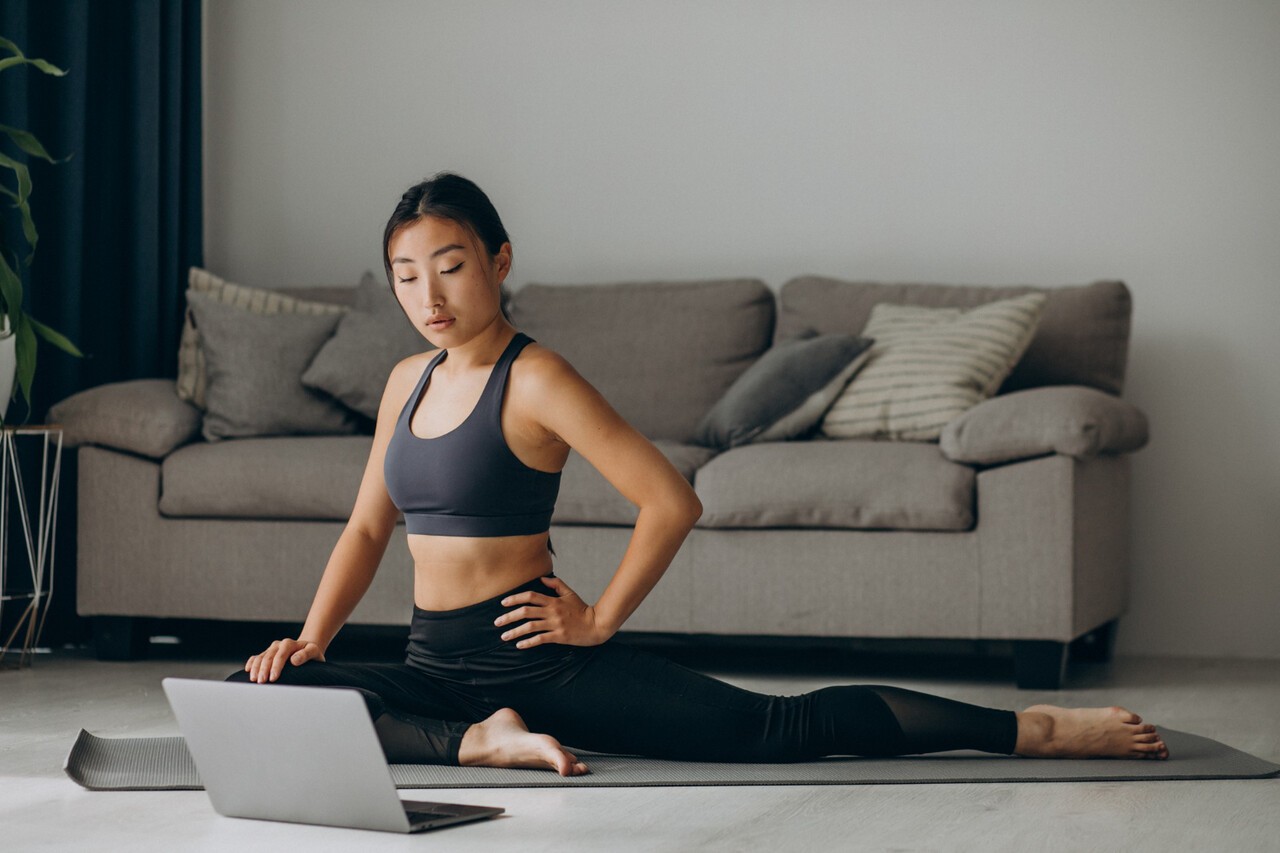
At home, you can do bodyweight exercises such as squats and stretches without any equipment. Free workout videos mean you do not have to pay for instruction, either.
We assumed a one-time expense of 50,000 won for exercise items such as a mat and dumbbells. If you work out 39 times over three months, that comes to about 1,282 won per session. The cost will rise if you subscribe to paid workout videos or buy additional equipment.
The biggest time saving when working out at home is avoiding travel. You do not need to get ready to go out to exercise, and you can split a workout into two 30-minute sessions—for example, one before dinner and another a few hours before bed.
In apartment buildings, there may be limits on jumping or dropping heavy equipment. It can also be difficult to tell whether you are using the correct form when exercising alone. There are limits, too, on the variety of equipment you can use.
How much do people spend on exercise?
According to the 2025 National Sports Participation Survey, released by the Ministry of Culture, Sports and Tourism in January, 62.9% of people exercised regularly at least once a week for 30 minutes or more per session. The share who exercised at least twice a week was 52.2%.
The most popular activities were walking (40.5%), bodybuilding (17.5%), and hiking (17.1%). Average monthly spending on sports and physical activity was 62,000 won, or 186,000 won over three months.
Lack of time was the most common reason people did not exercise regularly (61.3%), followed by lack of interest (50.8%) and poor access to facilities (31.3%). Respondents could select more than one answer.
How many minutes does a one-hour workout actually take?
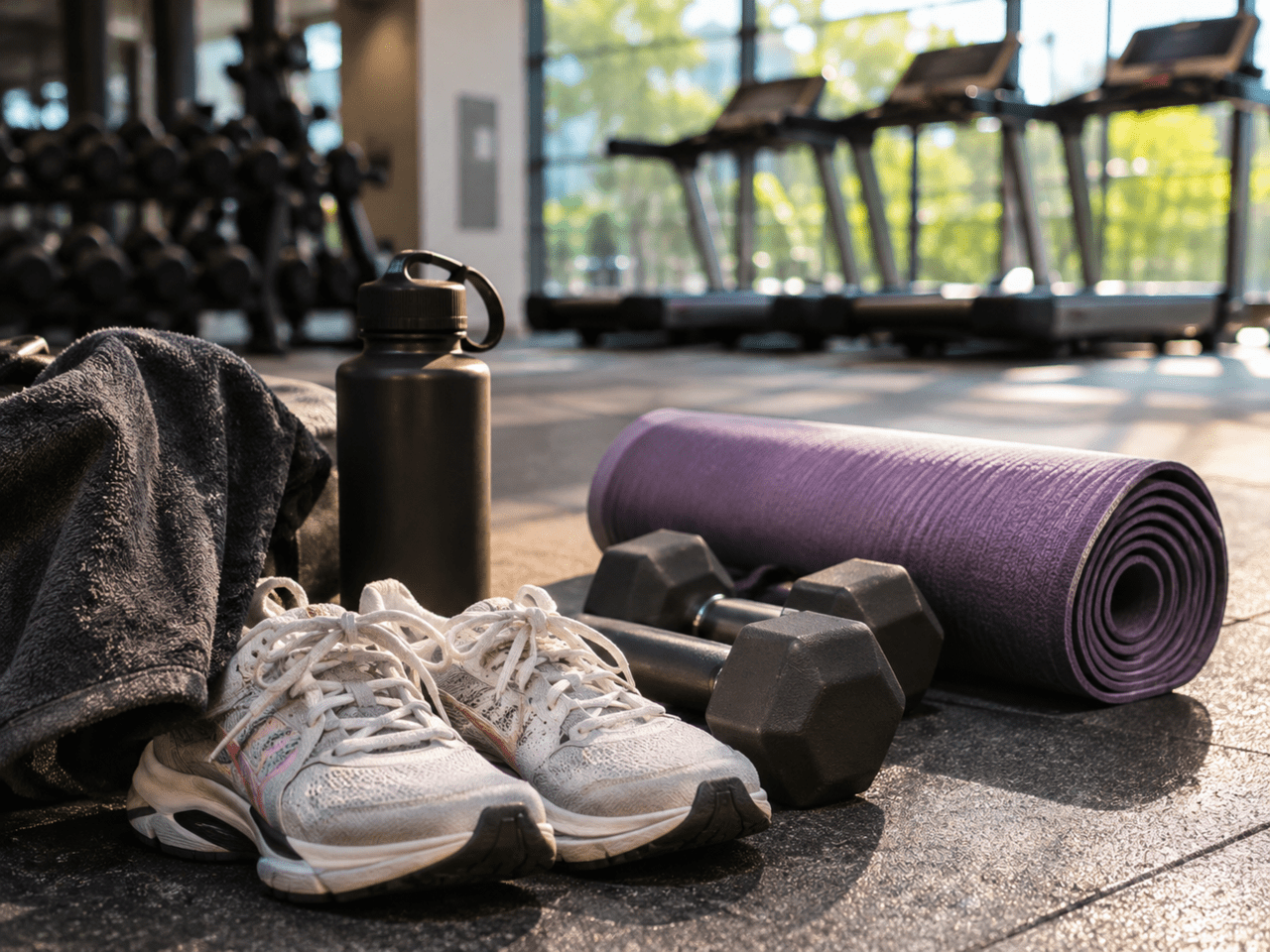
We assumed it takes 10 minutes to walk from home to the gym. Add 20 minutes for the round trip to an hour of exercise, and the total is one hour and 20 minutes. Three sessions a week add up to four hours. Over three months, the time spent traveling to and from the gym alone comes to 13 hours.
When choosing a gym, it is worth looking at the travel distance, operating hours, and available equipment as well as the membership fee. You could tour the facility before signing up or try a day pass to see what it is like to work out there.
If you are thinking of running, check whether there is a suitable route near your home. For home workouts, start by finding enough space to lay out a mat.
Another option is to keep track of your exercise dates, time, and expenses for about two weeks. Knowing how often you can realistically work out each week can make it easier to plan your exercise schedule for the month.
After work, our bodies feel heavy. We know we should move after sitting all day, but actually getting started is not easy. Some days bring evening plans; on others, we get home later than usual.
There will be weeks when you plan to exercise three times but manage only twice. That does not mean you need to give up on the remaining day, too.
We hope exercising after work does not become yet another chore. There can be days when you work up a sweat at the gym, days when you take a light run around the neighborhood, and days when you simply stretch for a little while at home.