
The 2027 College Scholastic Ability Test (CSAT) will be held as scheduled on November 19.
Education supervisors will be assigned to test sites, and hotlines will link local education offices with the Ministry of Education’s situation room.
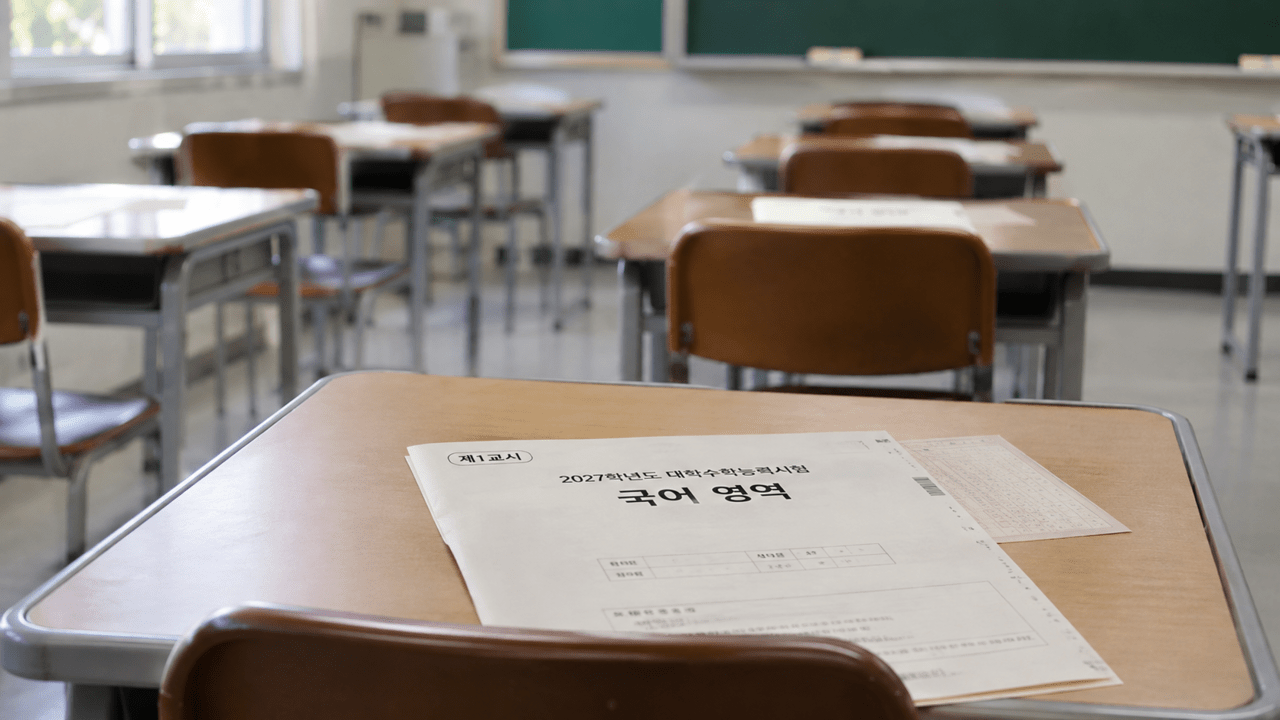
The Ministry of Education said it will hold the 2027 College Scholastic Ability Test (CSAT) as scheduled on November 19, despite concerns about cheating with AI smart glasses. It will assign dedicated personnel to all 1,312 test sites nationwide and respond firmly to cheating, including by invalidating exams and restricting candidates from taking future tests.
The ministry presented its “Response Plan for AI Smart Glasses” at a full meeting of the National Assembly’s Education Committee on November 16. Following a series of cheating cases involving advanced electronic devices in university entrance exams and national certification tests, it plans to strengthen CSAT supervision and on-site response procedures.
A total of 551,864 candidates have registered for this year’s CSAT.
Dedicated personnel at all 1,312 test sites
The Ministry of Education will assign at least one dedicated staff member to each of the country’s 1,312 CSAT test sites to help identify smart glasses and respond on site.
The staff will include education supervisors who have received special training. If an exam proctor suspects a candidate’s glasses are smart glasses or has difficulty identifying them, the dedicated staff member will assist with an on-site assessment.
An emergency contact system will also be established for cases that test sites cannot assess on their own. Hotlines connecting test sites with provincial and metropolitan education offices and the Ministry of Education’s situation room will enable a swift response to suspected cases.
The ministry has distributed training videos and manuals covering the appearance of smart glasses, how to identify them, and supervision procedures. It has also provided actual smart glasses to local education offices for use in proctor training.
Recently released smart glasses can look much like ordinary glasses while incorporating cameras, communications functions, and other features, making them difficult to identify at test sites. The ministry plans to improve on-site response capabilities through dedicated staff and proctor training.
Plan to extend exam ban to three years
The ministry will apply a zero-tolerance policy to cheating with smart glasses. If a candidate is found to have used them to cheat during an exam, the test will be invalidated and the candidate will be barred from taking the CSAT the following year. Depending on the circumstances, the ministry may file a complaint or request an investigation on suspicion of obstruction of official duties through deception under the Criminal Act.
The ministry also plans to pursue legislative changes to strengthen penalties for cheating. It will consult with the National Assembly on extending the current one-year period of ineligibility for taking the exam to three years for the relevant violations.
A case of cheating with smart glasses was reportedly detected during Yonsei University’s essay-based admissions exam in October. On November 15, the top-ranked candidate in the tax accountant examination reportedly turned themselves in, admitting to using a miniature camera to photograph exam questions and AI to check the answers.
In light of these cases, the ministry plans to step up supervision at the CSAT for smart glasses and emerging electronic devices, including miniature recording equipment.
Limits to detecting miniature cameras
The ministry is also considering ways to address devices that are difficult to identify with the naked eye, including miniature cameras, as well as smart glasses.
Miniature recording equipment can be difficult to detect through ordinary visual inspections because it is small and comes in many forms. With the exam approaching, the ministry is taking a cautious position on introducing new detection equipment at all test sites nationwide.
For this year’s CSAT, the ministry plans to enforce existing restrictions on bringing or possessing electronic devices and to strengthen on-site checks through staff dedicated to smart glasses.
Candidates must comply with rules on prohibited items and items permitted during the exam. Electronic devices that are not allowed, such as mobile phones, must be handed over at the direction of proctors before the test begins. The ministry will assess whether technical detection equipment, such as radio-frequency detectors, can be used with specialist organizations before considering its introduction for next year’s CSAT.
Other national certification exams are also taking steps to address the issue. The Human Resources Development Service of Korea is working on an AI-based cheating detection system, radio-frequency detectors, and expanded CCTV coverage. The Financial Supervisory Service is also strengthening checks for smart glasses during the certified public accountant exam.
Strengthening protections for proctors
The ministry will also strengthen protections for proctors in anticipation of disputes with candidates that may arise during efforts to detect cheating.
It plans to extend the coverage period of liability insurance for CSAT proctors from two years to three and to improve working conditions, including by adjusting proctor allowances.
The ministry will also work with universities to strengthen exam supervision and management procedures so they can respond to new forms of cheating in university entrance exams.
The ministry plans to deploy dedicated smart-glasses personnel and an emergency response system for this year’s CSAT, and to review technical detection measures and related institutional improvements after the exam.
“We will respond thoroughly to new forms of cheating while taking care to ensure that innocent candidates and proctors do not face unnecessary burdens or harm,” the Ministry of Education said.