
SpaceX’s 15th test flight achieved the first midair recovery of the Starship upper stage.
Satellite cameras inspected the heat shield, and a 10-second engine burn sent the spacecraft out of orbit.
Recovery of the first-stage booster was called off after a low-propellant warning.
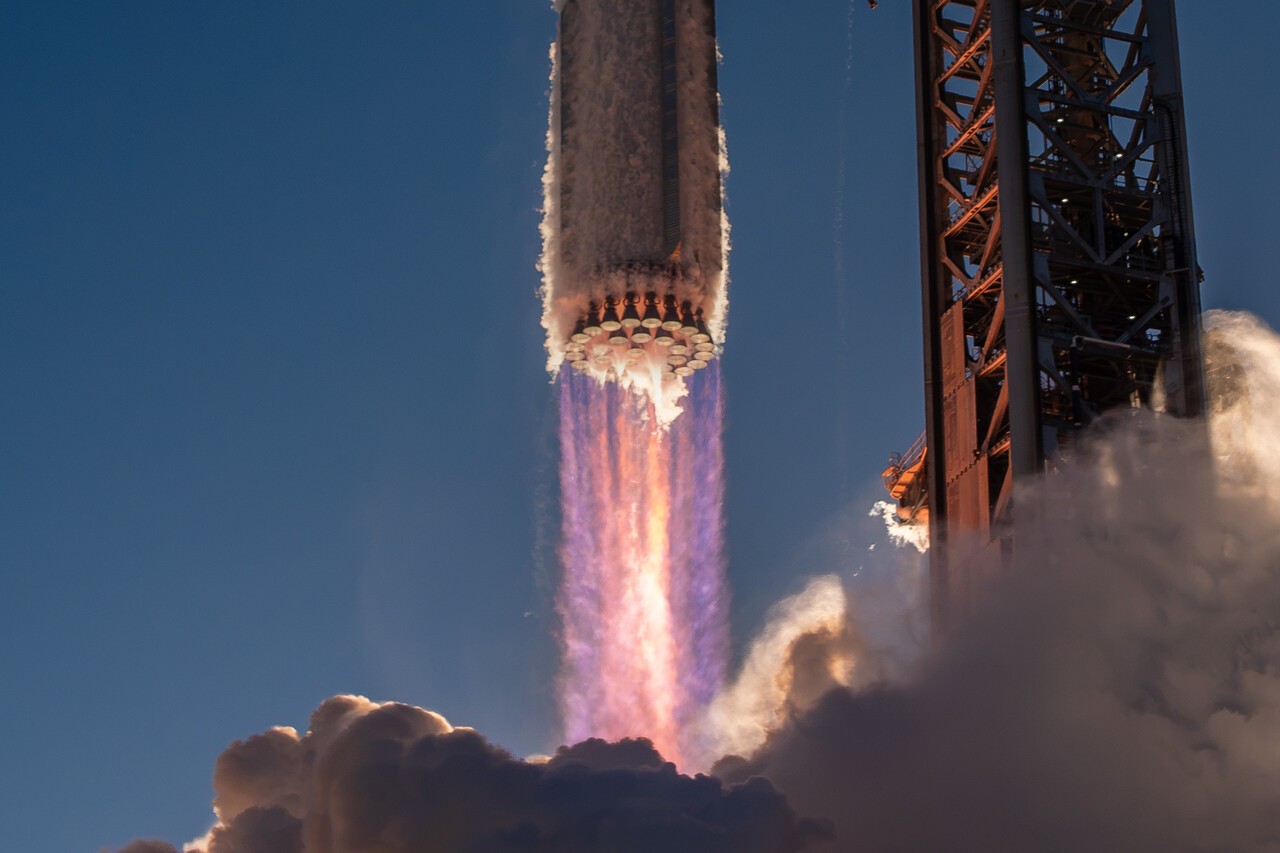
A spacecraft about 50 meters long circled Earth 14 times before returning to its launch site. It did not land on the ground. Instead, two mechanical arms mounted on a massive launch tower caught the descending spacecraft in midair. About 22 hours after sending it into space, the tower received it back.
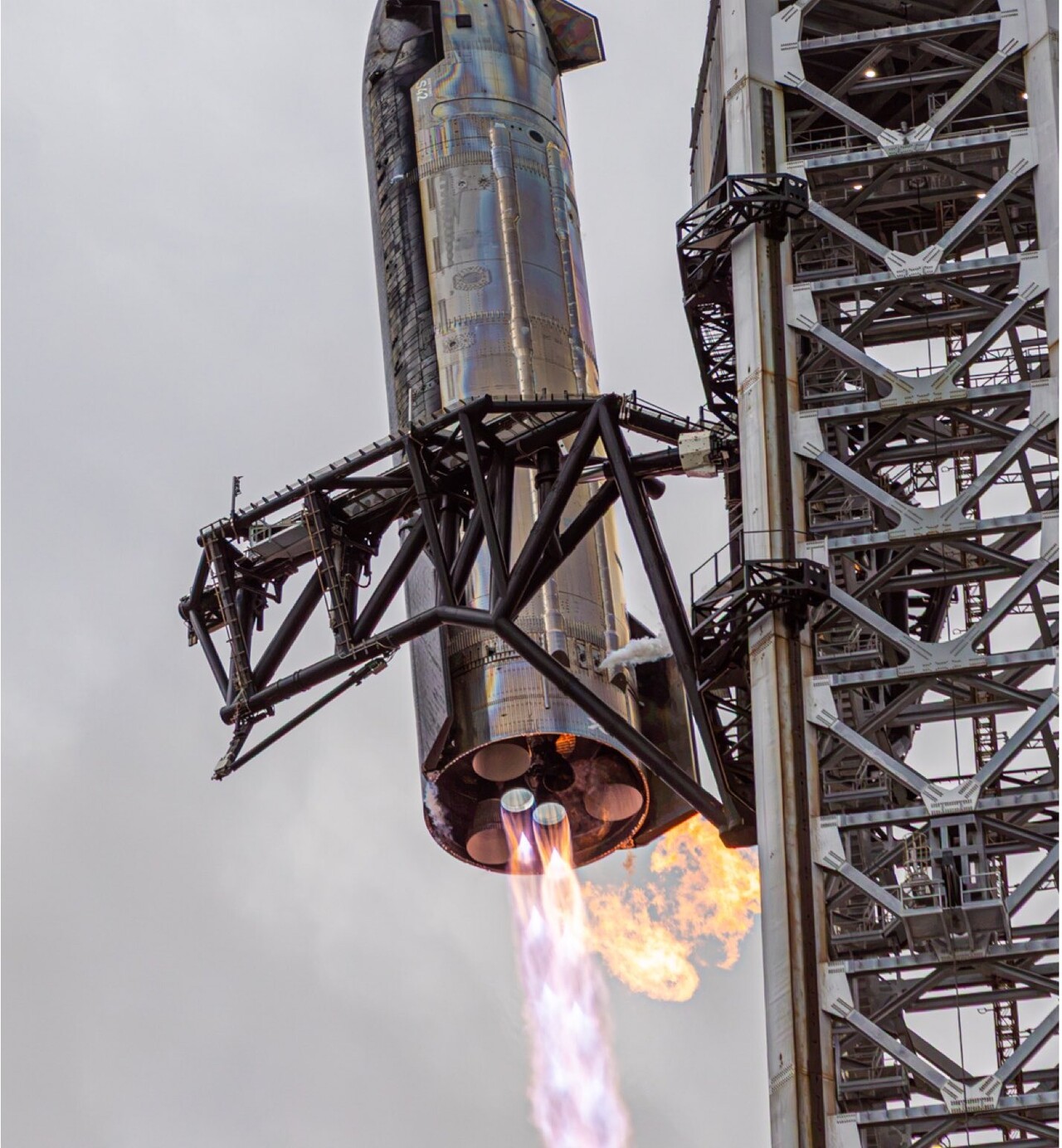
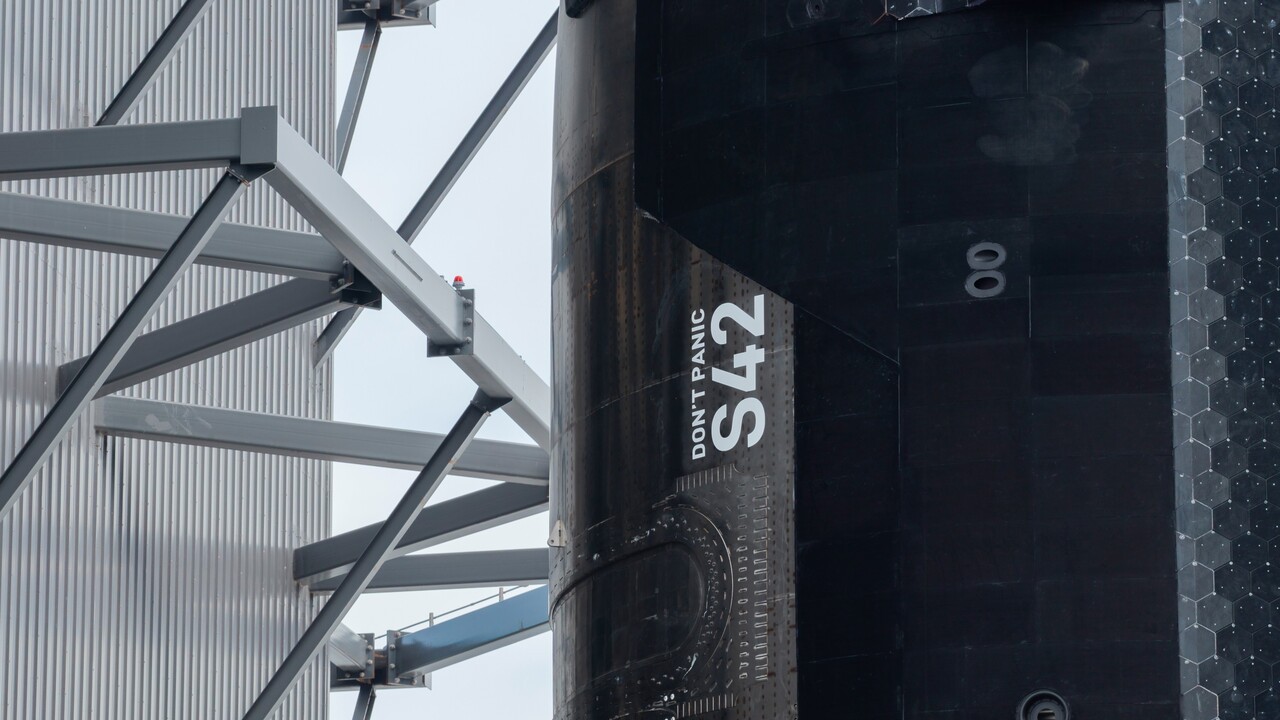
At about 3:20 p.m. local time on Nov. 14, SpaceX successfully recovered Ship 42, the upper-stage spacecraft of Starship, at Starbase in Texas. The recovery came about 22 hours and 33 minutes after its launch at 4:47 p.m. the previous day. It was the first time a spacecraft had completed an orbital flight at an altitude of about 275 kilometers, passed through the atmosphere, returned to its launch site and been caught by the tower’s mechanical arms.
SpaceX had previously succeeded in catching the first-stage Super Heavy booster with the launch tower’s arms. This time, it recovered the upper-stage spacecraft in the same way after it had traveled much higher and orbited Earth. Unlike the booster, which returns within minutes of launch, the upper stage must travel at orbital speed and withstand the intense heat of reentry. Its return also requires precise timing, taking Earth’s rotation and the spacecraft’s orbital position into account.
This success was not simply the result of improved landing technology. It came from integrating a range of technologies, from orbital mechanics and thermal protection to flight control and engine-thrust management.
◆ How a spacecraft reaches Earth orbit
Starship is a large launch vehicle made up of the first-stage Super Heavy booster and the second-stage spacecraft, called Ship. The entire vehicle is about 120 meters long. The first stage pushes the spacecraft up from the ground, while the second stage accelerates in space and enters orbit.
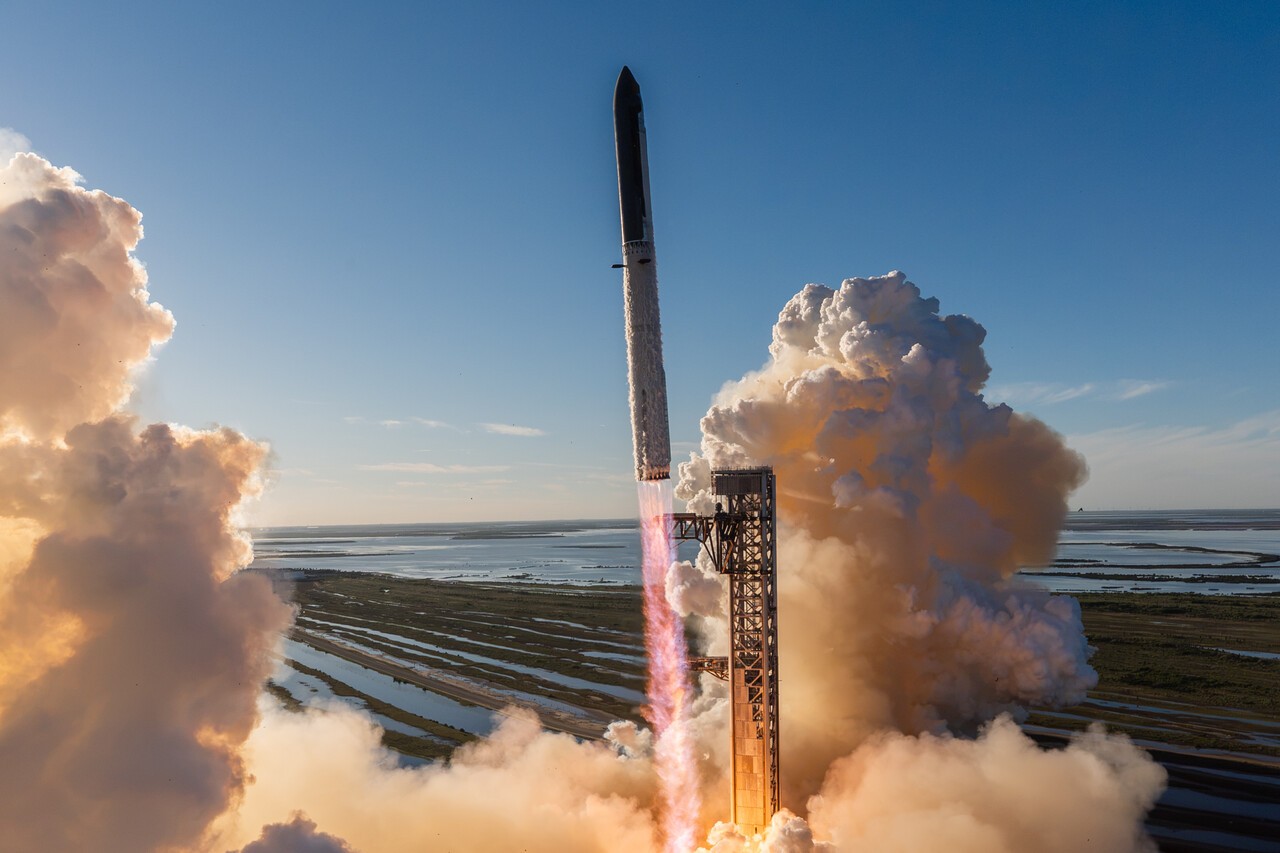
The 15th test flight, launched on Nov. 13, used the third-generation Super Heavy Booster 22 and the Ship 42 upper stage. The booster was equipped with 33 Raptor engines, which use liquid oxygen and liquid methane as propellants.
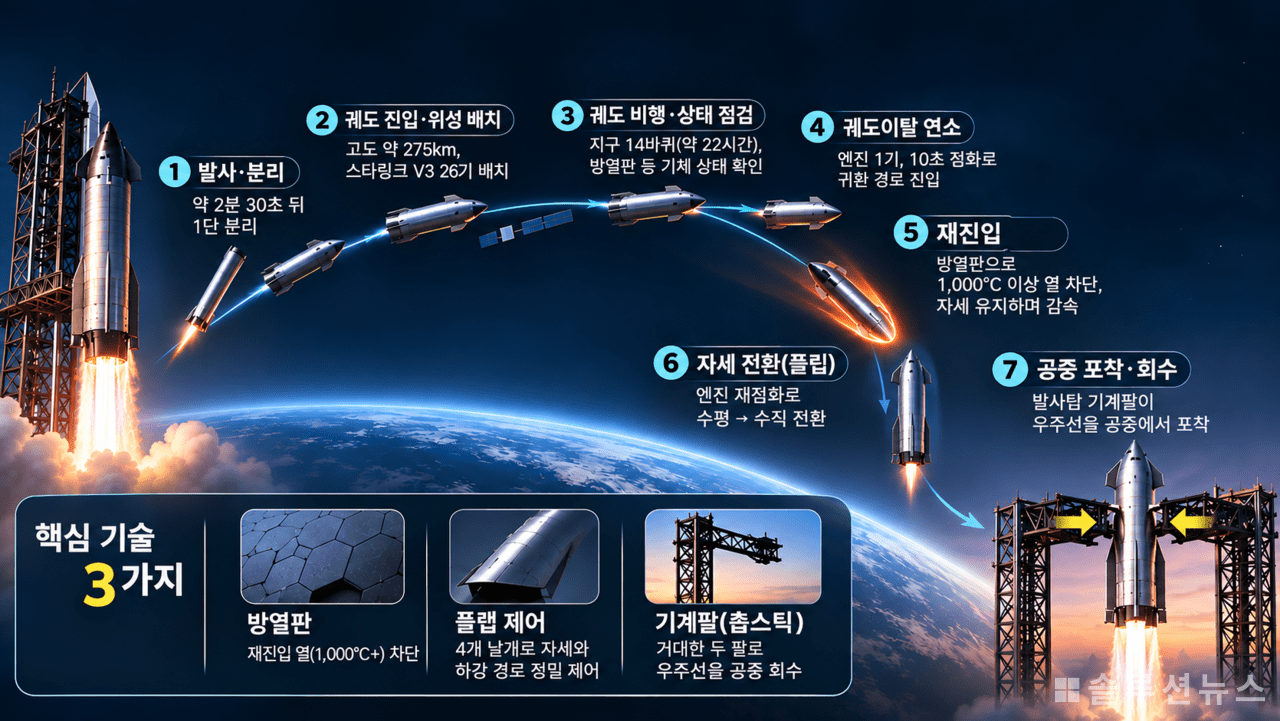
About two minutes and 30 seconds after launch, the two vehicles separated using a method known as “hot staging.” With a conventional rocket, the first-stage engines shut down and the stages separate before the second-stage engines ignite. Starship ignites its second-stage engines first, building thrust as it separates from the first stage.
This method helps reduce the loss of speed during separation. That saves fuel needed to send a massive vehicle into orbit. But because hot exhaust is produced while the two vehicles are close together, the rocket needs structural and thermal-protection systems capable of withstanding it.
Ship 42 completed its initial engine burn about eight minutes after launch. Then, about 26 minutes into the flight, it reignited its engines for an additional burn of about 20 seconds. This maneuver placed it into orbit at an altitude of roughly 275 kilometers.
It then deployed 26 Starlink V3 satellites. The flight was significant because Starship both delivered satellites into orbit on an operational mission and tested the spacecraft’s recovery.
Three of the satellites carried cameras capable of filming the outside of the spacecraft. They captured Ship 42 in orbit to help assess the condition of its heat shield and exterior structures.
◆ Why the spacecraft remained in orbit for 22 hours
Reaching Earth orbit does not mean a spacecraft can immediately return to any location it chooses. Earth keeps rotating, and the spacecraft moves along a fixed orbit. Both motions must be calculated to bring it back to a specific point.
Ship 42 circled Earth 14 times and remained in orbit for about 22 hours. The schedule was not simply intended to test the spacecraft’s ability to fly for an extended period. It also allowed the team to find a return window by accounting for the spacecraft’s orbit and the changing position of the launch site as Earth rotated.
The spacecraft travels at about 27,000 kilometers per hour in orbit. As it circles Earth, the launch site’s position on the ground continually changes. Without precise calculations of the return time and deorbit burn, the spacecraft cannot reach the launch site.
SpaceX planned several points during the flight at which it could assess whether a return was possible. If problems were found with the spacecraft, heat shield, attitude-control system, engines or guidance system, it was to abandon the return to the launch site and head for a designated area at sea.
Images collected by satellite cameras and ground-based observation equipment also informed the decision. The condition of the heat shield was particularly important. Even a spacecraft that had operated normally in orbit would be difficult to preserve if its thermal protection failed during reentry.
After reviewing the data, SpaceX determined that the heat shield was suitable for reentry. A final return check also resulted in approval from the teams responsible for flight control, the structure, the heat shield and the launch tower.
Rather than automatically sending the spacecraft back to the launch site, the system was designed to check its condition and allow the return to be called off depending on the level of risk.
◆ A 10-second engine burn begins the return
At about 3:20 p.m. on Nov. 14, Ship 42 ignited one Raptor engine for about 10 seconds to perform a deorbit burn. The maneuver adjusted the spacecraft’s speed and trajectory so that it could leave Earth orbit and enter the atmosphere.
A spacecraft in orbit is not floating because gravity has stopped acting on it. It is continually falling toward Earth, but it moves sideways fast enough to circle the planet without reaching the ground.
If an engine is fired in the opposite direction of travel, the spacecraft slows down. As its speed drops, the lowest point of its orbit moves closer to Earth, creating a path that intersects the atmosphere.
Ship 42’s 10-second burn worked on the same principle. A brief engine firing changed its orbit, after which gravity and atmospheric drag carried it downward.
The key is not simply to reduce speed. The timing and direction of the burn, along with the amount of thrust, must be precisely controlled to send the spacecraft to the intended area. An error in the deorbit burn would also change the point of atmospheric entry and the flight path that followed.
SpaceX calculated the spacecraft’s position, speed and attitude to set a trajectory that would bring it back to Starbase.
◆ How did the heat shield protect the vehicle?
The biggest technological hurdle for a spacecraft returning from orbit is atmospheric reentry.
When a spacecraft enters the atmosphere at hypersonic speed, the air in front of it is compressed rapidly and heats up. Ionized plasma forms around the vehicle. Depending on the area, the spacecraft’s surface can be exposed to temperatures exceeding 1,000 degrees Celsius.
If the vehicle cannot withstand the heat, its structure could be damaged and it could lose the ability to control its flight. That is why the heat shield has been a major focus of testing throughout Starship’s development.
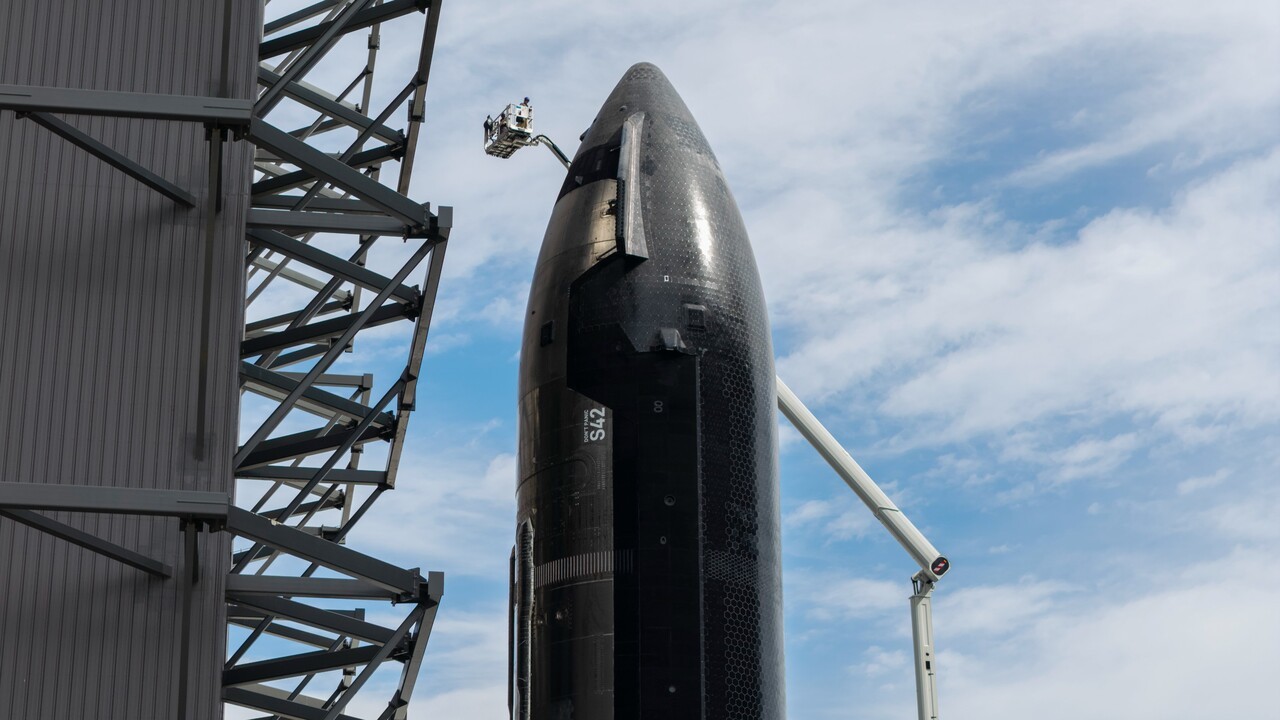
Ship 42 is protected by ceramic heat-resistant tiles attached to one side of the spacecraft. Thousands of hexagonal tiles cover the exterior surface exposed directly to high temperatures, helping reduce the amount of heat that reaches the vehicle’s internal structure.
During reentry, Starship points the broad side covered with heat-shield tiles in the direction of travel. This is the posture commonly called a “belly flop.” The spacecraft is laid out lengthwise to create more air resistance.
This posture increases the area of the spacecraft facing the air, helping it slow down. At the same time, the surface designed to withstand reentry heat is exposed to the high-temperature environment.
Four flaps at the front and rear of the spacecraft also play an important role. They use airflow to control the vehicle’s attitude and direction. The flight-control computer continually adjusts their angles to keep the spacecraft on its planned descent path.
In earlier test flights, SpaceX encountered damaged tiles and problems with thermal protection around the flaps. It has worked to address these issues by improving tile structures and joints and adding further thermal-protection measures.
For this flight, the heat shield was inspected in orbit before the spacecraft made an actual reentry. SpaceX said the heat shield and major equipment appeared to be in good condition immediately after recovery. The extent of any damage and the level of maintenance required will need to be confirmed in follow-up inspections of the recovered vehicle.
◆ How did a 50-meter spacecraft falling on its side right itself vertically?
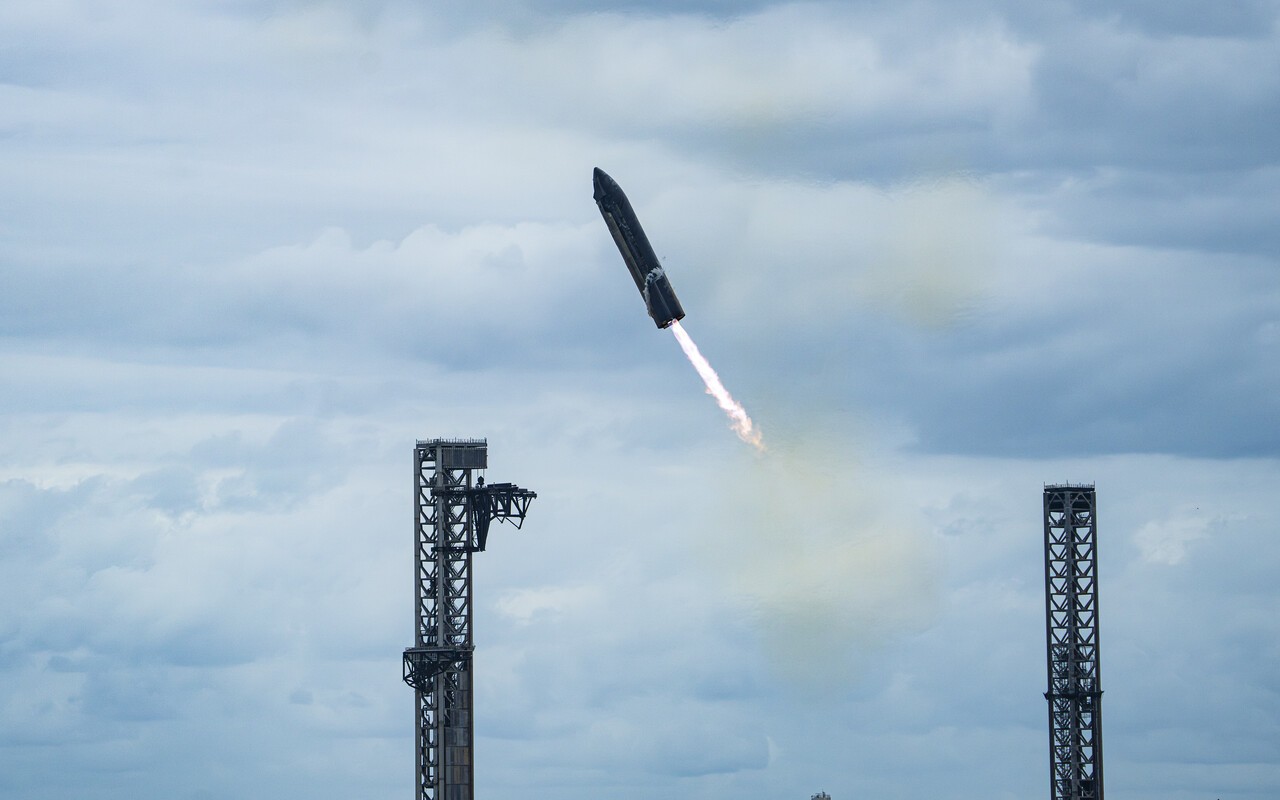
Completing atmospheric reentry does not mean the spacecraft can immediately land at the launch tower. The vehicle, which has been descending broadside to create air resistance, must be turned upright.
Starship uses its flaps to control its attitude during reentry and descent. As it approaches the launch site, it performs a “flip” maneuver, using engine thrust to bring the vehicle upright.
The maneuver turns a spacecraft about 50 meters long from a nearly horizontal position to a vertical one in a short time.
During the rotation, the direction of engine thrust, the vehicle’s center of gravity and its rotational speed must all be controlled precisely. If the rotation is insufficient, the spacecraft will not reach a vertical position. If it rotates too far, additional fuel and time will be needed to correct its attitude.
Starship is designed to use multiple Raptor engines to change its attitude and slow down. By adjusting when the engines fire and how much thrust they produce, it reduces its descent speed and turns upright.
This requires more than a simple automated landing function. The system must calculate not only the spacecraft’s position and speed but also its direction and rate of rotation.
The flight-control system uses data from sensors to adjust the engines and flaps. It must then simultaneously align the spacecraft’s position, attitude and descent speed so it can enter the space between the launch tower’s mechanical arms.
◆ Caught in midair without landing legs: How did the “chopsticks” grab the spacecraft?
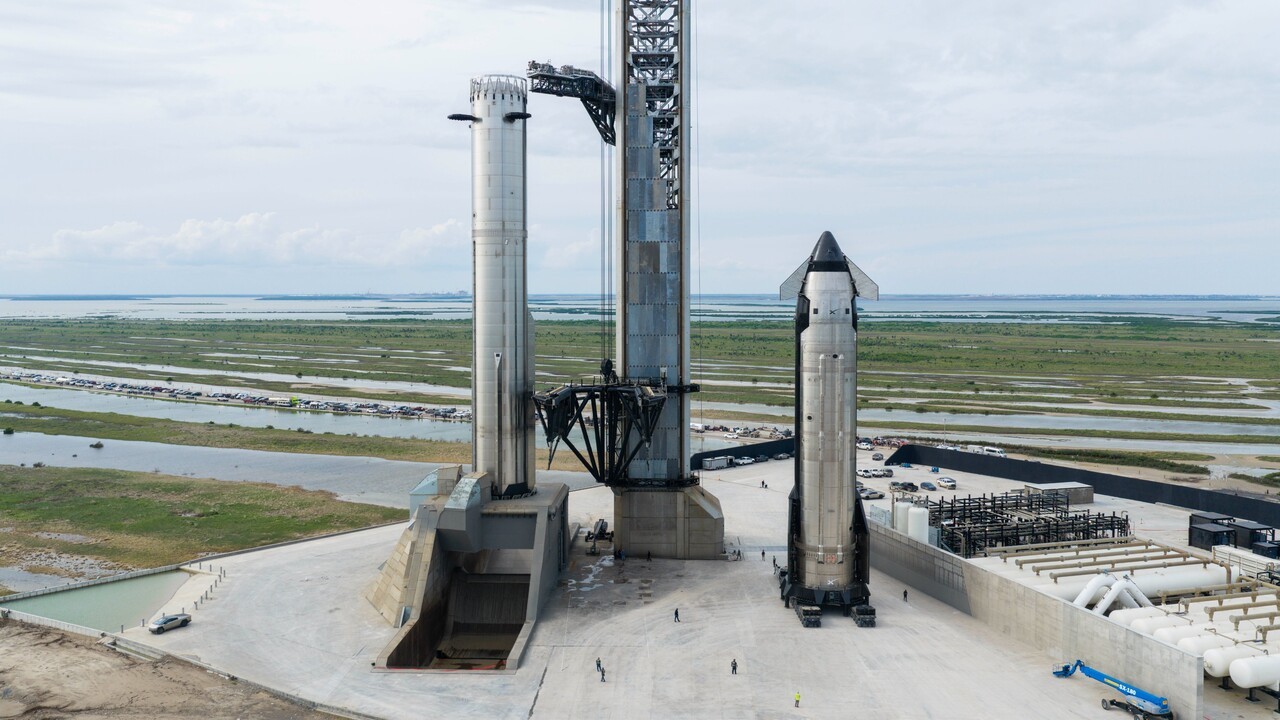
Starship uses a recovery method unlike those of traditional rockets. SpaceX’s Falcon 9 first-stage booster deploys landing legs and touches down on land or on an autonomous drone ship at sea. Starship instead uses two mechanical arms mounted on the launch tower to catch the vehicle in midair.
SpaceX calls the launch tower “Mechazilla” and the mechanical arms “chopsticks,” because the arms resemble a pair of long chopsticks.
The arms are not designed to clamp tightly around the spacecraft’s body. Instead, they support its weight by catching support structures built into the upper part of the vehicle.
The spacecraft adjusts its engine thrust as it approaches the space between the arms. Once it reaches the designated position, the arms catch the support structures and hold the vehicle suspended.
This method reduces the need to install heavy landing legs on the spacecraft. Reducing the vehicle’s weight can make it possible to carry more cargo or reserve more fuel with the same amount of thrust.
But the method requires a high degree of precision from both the launch tower and the spacecraft. If the vehicle approaches too quickly or misses its position, it could damage not only itself but also the tower.
The launch tower thus becomes more than a ground facility: it directly participates in the spacecraft’s recovery.
At about 3:20 p.m. on Nov. 14, Ship 42 descended into the space between the mechanical arms at Starbase. The arms caught the vehicle, completing the first successful midair recovery of an upper-stage spacecraft.
SpaceX commentator Dan Huot likened the recovery to a long-sought goal in spaceflight, saying, “We caught Starship. Everything changes now.”
◆ The upper stage returned, but the first stage failed
The 15th test flight did not end in complete success. SpaceX did not manage to recover both the first and second stages, as it had attempted.
After separating from the upper-stage spacecraft, Super Heavy Booster 22 began a retro-burn to return to the launch site. But the burn ended earlier than planned.
Kate Tice, a SpaceX quality systems engineering manager, said an initial analysis suggested that a low propellant-mass warning had caused the return burn to end prematurely.
With too little burn time, the booster could not reach the position and flight path required for a catch by the launch tower.
The guidance, navigation and control system then analyzed the flight and automatically called off the tower recovery. The booster turned toward a designated area in the Gulf of Mexico and was ultimately destroyed when its flight-termination system activated.
SpaceX initially raised the possibility of a problem with the guidance, navigation and control system, but later clarified that the system had worked as designed. It automatically called off the recovery to prevent a vehicle that had not met the necessary conditions from approaching the tower.
Elon Musk cited engine output that was somewhat lower than expected as the cause and mentioned upgrades to the Raptor engine and software changes.
An investigation into the loss of the booster is ongoing. Further verification will be needed, including checks of engine performance, propellant management and return-trajectory calculations.
The flight demonstrated upper-stage recovery technology while also showing how important engine performance and propellant management are to first-stage recovery.
◆ Reusable rockets could change launch economics
SpaceX is focused on recovering the Starship upper stage because it aims to reuse the entire launch vehicle.
The Falcon 9, widely used in today’s commercial launch market, recovers and reuses its first-stage booster. Its second stage is not reused after delivering cargo to orbit.
Starship is intended to recover and reuse both stages. If the upper stage can be returned and reused along with the first stage, SpaceX can reduce the number of major vehicle components that must be newly manufactured for each launch.
This could lower the share of total launch costs accounted for by manufacturing the vehicle. The economic benefits of using each vehicle multiple times could also grow as the number of launches increases.
But a successful recovery does not immediately make low-cost reuse possible.
Before a recovered vehicle can fly again, the heat shield, engines, fuel lines and structure must be inspected. If replacing damaged parts and carrying out maintenance takes a great deal of time and money, the economic benefits of reuse will be reduced.
The key measure going forward will therefore be more than the number of successful recoveries. The crucial questions are how quickly a recovered spacecraft can be refurbished and relaunched, and whether its engines and heat shield can maintain their performance over repeated flights.
◆ From Starlink to lunar landings
Starship’s reusable technology is also connected to SpaceX’s broader space programs.
One is Starlink. The next-generation Starlink V3 satellites are larger than existing satellites and have greater communications-processing capacity. A large launch vehicle is needed to deploy them in large numbers. If Starship can fly repeatedly, it could help increase launch frequency and, over time, lower the cost of building the satellite network.
Starship’s reusable technology is also important to NASA’s Artemis lunar exploration program. SpaceX is developing a lunar lander based on Starship.
A lunar landing mission requires the ability to refuel in Earth orbit. SpaceX will need to develop spacecraft that can transport fuel, systems to receive and store it, and technology to transfer it in space.
This process could require multiple launches. If spacecraft used to transport fuel can be reused, the burden of manufacturing a new vehicle every time could be reduced.
The successful recovery of the upper stage is an important technical step toward building this kind of operating system. The in-orbit fuel transfer, long-term storage and repeated-launch capabilities needed for actual lunar missions still require separate verification.
◆ What happens after a successful recovery matters even more
In its 15th test flight, SpaceX demonstrated that an upper-stage spacecraft that has reached orbit can return to its launch site and be caught in midair.
Satellite cameras inspected the heat shield, the spacecraft left orbit at a planned time and withstood the intense heat of reentry. It then used its flaps and engines to control its attitude and enter the space between the launch tower’s mechanical arms with precision.
Each of these technologies has been studied in various space programs. The significance of this achievement lies in integrating them into a single large spacecraft and linking the entire process, from orbital flight to recovery at the launch site.
The flight-management system, which allows a return to be called off if the vehicle does not meet recovery conditions, is also noteworthy. The upper stage returned to the launch site after multiple checks, while the first-stage booster automatically abandoned its recovery when it failed to meet the requirements.
Developing a fully reusable launch vehicle requires the ability not only to recover it under normal conditions but also to end a flight safely when something goes wrong.
South Korea is also working to develop reusable launch-vehicle technology. The Starship test shows that reusing a large launch vehicle takes more than engine relights and landing technology. Thermal protection, structural design, sensors, flight control and ground recovery facilities must all be developed together.
SpaceX still has challenges to address. It must determine why Booster 22 failed to return, and confirm whether Ship 42 is in a condition to fly again. The time and cost required to prepare a recovered spacecraft for another launch also remain to be verified.
On this flight, Starship succeeded in catching a spacecraft at the launch tower after it had circled Earth and returned. The next technical goal is to launch the recovered vehicle again and repeat the process.
The technology to bring a spacecraft back has been demonstrated. How quickly and reliably SpaceX can fly it again will determine the arrival of the fully reusable era.