
Key points
▶ Samsung Electronics and SK hynix are competing to place orders for extreme ultraviolet (EUV) lithography systems from Dutch supplier ASML, with each reportedly investing between 10 trillion and 20 trillion won.
▶ SK hynix disclosed in March that it had ordered EUV equipment worth 11.95 trillion won. Delivery is due by December 31, 2027.
▶ Samsung Electronics has already placed orders for lithography equipment for its Pyeongtaek Line 5 (P5), which is targeted to begin operations in 2028. Both companies are expected to place additional orders, potentially increasing their investment totals.
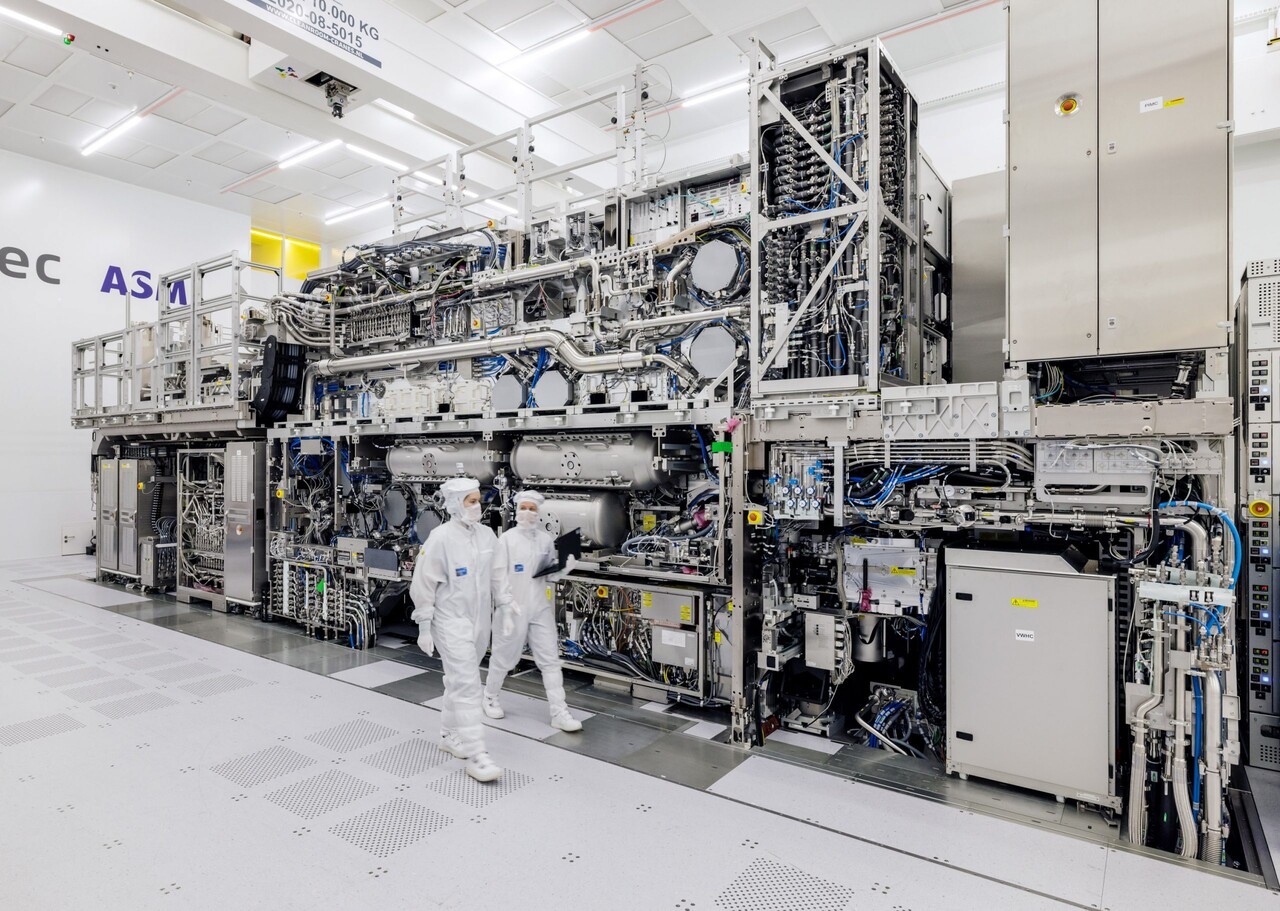
In the memory boom, the scarcest item is no longer chips, but the equipment used to make them.
According to industry sources on the 8th, Samsung Electronics and SK hynix are competing to order EUV lithography systems from ASML, with each reportedly spending between 10 trillion and 20 trillion won.
On March 24, SK hynix disclosed a purchase of EUV equipment worth approximately 11.95 trillion won. The amount represents 9.97% of the company’s total assets at the end of 2024 and includes equipment costs as well as installation and modification expenses. Delivery is due by December 31, 2027. The company said the investment will help it move to the 1c process—the sixth generation of 10-nanometer-class DRAM—in order to meet demand for HBM and general-purpose DRAM used in servers and mobile devices.
Samsung Electronics is increasing orders in line with its investment in Pyeongtaek. Last November, it announced a plan to invest 450 trillion won domestically over five years, including in Pyeongtaek Line 5 (P5), which is targeted to begin operations in 2028. P5 is reportedly expected to cost more than 60 trillion won per fab.
Industry sources expect equipment deliveries to begin once the cleanroom for the first phase of P5 is completed in the first half of next year. Samsung Electronics has already placed orders for the lithography equipment to be installed on the line.
What is EUV?
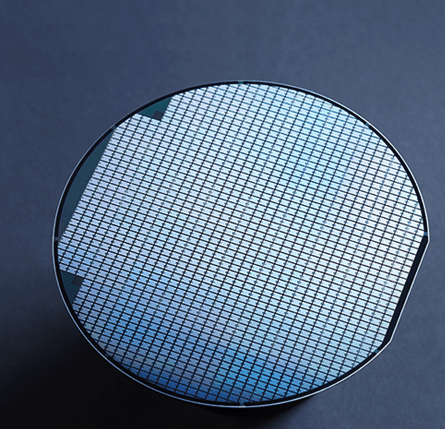
Semiconductors are made by etching circuits with light onto a flat disc called a wafer. The shorter the wavelength of the light, the finer the lines it can draw. EUV uses light with a wavelength of 13.5 nanometers—much shorter than that used by older equipment—allowing fine circuits to be etched in a single exposure. Previously, manufacturers used multiple patterning, dividing the same area into several exposures to create finer lines. This added process steps and increased defects. EUV reduces the number of exposures, improving precision and yield.
As DRAM advances through successive generations, its reliance on EUV grows. Circuit spacing becomes narrower, increasing the number of layers that cannot be produced without EUV. Market researcher TrendForce reported that SK hynix plans to use EUV on at least five layers in its 1c DRAM, two more than in the previous generation. More layers mean more equipment is needed.
In March 2020, Samsung Electronics became the first in the industry to ship a DRAM module made using EUV, and it is reportedly the memory maker with the largest number of EUV systems. SK hynix installed its first EUV system at its M16 facility in Icheon in February 2021, and in September last year became the first in the industry to bring in a latest-generation High-NA EUV system for mass production. Samsung Electronics also announced an expanded partnership with ASML on September 8 and said it would use High-NA EUV in DRAM mass production by 2028.
ASML: Even production increases won’t meet demand
ASML is the only company that makes the equipment. In its third-quarter earnings announcement, it said supply in 2027 and 2028 would not be sufficient to meet customer demand. It expects to ship about 65 EUV systems this year, nearly 50% more than the 44 shipped last year.
ASML is considering increasing production capacity by 30% in 2027 and expanding it by a further 30% in 2028, but still expects supply to fall short. Memory makers accounted for 46% of ASML’s system sales in the third quarter. The company said the effects of price increases for key products would begin to be reflected next year and would be fully felt in 2028.
With lead times for key equipment now as much as twice as long as before, the two companies are considering placing orders earlier. Industry sources say further orders are also planned depending on conditions, making additional increases in capital expenditure likely.
Back-end equipment is also booked out for two to three years
Orders have also flooded the back-end equipment sector, which stacks and packages chips, leaving suppliers with two to three years’ worth of orders. According to industry sources, order volumes at companies such as Hanmi Semiconductor and Amkor are nearing completion. They are expanding production capacity for process equipment used in AI data centers, including thermal-compression (TC) bonders used to manufacture HBM.
“For the high-capacity, high-performance chips used in AI data centers, the importance of back-end processes—which package and connect individual chips in various ways—is growing alongside advanced front-end processes,” a semiconductor industry official said. “An ecosystem is taking shape in which companies such as Hanmi Semiconductor and Amkor are inevitably linked to the boom in front-end manufacturers.”