
In the Nov. 3 U.S. midterm elections, Democrats swept both chambers of Congress and several key governorships, raising the prospect of delays to AI data center construction.
Texas is at the center of the issue, with roughly a quarter of planned U.S. data center development concentrated there.
Federal regulation is likely to run up against President Donald Trump’s veto power, leaving markets focused on state governments.
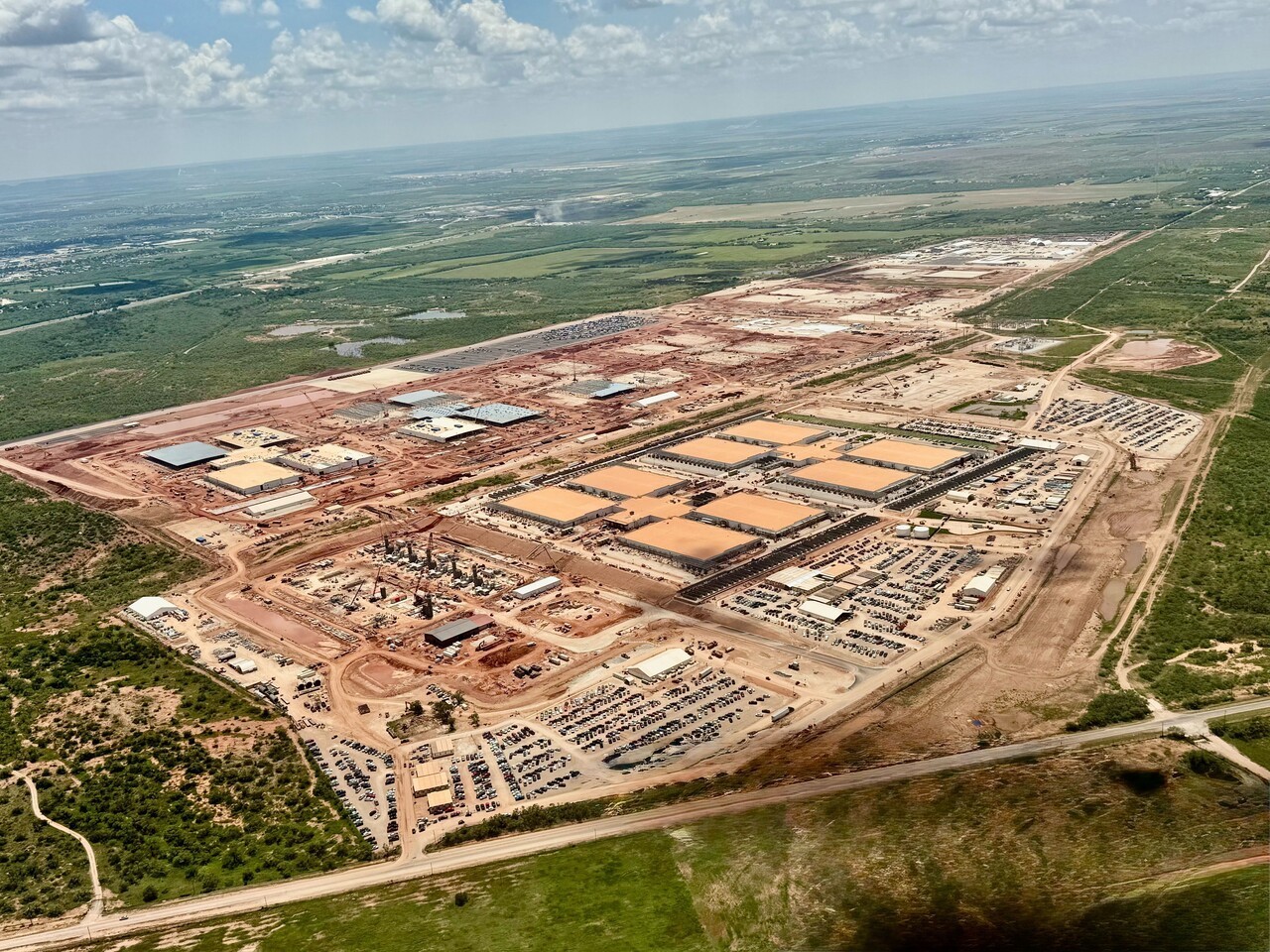
Regulatory uncertainty over artificial intelligence (AI) data center construction is growing after Democrats won the U.S. midterm elections. Candidates who support a pause on data center construction were elected governor in Texas, Georgia and Ohio, states that are home to major development plans.
The Financial Times (FT) reported on Nov. 5 that investors are concerned the midterm results could change the investment climate for the AI industry.
Democrats secured control of both chambers of Congress in the Nov. 3 midterms and won several key gubernatorial races. The party is not opposed to AI development itself, but some incoming officials have called for limits on data center construction, cuts to tax incentives, and requiring companies to shoulder more of the cost of electricity and water.
Goldman Sachs estimates that about 45% of planned U.S. data center capacity is concentrated in states where Democratic politicians could move to tighten regulations.
Federal gridlock, state-level uncertainty
Democrats do not oppose the AI industry itself. The party’s position is that AI risks should be managed and that stronger oversight and regulation are needed to serve the public interest. Some incoming officials, however, have gone further.
According to the FT, Michigan Senate-elect Abdul El-Sayed has called for a complete halt to the development of advanced AI models. South Carolina Senate-elect Annie Andrews has proposed a two-year moratorium on new data center construction. Ohio Senator Sherrod Brown has called for eliminating tax breaks and subsidies for AI companies and requiring them to pay the full cost of electricity and water.
Federal legislation, however, could be blocked by a veto from President Trump. Trump has opposed tighter regulation, arguing that slowing AI development would undermine U.S. leadership. As a result, markets are watching state and local governments more closely than Congress. Governors have direct authority over permits, regulations and tax incentives.
The FT said a pause on data center construction could come first, followed by the elimination of tax incentives, tighter environmental, water and power rules, and expanded local government authority to block construction. According to market intelligence firm Cleanview, 41% of planned U.S. data center capacity is in states whose incoming governors support a temporary construction halt.
Texas: “Things will change on our terms”
Texas is drawing the most attention. Roughly a quarter of planned U.S. data center development is concentrated in the state.
Governor-elect Gina Hinojosa said in a CNN interview on Nov. 5, “We will put laws in place to protect Texans,” adding that “data center projects currently underway should be paused until those protections are in place.” She said, “I don’t dislike data centers. I dislike the way data center companies are using Texas, and when I become governor, that will stop.”
She said she could work with Elon Musk, but only “on terms set by my administration,” adding that “the way Texans are pushed around will change.” Musk’s SpaceX and Tesla are headquartered in Texas, and he is also pursuing semiconductor manufacturing projects in the state. Musk endorsed incumbent Republican Governor Greg Abbott in the election.
According to the FT, Texas has at least 248 planned data center projects, with large-scale projects totaling about 200 gigawatts under review. UBS estimates that 18 GW of capacity expected to be added in Texas by 2028 could be at risk from regulation.
Governor Abbott also moved this year to make data centers pay for grid costs and halt approvals for new grid connections, but Hinojosa called those measures “an election-year stunt.”
Georgia Governor-elect Keisha Lance Bottoms pledged a statewide temporary halt to data center construction. Atlanta is one of the busiest data center construction markets in the United States. Ohio Governor-elect Amy Acton also supports a moratorium, and voters in Ohio have approved 21 local ballot measures restricting data center development. Morgan Stanley said an Nvidia-backed 10 GW project in Ohio faces an increased risk of delay.
New developers could be hit hardest
If tighter regulations become reality, their impact is likely to vary depending on the stage of a project.
The FT said new data center developers and emerging cloud providers, which have few existing facilities, could be hit relatively hard.
Projects that need to secure new sites and navigate grid connections and permitting are vulnerable to regulatory changes. By contrast, large technology companies that already operate facilities or have projects under construction may be able to rely on existing infrastructure.
Meta President Dina Powell McCormick expects greater scrutiny of whether local residents will accept data centers. Projects at new sites could face more difficulty than expansions of existing facilities, she said.
Companies may also increasingly consider building data centers overseas. If U.S. permitting processes take longer, investment could shift to places where power and land are easier to secure.
OpenAI co-founder and President Greg Brockman also acknowledged that technology companies have not done enough to explain to local communities why data centers need to be built.
Is the 2030 outlook still unchanged?
AI industry optimist and analyst Dan Ives likened the election results to a “political earthquake.” He said Big Tech capital spending could peak as early as next year, sooner than expected, and that up to 20% of planned AI data center capacity could be dropped from construction plans.
AMD CEO Lisa Su said the backlash would not be a reason to revise the AI market’s growth outlook through 2030. Goldman Sachs also expects any construction pauses to be short-lived.
The FT reported that construction plans could face disruption in the short term, but companies and state governments may find a compromise.
The developments could bring both gains and losses for South Korea’s semiconductor industry. Delays to U.S. data centers could disrupt the timing of demand for high-bandwidth memory and server memory supplied by Samsung Electronics and SK hynix. On the other hand, the “construction outside the U.S.” mentioned by Meta’s president could create opportunities for countries able to provide power and land.
Anthropic said in its IPO filing that it had signed letters of intent to develop data centers overseas in an effort to reduce its reliance on the United States. It remains unclear when individual states will actually introduce moratoriums, what their scope and duration will be, or whether they will apply retroactively to construction already underway.