
U.S. and China agree to establish an “AI dialogue” and propose a mechanism for notifying each other of national-security-level AI incidents.
Advanced AI chip export controls were excluded from the discussions.
The tariff truce expires on November 10, while the issue of insufficient rare-earth supplies remains unresolved.
The matters are expected to be discussed at the White House summit on September 24.
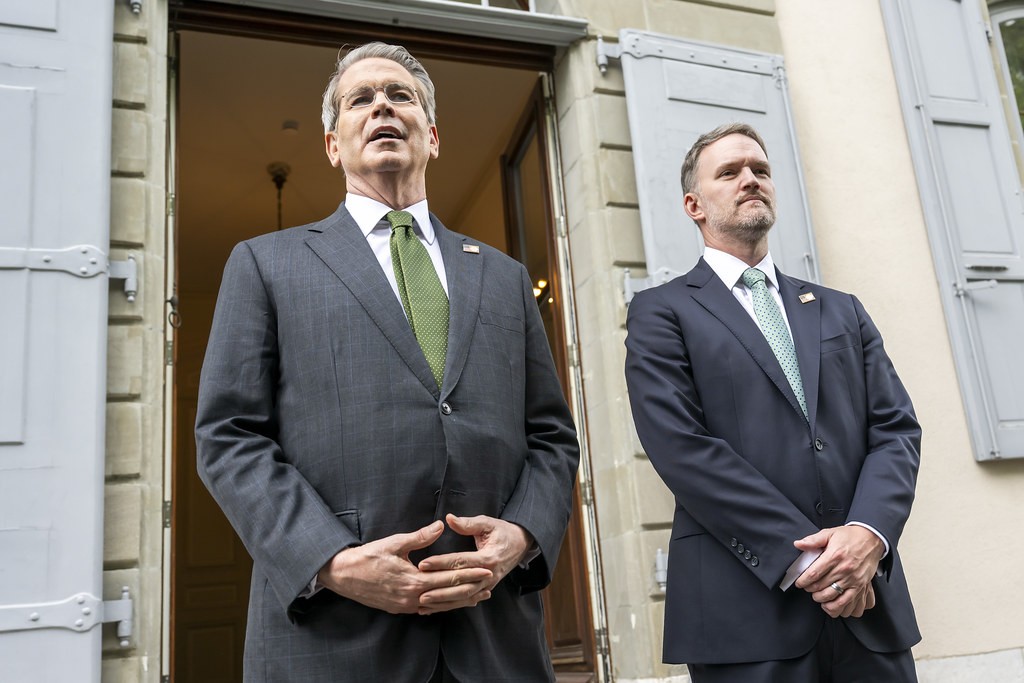
The United States and China held high-level talks in New York ahead of the White House summit on September 24. The United States proposed a system for notifying each other when AI incidents occur, and the two countries agreed to establish an AI dialogue. They failed to reach an agreement on extending the tariff truce or resolving the rare-earth supply issue.
◆ From “opaque” to transparent
According to Reuters, U.S. Treasury Secretary Scott Bessent and Chinese Vice Premier He Lifeng met on September 20 local time at JPMorgan Chase’s headquarters in Manhattan, New York, to discuss AI, trade and critical minerals. Jamieson Greer, the U.S. trade representative, and Li Chenggang, China’s international trade representative, also reportedly attended.
After the talks, Secretary Bessent told reporters that the discussions had been “very successful,” Reuters reported. The two countries agreed to create a “U.S.-China AI dialogue.” The United States is said to have proposed a notification system under which each side would inform the other if an AI incident threatening national security occurred.
Secretary Bessent reportedly said that the world’s No. 1 and No. 2 AI powers should move “from a state of opacity toward greater transparency” and communicate around “common goals and common threats.”
However, the advanced AI chip export controls that the United States currently applies to China were not addressed in the dialogue.
◆ Tariff truce runs through November; rare earths remain unresolved
The tariff truce agreed by the two countries in Busan last October will expire on November 10. The United States proposed extending it for six months but failed to reach an agreement with China.
The two sides are reportedly holding separate discussions on which products should receive tariff reductions. In May, they agreed to establish a “Board of Trade” to address tariff cuts on non-strategic goods, and the body is now operating.
China has raised consumer goods and low-tech products as potential targets for reductions, while the United States has mentioned energy, agricultural products and medical devices. Before the talks, Representative Greer said, “We will review the implementation of recent commitments, expand trade in non-sensitive goods, and improve market access for American farmers, manufacturers and workers.”
The issue of critical minerals remains unresolved. The United States believes that China’s supply of rare-earth magnets and critical minerals has fallen short of its commitments.
◆ White House summit on September 24; Xi’s first visit in 11 years
President Xi Jinping will arrive at Joint Base Andrews in Washington on September 23. President Trump will personally greet him. The two leaders will hold a summit and state dinner at the White House on September 24, and Xi will return on September 25. The two leaders previously met in Beijing in May. Xi’s visit to the White House will be his first in 11 years, since 2015.
AI is a major agenda item at this summit. Debate intensified in the United States after Dario Amodei, CEO of Anthropic, proposed slowing the pace of frontier AI development on September 12.
President Trump called the argument for slowing down AI a “hoax” and said it would benefit only China. Secretary Bessent said on September 16 that the United States could discuss “shared risks” with China. Representative Ro Khanna, a Democrat, said AI should be the “first agenda item” at the summit and called for international monitoring and verification mechanisms.
On September 23, the United Nations Security Council will hold a meeting on the risk of losing control over AI. OpenAI CEO Sam Altman will brief the council.