
The first open recruitment for the “lunar base generation”
After two years of training, astronauts will explore the lunar south pole, build a base and help prepare for the first crewed mission to Mars.
Key points
▶ The National Aeronautics and Space Administration (NASA) has announced an open call for its next class of astronauts.
▶ Those selected will complete two years of training before taking on missions to explore the lunar poles, build a lunar base and prepare for the first crewed mission to Mars.
▶ Applicants must be U.S. citizens, with no age limit. The annual salary is $164,395 (about 220 million won). Applications close on December 3.
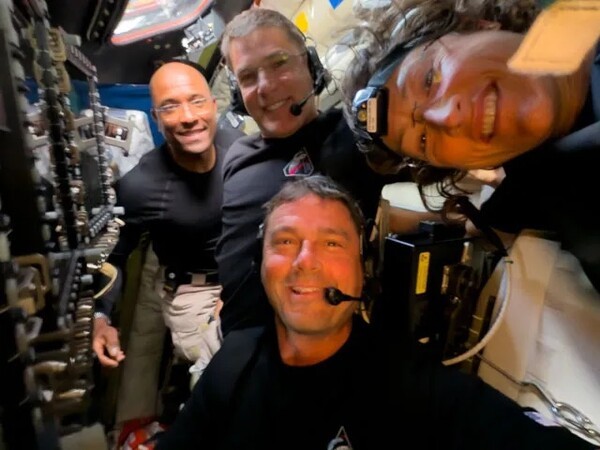
NASA is recruiting the next generation of astronauts to live and work on the Moon. On November 7 local time, the agency announced an open call for new astronauts. The recruitment aims to bring in personnel not only for missions to the International Space Station (ISS), but also for extended stays on the Moon and preparations for crewed exploration of Mars.
NASA is pursuing exploration of the lunar south pole through its Artemis program. Its plan is to establish the infrastructure needed for a sustained presence on the Moon and use the technologies developed there for missions to Mars. Applications are due by December 3.
◆ U.S. citizenship required; no age limit
Applicants must be U.S. citizens. There is no age limit. They must meet at least one of NASA’s educational and professional qualifications: a master’s degree in a science, technology, engineering or mathematics (STEM) field such as engineering, biology, physics, computer science or mathematics, plus three years of related work experience; at least two years of study toward a STEM doctorate; a qualifying professional medical degree; or completion of an accredited test-pilot school.
NASA has also included a master’s degree in nursing among the qualifying credentials. Applicants who are on track to complete a test-pilot program and meet certain requirements may also apply. The selection process includes medical examinations and interviews. Candidates will be assessed not only on their expertise and experience, but also on leadership, teamwork and communication skills.
Competition is intense. About 8,000 people applied in NASA’s 2024 recruitment drive. The agency selected 10 of them and announced the results in September 2025, putting the acceptance rate at roughly one in 800.
NASA has selected about 370 astronauts since the 1960s. There are currently 32 active astronauts.
The advertised annual salary for this recruitment is $164,395, or roughly 200 million won. Those selected will undergo about two years of basic training. After completing the program, they will be eligible for assignment to flight missions.
◆ From exploring the lunar south pole to preparing for crewed missions to Mars
NASA’s future missions include exploring the lunar south pole, building a lunar base and preparing for crewed exploration of Mars.
The priority is to create conditions for people to live on the Moon for extended periods. Through the Artemis program, NASA plans to land astronauts at the lunar south pole and establish the foundation for sustained exploration.
The lunar south pole is considered strategically important for space exploration because water ice is thought likely to exist in permanently shadowed regions that receive little or no sunlight.
Access to water could provide drinking water and enable the production of oxygen. NASA is also studying whether water can be split into hydrogen and oxygen for use in rocket propellant.
NASA plans to test life-support systems, habitats and energy-supply technologies on the Moon. The agency’s strategy is to build experience with long-duration stays and apply it to future crewed missions to Mars.
NASA is currently targeting 2028 for a crewed lunar landing. If the plan proceeds as scheduled, humans will set foot on the lunar surface again for the first time in 56 years, since Apollo 17 in 1972.
The Artemis III mission is scheduled for 2027. At a press conference on November 7, NASA Administrator Jared Isaacman expressed strong confidence in the 2027 launch schedule.
SpaceX and Blue Origin are developing lunar landers for the program. Astronauts selected in this recruitment will become eligible for missions after completing basic training. Whether they will take part in lunar exploration, and when they may be assigned, will depend on NASA’s future mission plans.
Isaacman said the selected astronauts would explore the lunar surface, live at a base and help advance the systems and strategies needed for missions to Mars.
He said these missions would demand exceptional technical skills, sound judgment, teamwork and courage, and encouraged people with the talent to open a new chapter in human space exploration to apply.
◆ No follow-up Korean spaceflight since the first mission in 2008
South Korea launched its first astronaut selection program in 2006. Lee So-yeon, who was ultimately selected, reached the International Space Station aboard a Russian Soyuz spacecraft in April 2008.
Lee became the first South Korean to travel to space. No one holding South Korean citizenship has flown to space since.
Because this NASA recruitment is open only to U.S. citizens, people who hold only South Korean citizenship are not eligible to apply.
South Korea signed the Artemis Accords in 2021. The Korea AeroSpace Administration is also pursuing lunar exploration and the development of related technologies.