
SK hynix denied reports on the 22nd that it was pursuing an acquisition of Intel’s semiconductor plant in Ohio, saying, “We have no plan to acquire it.” The response came after reports the previous day said the company was in talks to take over Intel’s Ohio facility as part of a goal to produce memory semiconductors in the United States within five years.
The acquisition rumor, which surfaced in a single exclusive report, was effectively put to rest in a day by the company’s official denial. However, the semiconductor industry still interprets this as not closing the door on memory production in the U.S., given that the group chairman has repeatedly mentioned the possibility of building new factories in the country.
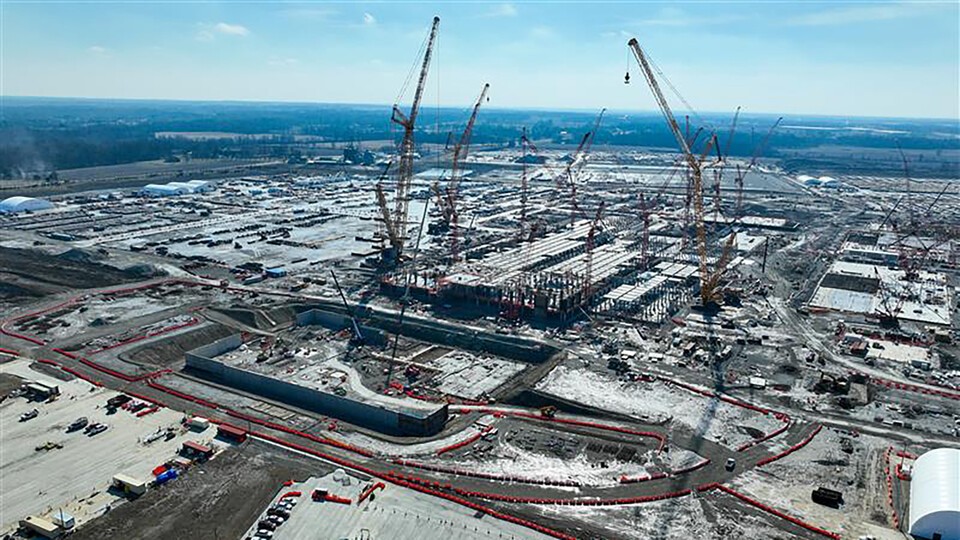
The Intel Ohio campus at the center of the rumor consists of two semiconductor fabs under construction in New Albany. Intel announced the large-scale project in 2022, initially pledging $20 billion in investment.
Amid financial strain and investment adjustments, Intel announced major workforce reductions and cuts to investment last year, pushing the start of operations for the plant back to after 2030, later than originally planned.
For a buyer, a half-built large plant is an attractive asset because it saves time. It allows the buyer to skip years of site acquisition, permitting, and infrastructure work. The rumor was built on the view that the interests of a company eager to secure production capacity in the U.S. and Intel, which wants to reduce its investment burden, were aligned.
U.S. pressure for domestic investment and calls to restructure the semiconductor supply chain were also cited as background factors behind the rumor. If the acquisition were completed, the scenario was that memory production in the U.S. could begin within five years.
The two companies have done business before. In 2020, SK hynix signed a deal to acquire Intel’s NAND flash business for about $8.8 billion, later establishing its U.S. subsidiary Solidigm and transferring the Dalian plant in China before completing the process last year. Some say this history further increased the plausibility of the latest rumor.
SK hynix drew a line. Since a reported acquisition rumor can affect stock prices and investment decisions, the company’s official response also served to reduce market confusion. However, industry observers note that the denial was specific to the Ohio plant acquisition and did not rule out broader consideration of expanding overseas production, including in the United States.
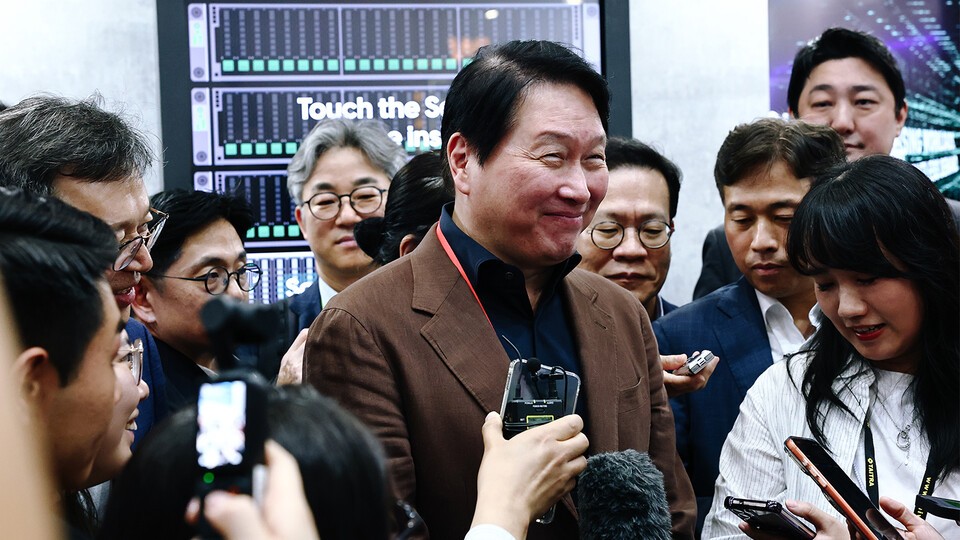
What made the market sensitive to the rumor was remarks recently made by Chairman Chey Tae-won. As the memory supply shortage has converged with rising investment in AI data centers, expanding HBM and server DRAM capacity has become a shared challenge across the industry.
At a press briefing during the Korea Chamber of Commerce and Industry’s Jeju Forum on the 15th, Chey said, “There are requests for 60% to 100% more memory next year than this year.” He added that supply is expected to increase very little next year, so the gap between demand and supply is bound to widen further. He said that if supply is to be increased quickly, the scale must be large, and that production sites should be identified and built quickly in order of priority around the world.
His comments on investment in the U.S. were even more direct. At a press briefing at Nasdaq headquarters in New York on the 10th local time, Chey said that if a location met the necessary conditions, it did not matter whether it was in the U.S. or anywhere else in the world. He added that the U.S. is the biggest market, a significant amount of revenue comes from there, and many customers want factories built in the U.S.
In an interview with foreign media that same day, he said there is no reason not to build a factory in the U.S. if power, water, land, labor, and the supply chain are all in place. In effect, the group chairman himself laid out the prerequisites for a front-end investment in the U.S. These remarks came shortly after SK hynix listed its American Depositary Receipts on Nasdaq. The combination of its U.S. capital market debut and hints of investment increased expectations for local production.
As demand for AI server memory exceeds supply, the repeated emphasis by the chairman on the need for new production bases has led the market to look for the next move, starting with potential U.S. factory sites. Analysts say this provided the backdrop for the Intel Ohio acquisition rumor. After the chairman’s remarks, speculation about U.S. investment continued in the securities market, and the latest acquisition rumor is seen as part of that same trend.

SK hynix’s U.S. production footprint remains limited. The company is only building an advanced packaging plant in Indiana focused on back-end HBM processing, and has not officially announced any plan to build a front-end fab for wafer production.
Front-end processes refer to the early stages of semiconductor manufacturing, where circuits are patterned onto wafers, while back-end processes refer to cutting and packaging the finished chips. Because the Indiana plant handles the back end, SK hynix still does not have a system in place to make memory chips from start to finish in the United States.
If SK hynix decides to enter front-end production in the U.S., there are broadly two paths: building a new plant from the ground up after selecting a site, or acquiring and repurposing an existing facility such as Intel’s Ohio fab.
New construction offers the freedom to design everything as desired, but site selection, permitting, and construction can take years. Acquisition saves time, but it comes with variables.
The cost and time required to convert a facility designed for foundry use into one suitable for memory production, as well as the uncertainty surrounding Intel’s restructuring, are seen as burdens. The trend of foreign semiconductor firms building plants in the U.S. with subsidies and tax incentives is also mentioned as a factor in the decision.
Balancing priorities with domestic investment is another challenge. SK hynix has said that roughly 40 trillion won raised through its Nasdaq listing will be invested in domestic production bases, including the Yongin semiconductor cluster and the Cheongju advanced packaging plant. If front-end investment in the U.S. is added, issues of funding allocation will follow.
From an investor’s perspective, it has been advised that decisions should still be based on the company’s officially announced investment plans even after the denial, since information at the rumor stage is highly volatile.
Ultimately, the key issue is conditions. Whether a candidate site emerges that meets the requirements cited by Chey — power, water, land, labor, and supply chain — is seen as the criterion that will determine whether SK hynix pursues front-end investment in the U.S. While the denial has closed off Ohio as an option, analysts believe the discussion over U.S. production will continue.