
One factory consumes as much electricity as 15 nuclear power plants and as much water as an entire city.
The Yongin cluster will take at least nine years, and securing water alone will take at least seven years.
That is why the two chairmen did not say “when.”
[Key Points]
▶ A semiconductor plant is not a facility that can be built just because someone wants to build it. Four conditions must all align at once: power, water, land, and labor.
▶ The electricity needed for the two companies in the Yongin cluster is estimated at the scale of 15 nuclear power plants. One factory consumes as much electricity and water as an entire city.
▶ The water is not ordinary water. It must be “ultrapure” water, stripped of impurities to the extreme. Building dedicated pipelines alone takes 7 to 10 years.
▶ A factory cannot operate alone. Materials, parts, and equipment suppliers, as well as skilled workers, must gather in one place. This concentration creates competitiveness.
▶ The reason the two chairmen did not specify a timetable is read as a signal that they will proceed cautiously until these conditions are in place.
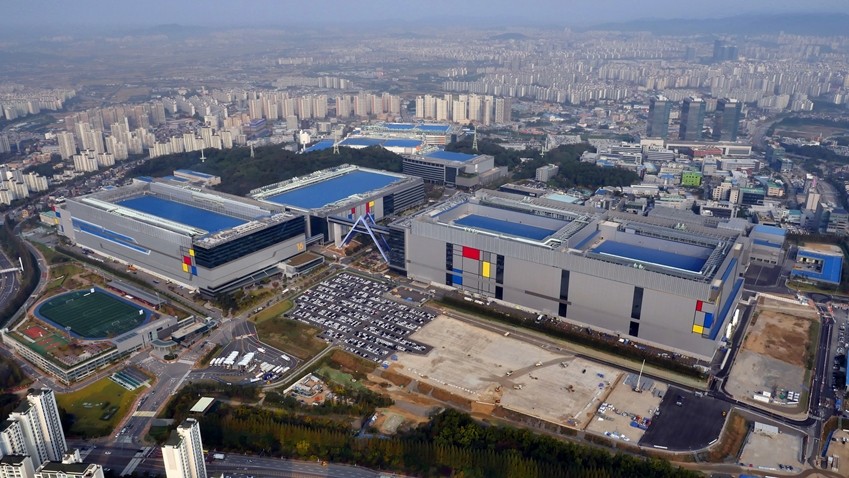
Neither of the two men said “when.” At the People’s Report meeting at the Blue House on the 29th, Samsung Electronics Chairman Lee Jae-yong and SK Group Chairman Chey Tae-won announced their investment plans for Honam semiconductors. However, they left out any promise of when construction would begin.
In place of a date, they spoke of conditions. Lee referred to Gwangju only as a “candidate site.” Chey said they would build where land, power, water, and labor were in place. That itself shows how demanding a semiconductor plant is. It is not a building that can be placed anywhere simply because someone wants it built.
◆ Why did the two chairmen avoid setting a timetable?
A close look at their remarks reveals caution. Lee pointed specifically to existing production bases. He said HBM plants would be concentrated in Cheonan and Onyang, while robots would be centered in Gumi. By contrast, he described Gwangju only as a place “planned as a candidate site.” Support in the form of incentives such as electricity, water, labor, and infrastructure was assumed as a prerequisite.
Chey’s wording was even more careful. He began by saying that it took nine years to build the Yongin cluster. He then explained that semiconductor plants require large tracts of land, power, water, and labor. He said he would invest about 400 trillion won in the southwest region, where those conditions are expected to be met. He did not mention Gwangju by name.
The business community interpreted this in unison. Announcing something that would happen only 10 to 15 years later is itself a burden for companies. One business source said of the two chairmen’s announcement, “There is no doubt that the leadership and working-level teams agonized over every single word.”
The key can be summed up in four words: land, power, water, and labor. These are the conditions that determine the fate of a semiconductor plant. If even one is missing, the factory cannot operate. The space where the two chairmen left the timetable blank was, in fact, filled with these four tasks.
◆ Electricity enough to power a city, and if it stops, disaster follows
First, electricity. Semiconductor plants are called power-hungry giants. There is a reason for that.
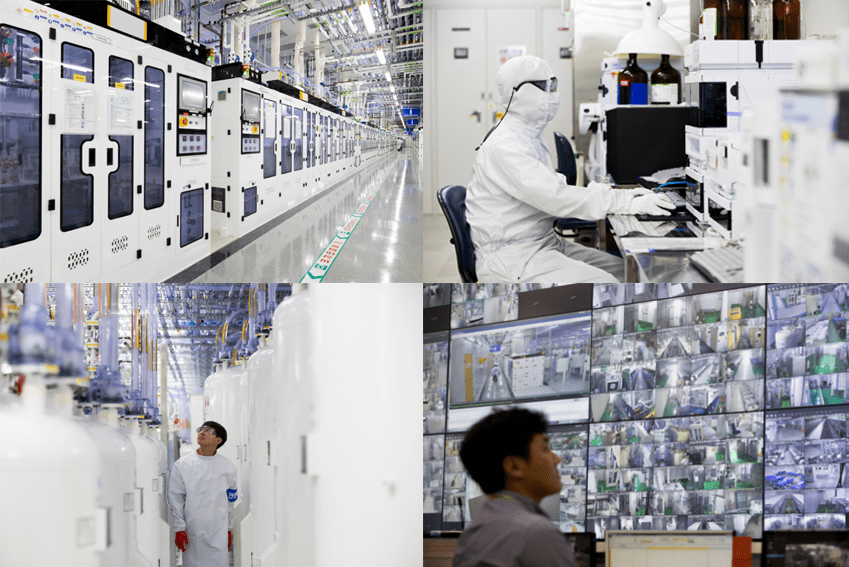
The plant runs 24 hours a day, 365 days a year without stopping. Its “clean room” is an ultra-clean space with not a single speck of dust. Temperature and humidity must be maintained with absolute precision. Thousands of machines operate constantly. The amount of electricity required is enormous.
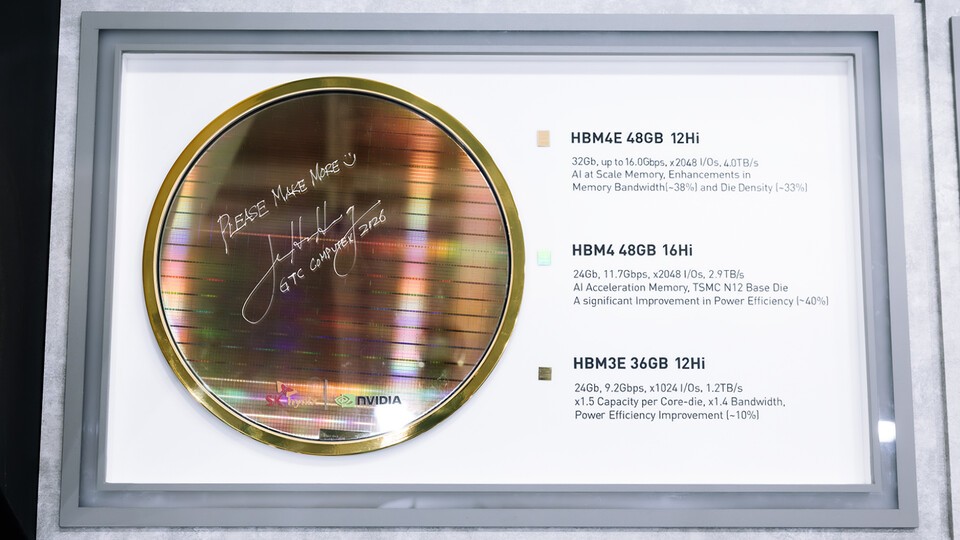
Even more frightening is a blackout. If the power cuts out for even a moment, the product being manufactured must be discarded entirely. Semiconductors are etched at scales thousands of times thinner than a human hair. If the power fluctuates during the process, the wafer becomes defective. A wafer is the circular silicon plate on which semiconductors are engraved. The loss can instantly run into hundreds of billions of won. That is why a stable power supply is a lifeline.
The scale is staggering. When Samsung Electronics and SK hynix are fully operating in the Yongin semiconductor cluster, electricity demand is estimated at 15 to 16 gigawatts (GW), roughly equal to the output of 15 nuclear power plants. The Ministry of Economy and Finance has estimated the final demand at around 10 GW, taking phased expansion into account. Even that is astronomical. It equals one-sixth of South Korea’s peak electricity demand in 2024.
The problem is where to get that power from. The Seoul metropolitan area cannot meet the need through its own generation alone. Electricity must ultimately be transmitted from nuclear and thermal plants in the east coast region and renewable energy from Honam to the capital area. That means laying new high-voltage transmission lines and expanding substations. Conflict has already erupted over this. In Hanam, Gyeonggi Province, residents opposed substation expansion, citing concerns about electromagnetic waves and noise. National transmission networks are already close to saturated.
The immediate fix is to generate emergency power inside the complex. A 1 GW combined heat and power plant will be built inside the Yongin site, and an LNG power plant will be relocated to provide short-term electricity. But this is only a temporary measure. The shortage of renewable power is another burden, because global clients demand RE100 products, meaning products made entirely with renewable electricity. Securing power is now a task that requires not only quantity but also quality.
◆ Water that must not be dirty by even one drop
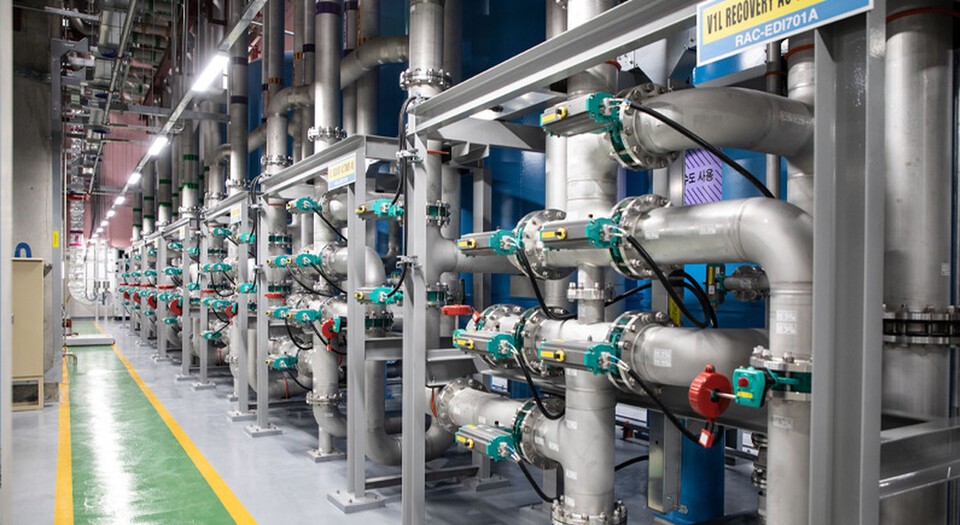
After electricity comes water. Semiconductors and water are inseparable.
The water used here is not ordinary tap water. It is called ultrapure water. It is water stripped of impurities to the extreme. Minerals and microorganisms are almost completely removed. It is so clean that drinking it would not be good for the body. Because semiconductor circuits are so microscopic, even a speck mixed into the water can cause defects.
The stage that uses the most water is cleaning. In the process of etching circuits onto wafers, cutting and washing are repeated dozens of times. Ultrapure water is used to rinse away residue left behind after etching. Water is also used in polishing and cutting processes. One factory uses more water than the household supply of a small city.
The numbers make this real. The Yongin cluster is expected to need around 1 million tons of water per day by the mid-2030s. The government plans to build water supply facilities capable of delivering 1.07 million tons per day by 2034, at a cost of more than 2 trillion won. The shortfall will be covered by SK hynix, which will install a separate intake facility downstream of the Namhan River near Chungju Dam. One senior official described the plan as “a desperate all-out effort, using every possible means to barely make the numbers work.”
The real reason securing water is so difficult is time. Building dedicated pipelines and intake facilities to bring in that much water takes at least seven years, and in some cases more than ten. If the location changes, planning must begin again from scratch, including local government consultations and watershed adjustments.
There is also no shortage of conflict over water routes. Gangwon and Chungbuk upstream of the Han River have been reluctant to supply water. Rural areas in eastern Gyeonggi have also been unwilling to cooperate. In the end, the plan has shifted toward drawing a substantial amount from Paldang Lake. Samsung Electronics and SK hynix have eased the burden by raising their water recycling ratio to the 40% range, reusing purified wastewater. In an era when a single drop of water can determine semiconductor competitiveness, this is the age of water as strategy.
◆ Land, people, and the fact that “they must gather together to survive”
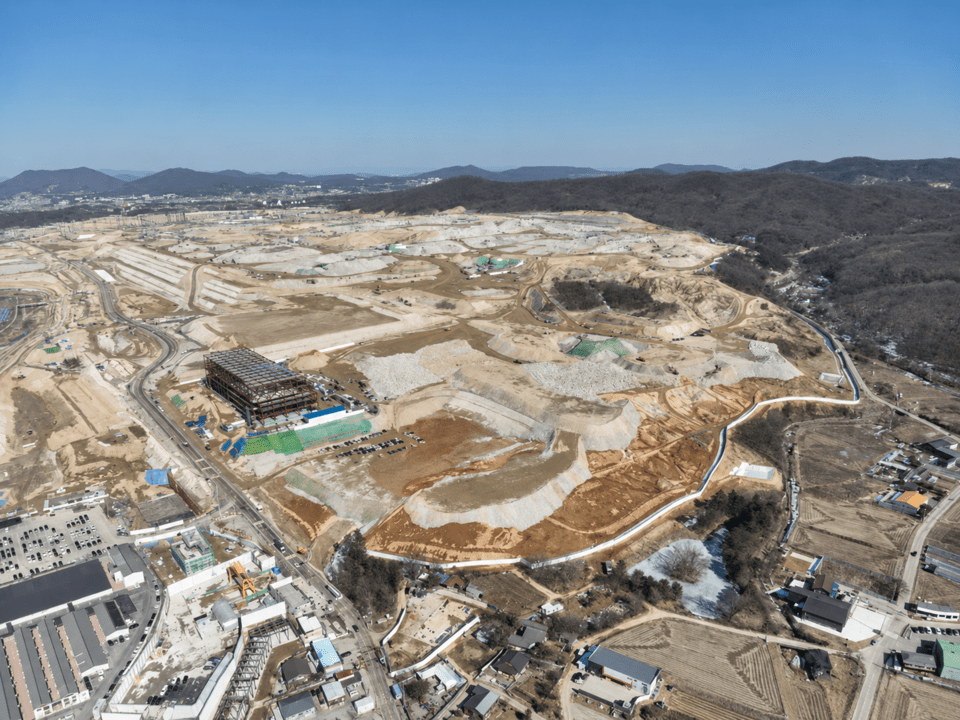
The third condition is land. Semiconductor plants are massive. Just building one fab requires more than 100,000 square meters of land, the size of 14 soccer fields. The Yongin national industrial complex will contain six factories, three power plants, and more than 60 partner companies on a site of 7.28 million square meters.
Selecting the land also takes years. It typically takes five to seven years just to review and finalize a site. It is not simply a matter of finding a large tract of land. It must be a place where electricity and water can be brought in, logistics can flow, and people can live. Sites that satisfy all of these conditions are rare.
But a factory alone cannot stand there by itself. Semiconductors are not made by one company alone. A web of materials, parts, and equipment suppliers is involved. These companies need to be clustered near the plant for work to proceed. When equipment breaks down, technicians must rush over and fix it. New materials must also be supplied quickly. This concentration in one place is called industrial clustering. That is where the term “cluster” comes from.
Concentration is competitiveness. Professor Huh Joon-young of Sogang University’s Department of Economics pointed out that “the key is to provide full support and create an independent ecosystem as quickly as possible so that the clustering effect can emerge.” But materials, parts, and equipment firms are cautious about relocating to the provinces, because their main bases are concentrated in the Seoul metropolitan area and Chungcheong region. Moving the factory alone does not bring the ecosystem with it.
The last condition is people. Perhaps it is the most difficult one. South Korea’s semiconductor workforce is expected to grow from the 170,000 range in 2021 to the 300,000 range by 2031. At the same time, forecasts suggest a shortage of more than 80,000 workers. Universities produce only around 3,000 semiconductor majors a year. That is nowhere near enough to meet demand.
Doctoral-level researchers are especially valuable. They are reluctant to leave the Seoul metropolitan area. Their children’s education, healthcare, and cultural life all affect their willingness to settle elsewhere. One industry source worried that forcing production bases to disperse would lead to talent loss and turnover. More than 3,000 experts must settle in the region to run one factory.
The clue to a solution lies overseas. The United States has divided its production bases among Arizona, Texas, and Ohio. Taiwan has also expanded its hubs from Hsinchu to Taichung and Tainan. This strategy emerged as competition shifted from single-factory competition to supply-chain and ecosystem competition. Rather than concentrating everything in one place, the approach is to plant industry in each region according to its strengths.
The government also made clear that the Honam cluster is an addition to, not a replacement for, Yongin. If Yongin is the core axis for memory production, the provinces will take on next-generation fields such as advanced packaging, AI semiconductors, and design. The key is the sequence. Preparing electricity, water, and people must come before deciding to build the factory. That is also the message behind the two chairmen leaving the timetable blank: construction will begin only once the conditions are ready.