
President Donald Trump signed a proclamation on the 13th (local time) imposing tariffs of up to 100% on imported drones and parts. Drones with a maximum takeoff weight exceeding 25 kilograms and drones with thermal imaging functions will be subject to the 100% rate, while smaller, low-risk drones will face a 25% tariff.
South Korean products will be subject to a conditional 15% cap. If key components and technologies are produced in the United States or allied countries, the total tariff rate, including existing duties, will not exceed 15%. The same condition applies to the EU, Japan and Taiwan, while the UK will face 10%.
The 100% tariff will take effect on September 3, and the 25% tariff on low-risk parts will take effect on February 9 next year. The measure is based on Section 232 of the Trade Expansion Act, a national security investigation provision, and stems from the Commerce Department’s assessment that reliance on foreign drones poses a security threat.
China’s DJI, which holds 70% of the U.S. commercial drone market, is directly in the crosshairs. Some say the move creates an opportunity for South Korean companies to fill the gap left by Chinese competitors, while others point to the challenge that domestic drones still rely heavily on Chinese-made parts.
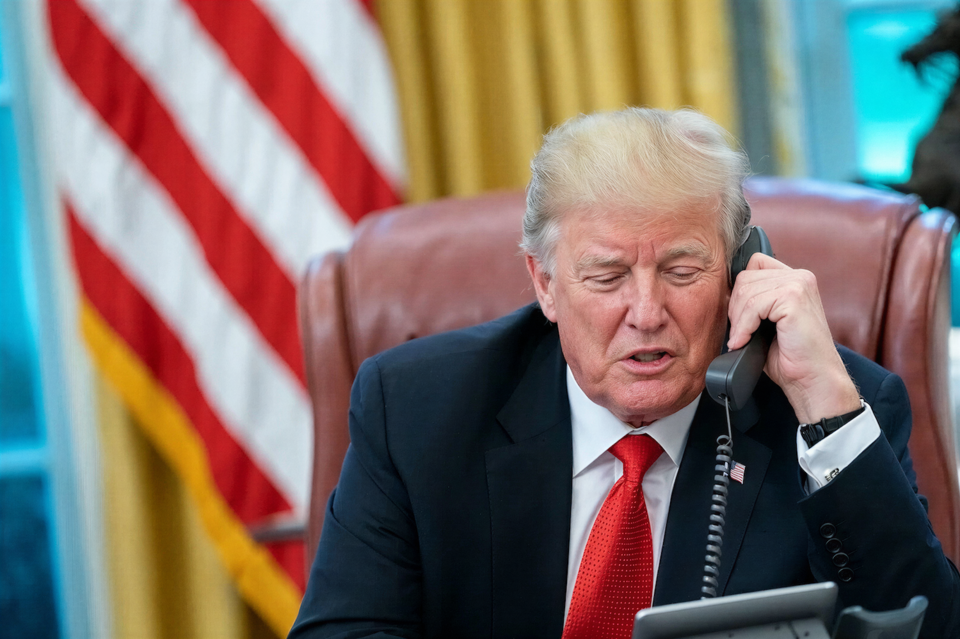
The United States has erected a tariff barrier of up to 100% on imported drones. The measure targets Chinese products, which dominate the global market, while South Korean products will receive a conditional 15% cap.
President Trump signed the proclamation on the 13th (local time) imposing tariffs on unmanned aircraft systems (UAS) and related parts. Based on Section 232 of the Trade Expansion Act, it is a provision that allows tariffs to be imposed after determining whether certain imports threaten national security.
Following steel and automobiles, drones have been designated a security item. The White House said drones are a core technology in modern warfare and U.S. military operations, and that the tariffs would protect the U.S. drone and defense industries while creating jobs.
◆ 25 kg or more, or thermal imaging, gets 100%
The tariff rate depends on the size and functions of the drone. The White House said drones with a maximum takeoff weight above 25 kilograms and drones equipped with thermal imaging functions will be subject to an ad valorem tariff of 100%. Docking stations, which charge and standby these drones, and some key parts will face the same rate.
Smaller drones and parts without security-sensitive functions will be subject to a 25% tariff. Thermal imaging detects heat in darkness to identify people or objects, making it closely linked to military and surveillance use and therefore classified as a security item.
The implementation date is split into two. The 100% tariff will take effect at 12:01 a.m. Eastern Time on September 3, 21 days later. The 25% tariff on parts with lower security sensitivity will take effect on February 9 next year, 180 days after the signing, to give companies time to move production facilities to the United States.
◆ South Korean products capped at 15%, but conditions apply
Allied countries receive an exemption. Drones and parts from South Korea, the European Union, Japan, Taiwan, Switzerland and Liechtenstein will have a total tariff cap of 15%, including the existing base tariff. Products from the United Kingdom will face a 10% cap.
However, the cap comes with conditions. The 15% ceiling applies only if major parts and technologies are produced in the United States or countries that have signed agreements with the U.S. This means that if the origin of the parts falls outside those conditions, the cap may not be guaranteed. That is why the domestic drone industry needs to reduce its dependence on Chinese parts.
The Trump administration cited dependence on foreign supply chains as the reason for the measure. Commerce Secretary Lutnick said the investigation found that foreign-made drones have a significant presence in the U.S. market and that the United States relies too heavily on foreign countries for drones and parts. The assessment also reflected the view that the U.S. drone industry’s production capacity alone is insufficient to meet security demand.
◆ China is the target; for South Korea, an opportunity and a challenge
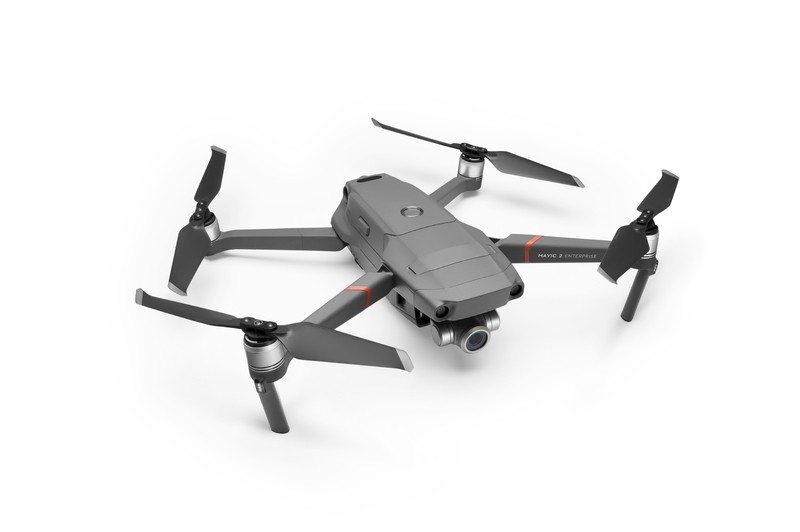
The target is China. China is not explicitly named in the proclamation, but the move is widely interpreted as aimed squarely at the world’s largest drone producer.
DJI, based in Shenzhen, accounted for about 70% of the U.S. commercial drone market last year. If the 100% tariff takes effect, DJI’s price competitiveness will be severely shaken. Bloomberg analyzed that the tariffs could deal a significant blow to China’s drone industry.
For South Korea, the impact is two-sided. Some believe the opening left by Chinese products in the U.S. market could create an opportunity for Korean-made drones to move in, since the 15% cap could provide a pricing advantage over Chinese rivals. The South Korean government also previously argued in a submission to the U.S. Commerce Department last year that a small number of companies from certain countries dominate the drone market, and proposed strengthening supply-chain cooperation among allies.
The domestic drone industry still relies heavily on Chinese-made motors, batteries and many flight control components. To meet the origin requirements for the 15% cap, localization of parts and diversification of supply chains are seen as urgent tasks. Critics say that even if export opportunities for finished products expand, companies that depend on Chinese-made core parts will not fully benefit from the cap.
Domestic market conditions are another variable. Since Chinese products have held a large share of Korea’s commercial drone market as well, the U.S. tariff move may accelerate calls for localization of both parts and finished products in Korea. As drone use expands into defense, disaster response and logistics delivery, analysts say self-reliance in core parts directly tied to security is emerging as a policy priority.
The U.S. drone tariff is being seen as a signal of global supply chain restructuring. With drones now grouped alongside semiconductors and batteries as security items, competition over the origin of parts has emerged as a variable in industrial policy.