
Advanced chips for smartphones also affected… TSMC restricts orders for chips made on 16-nanometer or smaller processes
Key points
▶ Taiwan’s TSMC and Samsung Electronics have halted shipments of some advanced semiconductors to Chinese customers in response to tighter U.S. export controls, the Financial Times (FT) reported on November 19 local time.
▶ The U.S. Commerce Department’s Bureau of Industry and Security (BIS) announced new rules on November 16, which took effect on November 19. The rules tighten controls on existing routes through which Chinese companies obtained advanced semiconductors via third-party packaging and testing firms. They cover advanced processors for smartphones as well as AI chips.
▶ TSMC instructed its Chinese customers without U.S. export licenses to stop supplying semiconductors made on processes of 16 nanometers or smaller. Samsung customers are reportedly said to include ByteDance and Kunlun, Baidu’s AI chip division.
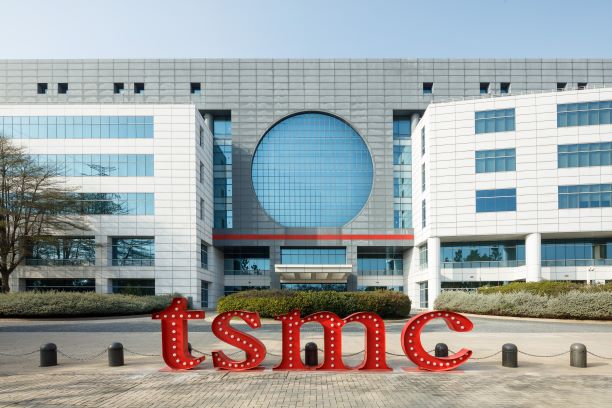
TSMC, the world’s largest contract chipmaker, and Samsung Electronics have halted shipments of some advanced semiconductors bound for Chinese customers in response to tighter U.S. government export controls. As the United States tightens restrictions on semiconductor supplies to Chinese companies, export licenses are now required not only for AI chips but also for advanced processors used in smartphones.
The Financial Times (FT) reported on November 19 local time, citing multiple sources, that TSMC and Samsung had recently notified Chinese customers that they were suspending the supply of certain semiconductors. The two companies plan to halt shipments of the products until they obtain export licenses from the U.S. Commerce Department. The specific shipment volumes and order sizes affected at each customer have not been disclosed.
◆ Restrictions on supplies of chips made on 16-nanometer or smaller processes
On November 16, the U.S. Commerce Department’s Bureau of Industry and Security (BIS) tightened export-control rules for advanced semiconductors, with the changes taking effect on November 19. Under the rules, advanced semiconductors manufactured using U.S. technology require a U.S. government export license when supplied to Chinese companies.
The measures also apply to overseas foundries that use U.S. semiconductor manufacturing equipment and design software. Taiwan’s TSMC and South Korea’s Samsung Electronics are likewise required to comply with U.S. export-control rules.
Reuters reported on November 19 that TSMC had instructed its Chinese customers not to place orders for advanced semiconductors made on processes of 16 nanometers or smaller without U.S. export licenses.
According to guidance TSMC sent to customers, Chinese chip design firms may generally use older processes, such as 28-nanometer and 40-nanometer technologies. Additional restrictions apply to products that use high-bandwidth memory (HBM) or require advanced packaging technologies.
In semiconductor manufacturing, a smaller nanometer figure generally enables greater transistor density and higher performance. Major AI accelerators are manufactured using advanced processes of 7 nanometers or smaller.
◆ Smartphone chips also affected
The new rules focus on restricting existing supply procedures used by Chinese chip design companies.
Some Chinese companies have previously received products through third-party semiconductor packaging and testing firms. Manufacturers such as TSMC could review a chip’s computing performance and technical specifications to determine whether it was subject to U.S. export controls. If certain requirements were met, manufacturing and supply could proceed without a separate export license.
Under the new rules, the U.S. Commerce Department has narrowed the scope of exemptions available through this review process. Advanced semiconductors for Chinese customers covered by the controls must now receive a U.S. government export license unless a separate exemption applies.
Smartphone semiconductors are also affected. Previously, some products could be excluded from export controls if it was demonstrated that they were not intended for AI computing. The new rules eliminate this exemption, extending the controls to consumer processors manufactured using advanced processes.
As a result, some advanced chips used in smartphones and electronic devices, as well as semiconductors for AI data centers, will have to undergo export-license reviews.
◆ Impact on Chinese smartphone makers including Xiaomi, Oppo and Vivo
TSMC supplies semiconductors to major Chinese smartphone makers such as Xiaomi, Oppo and Vivo. The advanced application processors (APs) used by these companies may also be subject to export licensing under the new rules.
ByteDance and Kunlun, Baidu’s AI chip division, have been cited among the Chinese customers of Samsung Electronics’ foundry business. The two companies have pursued the development of their own AI chips and efforts to secure supply chains as access to advanced Nvidia AI semiconductors in China has been restricted.
China’s largest foundry, SMIC, has been mentioned as an alternative supplier, but its capacity to manufacture chips using advanced processes is limited. Chinese chip design companies will find it difficult to shift in the short term to domestic production facilities the volumes they had entrusted to TSMC and Samsung Electronics.
An industry source cited by the FT said export licenses for smartphone semiconductors are likely to be approved eventually, but delays in the review process could significantly disrupt production schedules.
◆ Greater scrutiny of China’s semiconductor supply chain
TSMC has stepped up its scrutiny of Chinese customers, examining not only chip design and manufacturing but also the full structure of transactions. The company is requiring additional checks on customers’ locations, parent companies, major shareholders, packaging firms and product shipping routes. It is also reviewing transaction structures when Chinese companies place orders through overseas subsidiaries or intermediaries.
The measures took effect as the U.S. government tightened restrictions on exports of advanced AI semiconductors to Chinese companies and their use of overseas data centers.
The United States had earlier introduced new licensing requirements for Chinese companies’ use of AI computing resources through data centers in third countries, including those in Southeast Asia. Both direct purchases of semiconductors by Chinese companies and access to advanced AI computing resources overseas are now subject to restrictions.
Shipments of semiconductors suspended by TSMC and Samsung Electronics could resume depending on whether the U.S. government grants approval. To date, neither company has disclosed the specific products whose supply to Chinese customers has been halted or the timeline for export-license reviews.