
At its third-quarter earnings briefing, SK hynix said that “virtually all of the company’s DRAM and HBM supply for the next three years, through 2029, has effectively been sold out.”
Third-quarter revenue reached ₩104.6155 trillion, surpassing ₩100 trillion for the first time in a quarter, while operating profit totaled ₩83.3338 trillion. The operating margin rose to 80%, up from 76% in the previous quarter.
Compared with a year earlier, revenue was 4.3 times higher and operating profit was 7.3 times higher. The results were driven by the ramp-up of HBM4 shipments and increased sales of server DDR5 and data-center eSSDs.
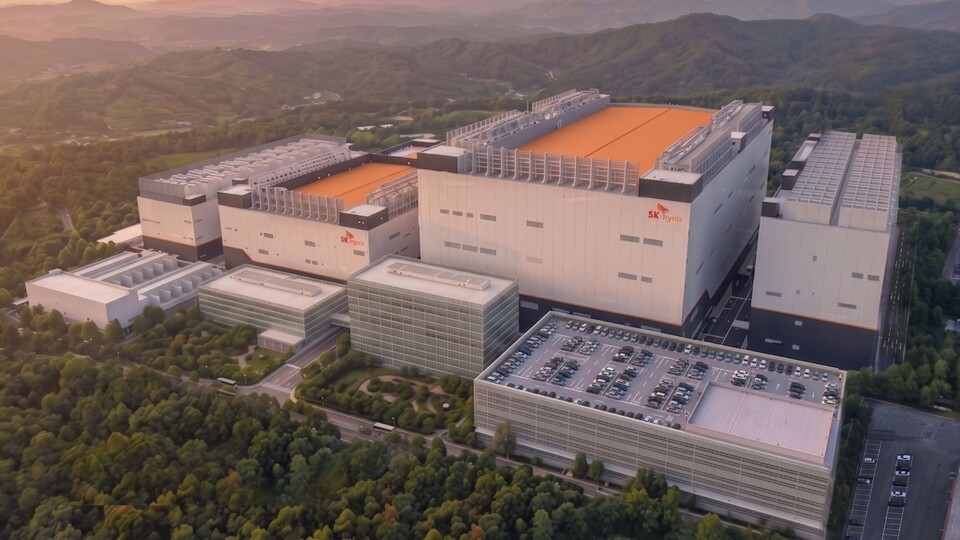
SK hynix said it has effectively sold out three years’ worth of memory products.
At its third-quarter earnings briefing on the 28th, the company discussed progress on long-term agreements (LTAs), saying, “Virtually all of our DRAM and HBM supply for the next three years, through 2029, has effectively been sold out. We are focused on expanding LTAs to improve visibility into medium- and long-term demand and translate that into revenue and profit growth.”
Revenue and operating profit announced that day both hit record highs, at ₩104.6155 trillion and ₩83.3338 trillion, respectively. It was the first time quarterly revenue had exceeded ₩100 trillion.
“Sold out” includes supply still under discussion
SK hynix said, “This assessment combines volumes already secured through LTAs with demand that we are currently discussing in detail with customers. The volumes under discussion are also based on customers’ specific purchasing plans and represent demand with a high likelihood of materializing. Taking this into account, we believe visibility into medium- and long-term sales has improved considerably.” In other words, volumes covered by signed contracts together with those being discussed with customers who plan to buy add up to three years of production.
The company separately disclosed the share of production capacity covered by contracts. “LTAs currently secure more than 50% of our total capacity for 2027–2028, and we plan to maintain a similar share under medium- and long-term LTAs,” SK hynix said. “We will use capacity not covered by LTAs flexibly in response to market conditions and demand for next-generation products, while also applying it to strengthen our competitiveness in the future.”
An LTA is an agreement in which a customer commits in advance to purchasing a specified volume over a set period. Because memory prices can fluctuate sharply with the business cycle, manufacturers use LTAs to secure demand ahead of time, while customers use them to ensure supply during shortages.
SK hynix has 14 LTA customers, including global cloud providers, and prices are linked to market conditions. The company’s structure ties up half its capacity under contracts while leaving the other half available to respond to the market and demand for next-generation products.
Operating margin reaches 80%; revenue is 4.3 times higher than a year ago
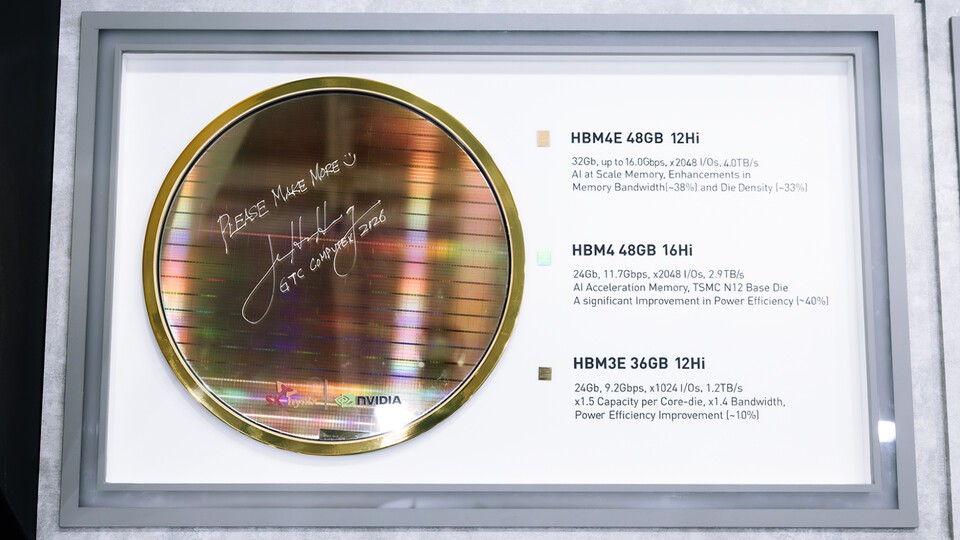
The third-quarter operating margin was 80%, up four percentage points from 76% in the previous quarter and setting another record. That means the company kept ₩80 for every ₩100 in sales—a rarely seen level in manufacturing.
Revenue rose 32% from the previous quarter, while operating profit increased 38%. Compared with the same quarter a year earlier, revenue was up 327.9% and operating profit surged 632.1%. Net profit was ₩39.7756 trillion.
HBM4 was the main driver of the results. Shipments of HBM4, the sixth generation of high-bandwidth memory, ramped up, while sales of server DDR5 DRAM and 321-layer TLC eSSDs for data centers also increased. SK hynix expects HBM4 shipments and revenue to surpass those of the previous-generation HBM3E in the fourth quarter, making HBM4 its leading product.
Cash reserves also grew. As of the end of September, the company had ₩114.5 trillion in cash and cash equivalents and ₩15.8 trillion in borrowings, leaving it with net cash of ₩98.7 trillion. The funds will support both investment and shareholder returns.
To meet HBM demand, SK hynix said it would maximize production capacity at its M15X facility in Cheongju by year-end. It plans to significantly increase investment next year, focusing on the start of operations at its first fab in Yongin, while adjusting the timing according to market conditions.
The company also plans to increase the share of high-value-added products by expanding the use of its sixth-generation 10-nanometer-class (1c) process and boosting sales of DDR6 and SOCAMM, a low-power memory module for AI servers.
₩20,000 dividend per share; shareholder returns of around ₩100 trillion this year
The company also announced a shareholder-return plan that day. Its board approved a third-quarter cash dividend of ₩14 trillion and a share buyback worth ₩20 trillion. The dividend will be ₩20,000 per share: ₩10,000 based on earnings and a special dividend of ₩10,000 reflecting gains from its Kioxia investment.
Of the ₩20 trillion in shares to be bought back, shares worth ₩10 trillion will be canceled, while the remaining ₩10 trillion will be used for employee compensation and will not count toward shareholder returns. The ₩40 trillion share buyback announced in August was completed last week, and the shares will soon be canceled.
Total shareholder returns this year are expected to reach around ₩100 trillion, comprising more than ₩30 trillion in cash dividends and at least ₩60 trillion in share buybacks and cancellations. The company said it would allocate at least 50% of free cash flow to shareholder returns, pay special dividends when it realizes substantial investment gains, and continue share buybacks each quarter.
Several reports had said SK hynix would pay a special dividend of ₩16 trillion from its Kioxia gains, but the special dividend was set at ₩10,000 per share for the third quarter.
“Supply shortages will continue through 2030”
The results were announced amid renewed debate over whether the semiconductor cycle had passed its peak. Concerns about the profitability of AI investment were spilling over into worries about slowing memory demand.
At the briefing, SK hynix said it expects supply to remain unable to keep pace with demand through 2030, as advanced manufacturing processes become more difficult and factories take a long time to build. How much of its 2029 supply is ultimately covered by signed contracts will become clearer at future quarterly briefings.