
SK hynix has decided on a record-breaking share buyback and cancellation plan worth 40 trillion won, the largest such move by a listed company in Korea. The company announced on August 19 that its board had approved the purchase and cancellation of 24.07 million common shares through open-market buying.
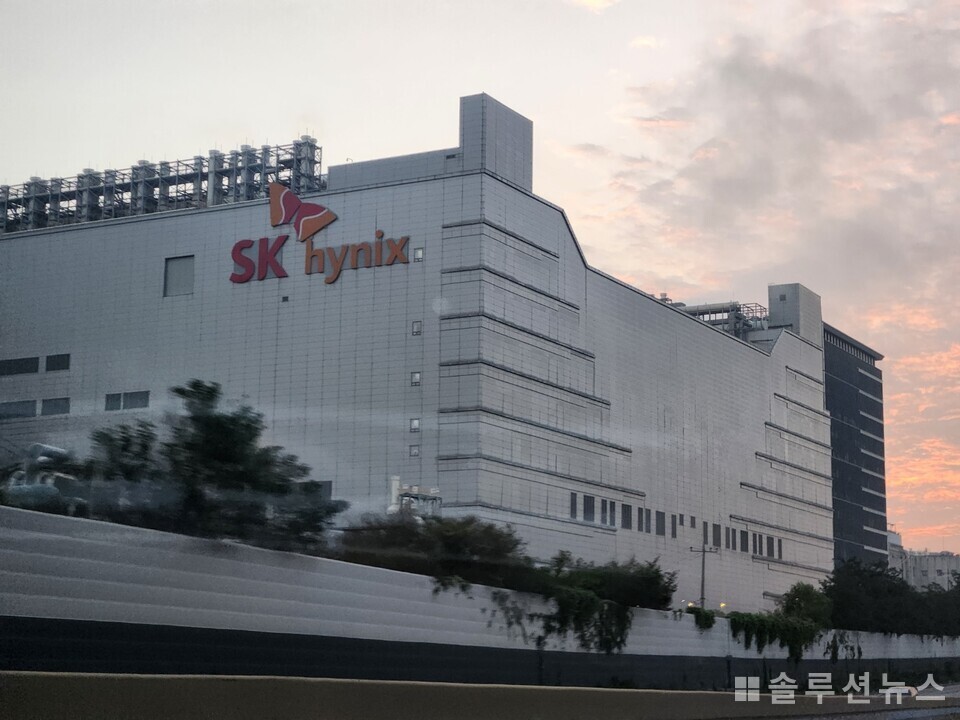
The planned acquisition is valued at a total of 40 trillion won. Based on the closing price of 1,662,000 won the day before the board resolution, the shares represent about 3.3% of total outstanding shares. The buyback will run for about three months starting on the 20th, and all acquired shares will be canceled once the process is complete.
◆ Reducing the slices makes each one bigger
Share cancellation means a company buys back its own shares with its own money and then eliminates them. The logic is often compared to a pizza: if the size of the company’s value remains the same but the number of slices, or shares, is reduced, each remaining shareholder’s slice becomes more valuable.
It differs from dividends as a form of capital return. Dividends distribute cash but are accompanied by taxes, while cancellation directly boosts per-share value. If shares are only bought back and not canceled, they could later be reintroduced into the market, but a firm commitment to cancel all of them removes that possibility.
SK hynix said the decision was made because it believes the company’s intrinsic value, including its business competitiveness, cash-generating ability, and medium- to long-term growth prospects, has not been sufficiently reflected in its current stock price. In other words, the company itself believes the stock is undervalued relative to its fundamentals.
◆ 69 trillion won in the treasury, with a pledge raised to “50% or more”
The source of the money is the semiconductor boom. Powered by AI-driven memory demand, SK hynix has been posting record results quarter after quarter, and its net cash position at the end of the second quarter this year reached about 69 trillion won. Net cash refers to cash holdings minus debt, representing the company’s actual spare funds.
The company also raised the bar on shareholder returns. In November 2024, SK hynix said it would return shareholder value within 50% of cumulative free cash flow (FCF) for 2025 to 2027, but it has now changed that standard to “50% or more.” FCF refers to the cash remaining after subtracting spending such as capital expenditures from operating cash flow, meaning money the company can freely use. In effect, what was once an upper limit of 50% has become a floor.
The methods of returning capital will also broaden. The company plans to combine share buybacks and cancellations with cash dividends, while also considering dividend expansion, including fixed and special dividends. A SK hynix official said the company plans to pursue additional shareholder returns by combining treasury share purchases and cancellations with dividends, taking into account cash flow, market conditions, and distributable profits during the policy period. The official added that the specific scale and method will be announced at the time of third-quarter earnings results after board approval.
Market watchers say there may still be room for more. Securities firms estimate that SK hynix’s net cash could reach around 200 trillion won by the end of this year, with shareholder return capacity potentially reaching about 100 trillion won. That means the 40 trillion won move may not be the end.
◆ Why the announcement was delayed, and what remains to be checked
There is a reason for the timing of the announcement. The share cancellation plan was not disclosed at last month’s second-quarter earnings release. It is believed to be because the 25-day prospectus delivery period that followed the company’s listing of American depositary receipts (ADRs) on July 10 had not yet ended.
Under U.S. market rules, companies are expected to avoid announcements that could affect stock prices immediately after issuing new securities, and the earnings release date overlapped with that restriction period. SK hynix convened a board meeting in early August after the delivery period ended and finalized the policy.
From the market’s perspective, the move is seen as establishing a new benchmark. As the first case of domestic listed-company shareholder returns reaching the 40 trillion won scale, it may reset expectations for other large companies with significant cash reserves. Analysts say it could also serve as a reference point in discussions of the so-called Korea discount, the idea that Korean equities are undervalued relative to corporate fundamentals.
There are also caution points for investors. A share cancellation does not guarantee a stock price increase. Because the buyback will be carried out in installments over three months and the return capacity depends on FCF, it is structurally tied to the semiconductor cycle; if the boom weakens, return capacity will also shrink. The next key checkpoint will be the scale and form of additional capital returns to be disclosed at the third-quarter earnings announcement.