
Samsung Electronics is building an air-conditioning and cooling equipment production facility for artificial intelligence (AI) data centers at its home appliances plant in Gwangju with an investment of about 240 billion won.
On the 19th, Samsung Electronics announced that it had signed an investment agreement with Gwangju Metropolitan City and FläktGroup Korea to establish a new production line for heating, ventilation and air-conditioning equipment inside the Gwangju plant.
The investment is a follow-up measure to Samsung’s domestic investment plan totaling 2,655 trillion won, announced at the “National Report Meeting for Korea’s Three Major Mega Projects” on June 29. The day after the event, Samsung unveiled a detailed plan to invest 425 trillion won in the Honam region, including a digital-twin-based innovation hub factory and heat pump and HVAC production facilities at the Gwangju plant.
Massive production investment first in 37 years
The production line will be built at the third campus of the Gwangju plant in Buk-gu, Gwangju. The facility will cover 21,800 square meters, about the size of three soccer fields. It is the first large-scale production facility investment since the Gwangju plant opened in 1989, 37 years ago.
From early 2028, the line will produce CDU (cooling distribution units), a flagship product of FläktGroup. It will also manufacture fan wall units for data center air cooling, computer room air handlers, and air-conditioning units for large buildings.
The June announcement also included plans to build a digital-twin-based innovation hub factory at the Gwangju plant. Digital twin technology recreates a real factory inside a computer so it can be tested in advance through simulated operation. With this agreement, the air-conditioning portion of the heat pump and HVAC production plan has now been specified first.
Why AI servers are cooled with water
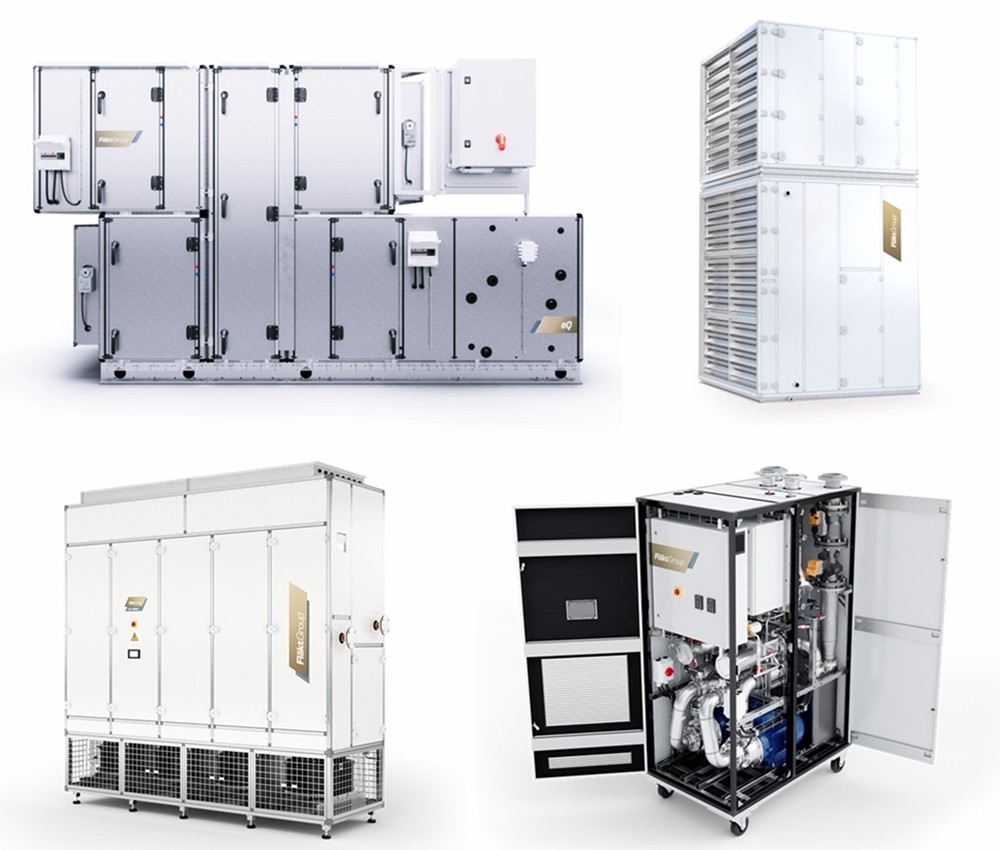
An AI data center is a facility where tens of thousands of high-performance servers operate nonstop. Because the amount of heat generated by these servers is enormous, conventional air-conditioning alone cannot adequately handle the cooling demand. As a result, liquid cooling, which uses water directly to remove heat from servers, is rapidly spreading.
The CDU is the device that manages coolant flow in this liquid-cooling system. It controls coolant pressure and temperature between the chiller, which is building cooling equipment, and the cold plate attached to the server, while also filtering out impurities. It is regarded as a key device that determines liquid-cooling performance.
Last year, Samsung Electronics acquired German HVAC company FläktGroup for 1.5 billion euros, or about 2.4 trillion won. Through this investment in Gwangju, the company plans to speed up its push into the AI data center cooling market by applying Fläkt technology to its domestic production base.
Expanding from home appliances to data center infrastructure
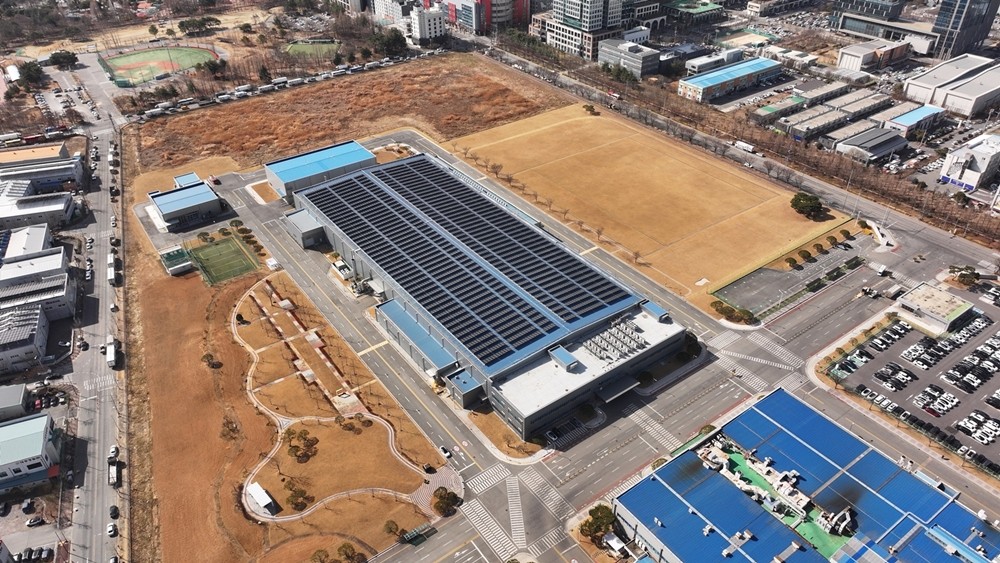
Heating, ventilation and air-conditioning is a new business area Samsung’s home appliances division is actively developing. As competition with Chinese companies intensifies and growth in home appliances slows, Samsung is seeking a breakthrough in the HVAC market. With AI data center construction expanding worldwide, demand for cooling equipment is also rising.
Data centers use a significant portion of their electricity to cool server heat, so cooling efficiency has a major impact on operating costs. With this investment, Samsung aims to expand its HVAC production base in South Korea and become a global leader by 2030.
Kim Cheol-gi, head of Samsung Electronics’ DA Business Division and vice president, said, “Building this production line in Gwangju will be an important foundation for securing differentiated competitiveness in the HVAC business.”
The AI investment boom is spreading beyond semiconductors into foundational industries such as power and cooling equipment. The investment is being seen as an example of how a home appliance manufacturing base that once made washing machines and air conditioners is expanding into a data center infrastructure base.