
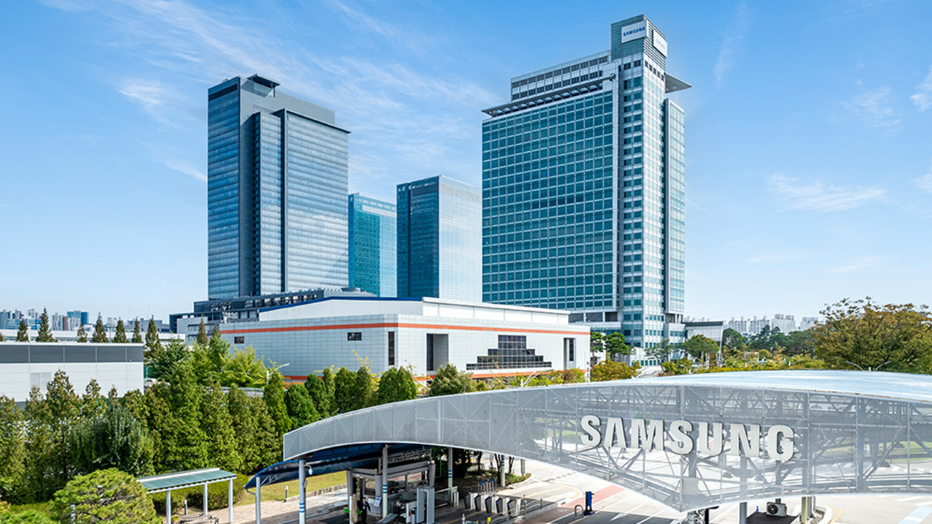
Samsung is investing 200 billion won in low-interest loans for financially vulnerable groups. This is the second initiative under its pledge to contribute 5 trillion won to society over five years.
On the 16th, Samsung announced that it will contribute 200 billion won in total to the Samsung Microfinance Foundation to expand inclusive finance. Samsung Electronics will provide 150 billion won, while financial affiliates that jointly operate the foundation — including Samsung Life Insurance, Samsung Fire & Marine Insurance, Samsung Card, and Samsung Securities — will collectively contribute 50 billion won.
The funds will be used for operating capital, startup funds, and emergency livelihood loans for financially vulnerable individuals and small self-employed business owners. The program also covers recovery funds for self-employed people on the brink of closure. Loans will be offered without collateral or guarantees at an interest rate of 4.5% or lower. Samsung expects about 40,000 people to benefit. In simple terms, that works out to an average of about 5 million won per person.
Inclusive finance refers to financial support that improves access to financial services for ordinary people and vulnerable groups while reducing the burden of high-interest borrowing. It also includes helping delinquent borrowers regain economic stability through debt restructuring. The target beneficiaries of microfinance are people with low credit scores or low incomes who struggle to use mainstream financial institutions, as well as small self-employed business owners.
This contribution follows a promise made shortly after Samsung Electronics and its labor union reached a wage and collective bargaining agreement in May. At the time, the company’s leadership apologized for causing concern to the public, shareholders, and customers during the labor negotiations, and said it would strengthen its social responsibility so that Samsung’s growth and achievements could create a virtuous cycle for society as well as its employees.
◆ Shifting the focus from boosting consumption to supporting self-reliance
This initiative differs in nature from Samsung’s first project. From June 8 for four weeks, Samsung Electronics held the “Samsung Electronics Appreciation Festival with the People,” offering Onnuri gift certificates worth 20% of the purchase amount to customers, or 30% for military personnel, police officers, firefighters, and correctional officers. The originally expected scale of benefits was about 400 billion won, but participation was so strong that the actual amount is expected to far exceed that figure.
Using Onnuri gift certificates as the refund method is considered one of the program’s defining features. Because these certificates are used in traditional markets and small neighborhood commercial districts, the design was intended to channel spending into local businesses.
If the gift-certificate refund was a one-time support measure aimed at stimulating consumption, this inclusive-finance initiative is seen as different. The loan funds are structured to flow back through repayments and then be reused by other vulnerable borrowers. Business circles are interpreting this as a shift in emphasis from immediate consumption to long-term self-reliance.
The target beneficiaries are also different. The refund event was aimed at consumers with the means to buy Samsung products, whereas this latest support program targets low-credit, low-income households that cannot clear the threshold for mainstream financial services. Analysts say Samsung’s 5 trillion won social contribution plan is being designed with different support methods for different social groups.
◆ 17 years of microfinance: its role grows again in a high-interest era
The Samsung Microfinance Foundation was established in December 2009 with contributions from six Samsung affiliates. Microfinance is a small-loan program that lends self-reliance funds without collateral or guarantees to people with low credit who have difficulty accessing banks. At the foundation’s launch, Samsung laid out a plan to contribute 300 billion won over 10 years and has continued the program since then.
Microfinance is a public-private cooperative system in which companies and financial institutions participate together. In addition to Samsung, major groups such as SK, Hyundai Motor, LG, POSCO, and Lotte, along with the five major banks, have each established foundations and execute loans as operating institutions for the Korea Inclusive Finance Agency. The system began as a way to fill financial blind spots using donations and dormant deposits as funding sources.
Unsecured and unguaranteed loans mean the foundation bears the risk of default. It fills an area that commercial banks, which must generate profits, would find difficult to handle. That is why microfinance is regarded as a mechanism that compensates for market failure.
Observers say the additional 200 billion won contribution is tied to prolonged high interest rates. Low-credit borrowers are easily pushed into illegal private lending, where rates exceed the legal maximum, if institutional loans are unavailable. Supplying funds at 4.5% or less could serve as a safety valve to break that cycle.
The move also aligns with government policy. The current administration has made the strengthening of inclusive finance a national policy task and is pushing for lower interest rates on livelihood finance products, more active debt restructuring by financial institutions, and stronger measures against illegal private lending.
The Financial Services Commission has formed an inclusive-finance strategy task force and is holding discussions by sector. Since the contribution combines private corporate funds with the government’s livelihood-finance system, it is expected to serve as a supplementary measure to policy.
◆ Success will depend on delivery channels, not just funding; sustainability will decide the outcome
There are also challenges. Microfinance struggled with weak performance early on because of strict loan requirements and inexperienced operations. The Samsung Microfinance Foundation itself once accelerated the use of contributed funds and adjusted its products and services after slow loan execution in its first year. The lesson left behind was that success depends more on the delivery system reaching people in need than on the size of the funding pool.
Because these are unsecured loans, delinquency management and follow-up support are also key issues. Critics note that simply lending money is not enough to achieve the goal of self-reliance.
In the field, there have been numerous cases showing that counseling provided alongside loans determines repayment outcomes. Examples are often cited in which offering startup education and business consulting together with loans improved both repayment rates and self-reliance outcomes.
A Samsung representative said, “Through expanded financial support, we aim to firmly support the economic independence and stable lives of vulnerable groups,” adding, “We will continue to put the values of inclusive finance into practice for the underprivileged in our society.”
In terms of execution progress, this is still only the beginning. Even when the roughly 400 billion won in benefits from the Appreciation Festival and this 200 billion won contribution are combined, it amounts to only around 10% of the overall pledge. Where the remaining 4 trillion won or so will go is expected to be a key point to watch.
Attention is also on Samsung’s next steps. Under its 5 trillion won social contribution plan, Samsung is expected to gradually unveil additional support measures, including strengthening the partner-company ecosystem and nurturing future talent.
Whether the promise that emerged from labor-management conflict will end as a one-off event or settle into a sustainable model of coexistence will likely be determined by how the remaining projects are designed. Some observers say it could become a new benchmark for corporate social responsibility.