
At the Jeju Summer Forum of the Korea Chamber of Commerce and Industry, Chairman Choi Tae-won said that SK hynix’s rapidly fluctuating stock price would trend upward over time, adding, “Don’t buy and sell; just hold it.”
He said that stock prices do not directly reflect reality, warning people not to be swayed by short-term ups and downs. He added that he also did not know how the stock would move next month.
As a basis for his optimism, he pointed to memory demand. “AI is still a four-year-old child,” he said, predicting that memory demand would grow exponentially throughout its development.
Behind his optimistic outlook for demand is a strategy to target niches between the U.S. and China and broaden the AI industry base through what he called “exporting intelligence.”
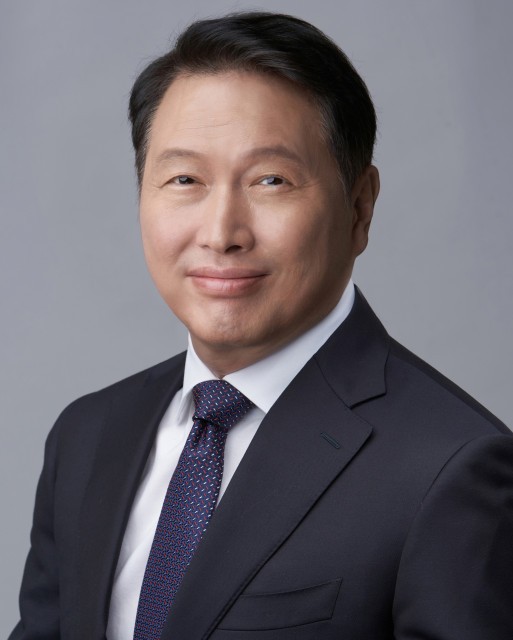
Choi Tae-won, chairman of the Korea Chamber of Commerce and Industry and of SK Group, said of the stock’s repeated sharp swings, “If you give it time, it will trend upward,” urging long-term holding. At the AI discussion session of the chamber’s summer forum held on the 17th in Seogwipo, Jeju, he said, “Don’t buy and sell; just hold it.”
The remark came in response to a question about SK hynix’s stock price, which has recently been swinging wildly day after day. Choi said, “The stock price is rising because memory demand is increasing,” adding, “Memory will be needed in the future too, so if you give it time, it will trend upward.”
◆ Stock prices do not directly reflect reality
Choi cautioned against overinterpreting price movements. “Stock prices do not directly reflect reality,” he said. “When the outlook improves, they go up, and when it seems a little less favorable, they can fall sharply.” He also noted, “Sometimes they rise too quickly and reality has to catch up.”
He was pointing out that stock prices can run ahead of earnings or industry conditions. In periods when expectations are priced in first and reality follows later, corrections are inevitable. His point was also that sharp volatility itself should not necessarily be seen as a warning sign.
He was clear that short-term forecasting is impossible. “I don’t know how the stock price will move next month,” he said. Instead, he expressed confidence in the long-term direction. The message was to stop trying to predict next month and instead look at where the industry is headed.
Observers say it is unusual for a group chairman to directly comment not only on a subsidiary’s stock price but also on trading behavior itself. Given the high share of retail investors in the stock, his remarks are seen as an attempt to calm market anxiety caused by short-term swings. His advice that holding is better than frequent trading for quick profits effectively means that investors should base decisions on the demand curve rather than the stock chart.
◆ The basis for the upward outlook is memory: “AI is still a four-year-old child”
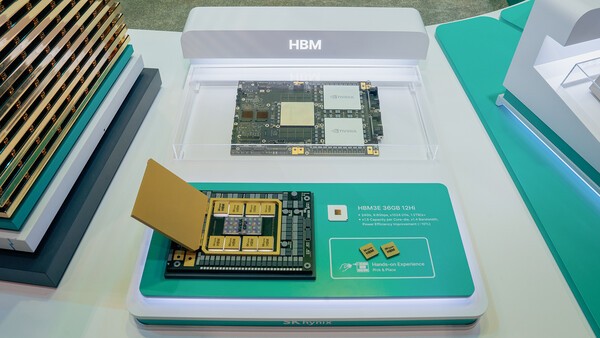
The basis for his long-term optimism is memory demand. “Memory demand has no choice but to increase exponentially,” Choi said. “AI is still a four-year-old child, but memory will inevitably be needed for it to become an adult.”
Memory is an essential component for AI to function. To produce answers, AI must retrieve and process vast amounts of data, and memory is where that data is stored. As AI services expand and usage grows, memory consumption rises with them.
The “four-year-old child” analogy reflects the view that the AI industry is still in its early stages. Much remains before the technology matures, and memory will be consumed throughout the entire process of learning and inference as data is stored and processed. It is an assessment that this is not a mature market but one that is only just beginning to grow.
Demand and stock prices do not always move at the same pace. Even if the demand curve trends gradually upward, stock prices can swing widely around it. Choi’s remarks can be summarized as advice not to confuse those two curves. It is the price that fluctuates, not the demand. The comment raises the question of what investors should use as their 기준 for judgment.
His mention of Samsung Electronics was also notable. Analysts interpret this as a diagnosis of the entire memory industry, not a defense of any single company’s stock. It also aligns with the view that the memory industry, which has long seen ups and downs depending on the economic cycle, is taking on a different character as it meets structural demand from AI.
◆ Behind the optimism on demand lies a vision of exporting intelligence
For memory demand to keep growing, the AI industry itself must expand. That is why Choi spent much of the event discussing industrial strategy.
In the discussion, he also outlined a strategy for Korea’s AI industry to expand memory demand. The core idea is to target niche markets that bypass the U.S.-China power struggle.
Token cost refers to the expense incurred for each token, the basic unit AI uses to process language. Choi’s assessment is that it would be difficult to lower this cost to Chinese levels and also hard to match U.S.-level quality.
“The U.S. approaches it in terms of quality, while China’s strategy is to gain a price advantage,” he said. “Korea will have trouble lowering token cost, and it will be hard to beat the U.S. on quality.” He added, “We need to build infrastructure, create the applications we need on top of it, and carve out niche markets.”
He also called for a shift in export strategy. “We need to create a situation where we can export large language models or applications to neutral third-world countries that feel burdened by the threats from the U.S. and China,” he said. “In the future, we should change our strategy to exporting intelligence rather than goods.”
Exporting intelligence is different from selling a finished product. It is closer to selling a bundled package that includes language models, application services, and the operating capabilities to run them. The idea is that Korean AI could become a politically less burdensome option for countries that are not eager to accept either U.S. or Chinese technology.
This vision is seen as inseparable from his comments on stock prices. As AI applications expand, the memory consumption that supports them also rises. His remarks on talent also fit the same context. He cited thinking, adaptability, empathy, and physical skills as competitive assets in the AI era, saying, “The era in which you had to graduate from university to be considered talent is over.”
He said that SK hynix recently announced it would no longer require a college diploma in hiring, using this as evidence of a shift toward evaluating actual capability over academic credentials. He added that “there will be more entrepreneurship, and with that, more failure, so people with strong resilience will be needed.” His remarks were interpreted as reflecting the view that AI growth requires change in both industry and people.
Of course, a long-term bullish view does not mean risk disappears. As Choi himself acknowledged that he does not know next month’s stock price, large corrections can still come at any time in the short term. Ultimately, the message underlying his remarks is to approach the market within a time horizon and funding range one can withstand.
For investors, the remaining task is to change the 기준 for judgment. The message running through his remarks is not to play a game of predicting next month’s stock price, but to look at the long arc of AI growing from a four-year-old child into an adult. Analysts say the pace at which that conviction is validated in the market will shape investor sentiment across the memory sector going forward.