
Europe is suffering under scorching heat. More than 1,300 people lost their lives in just one week.
The World Health Organization (WHO) said that, since the 21st, excess deaths related to the heatwave in Europe have surpassed 1,300. WHO Director-General Tedros Adhanom Ghebreyesus personally disclosed the figure on social media last Sunday. “Homes, workplaces, and schools in Europe were not built to withstand this kind of heat,” he said.
Excess deaths are a measure of how many more people died than the average for the same period in previous years. They are used as an indicator of the actual damage caused by heatwaves.
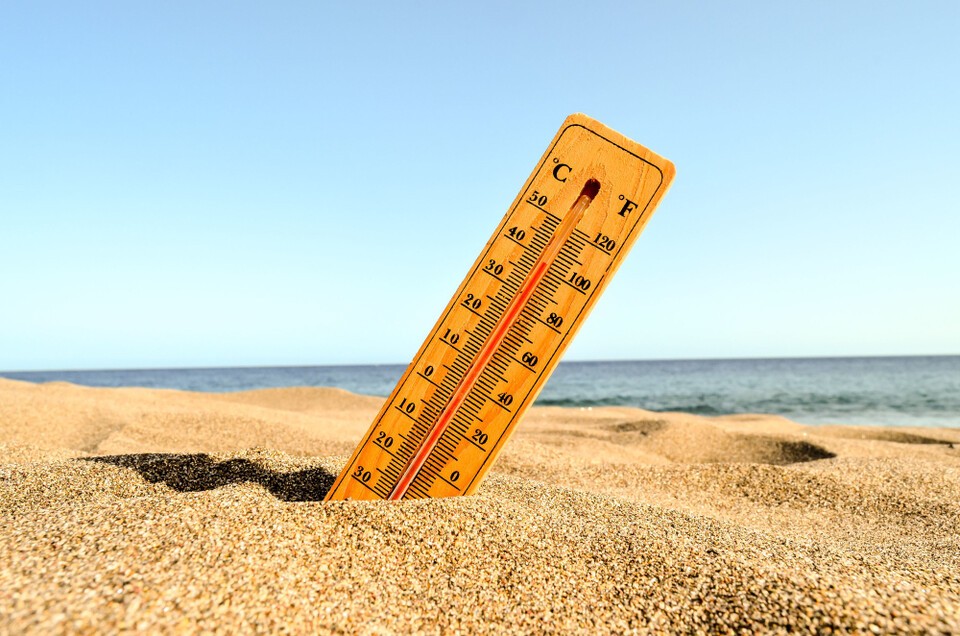
◆ More than 1,300 dead in a week… Europe is boiling
France is hit the hardest. France’s public health agency said on the 24th that about 1,000 more people than usual appear to have died since then. The figure is preliminary and has not yet been confirmed.
The toll has fallen heavily on older adults. Eighty-five percent of the deaths were among people aged 65 and older.
The areas with the heaviest losses were those under the highest-level red alert. A red alert is the top tier of France’s heatwave warning system. It included Île-de-France, the Paris metropolitan area, as well as Nouvelle-Aquitaine, Brittany, and Normandy. More than 30 French administrative districts, known as départements, were at one point under red alert.
Temperatures kept breaking records. Many parts of France exceeded 40 degrees Celsius this week. Last Wednesday went down as the hottest day ever recorded by French meteorological observations. The average daily temperature rose to 30 degrees Celsius.
◆ Heatwaves are invisible disasters… They strike the most vulnerable first
What makes heatwaves so dangerous is this: unlike earthquakes or floods, they do not bring sudden collapse. Heat slowly wears down the bodies of the weakest.
Older adults are especially vulnerable. As people age, their ability to regulate body temperature declines. The danger increases further if they have chronic conditions such as heart disease or diabetes. When tropical nights keep temperatures from falling even after dark, the body loses its chance to recover.
Cities are even hotter. Asphalt and concrete absorb heat during the day and release it at night. This is the urban “heat island” effect, where city centers are hotter than surrounding areas.
The scene in Paris shows the seriousness of the crisis. City authorities banned drinking in public places last weekend to ease the burden on emergency services even slightly. A Pride march scheduled for Saturday was postponed. The Eiffel Tower and the Louvre Museum closed early.
Accidents also continued along waterways, where citizens gathered to escape the heat. A man died last Friday night in the Canal Saint-Martin in Paris. Kenzo Keita, a 21-year-old player in France’s second-division professional football league, was also reported to have drowned in the Rhône River. His team, Guingamp, issued a condolence statement.
Paris Mayor Anne Hidalgo repeatedly warned that swimming outside designated times and areas is dangerous.
◆ It is not just Europe… climate change is intensifying heatwaves
The heat did not stay in France. The United Kingdom recorded its hottest June day on Friday. According to a preliminary estimate by the UK Met Office, the village of Santon Downham in Suffolk reached 37.3 degrees Celsius. Spain and Germany also exceeded 40 degrees Celsius.
The damage in Spain has also been confirmed. Based on Spain’s daily mortality monitoring system, MoMo, more than 400 deaths possibly linked to the temperature from Wednesday to Saturday could have occurred. Excess deaths during the same period were recorded at 174.
Experts say this kind of heat is no coincidence. The World Meteorological Organization (WMO) has said that Europe is warming at about twice the global average rate. As greenhouse gases accumulate, heatwaves are arriving more often and lingering longer and more intensely, analysis shows.
This is not a problem limited to others. South Korea also sees deaths from heat-related illnesses every summer. As the population ages rapidly, the number of people at risk is also increasing. Experts say adaptation measures such as expanding cooling centers, caring for seniors living alone, and increasing urban green space must be implemented quickly. They also point out that the fundamental solution is to reduce greenhouse-gas emissions.
Heatwaves will return more often and last longer. Preparedness will determine survival.