
Nvidia is reportedly asking its cloud partners around the world to reduce the share of their business with Chinese companies.
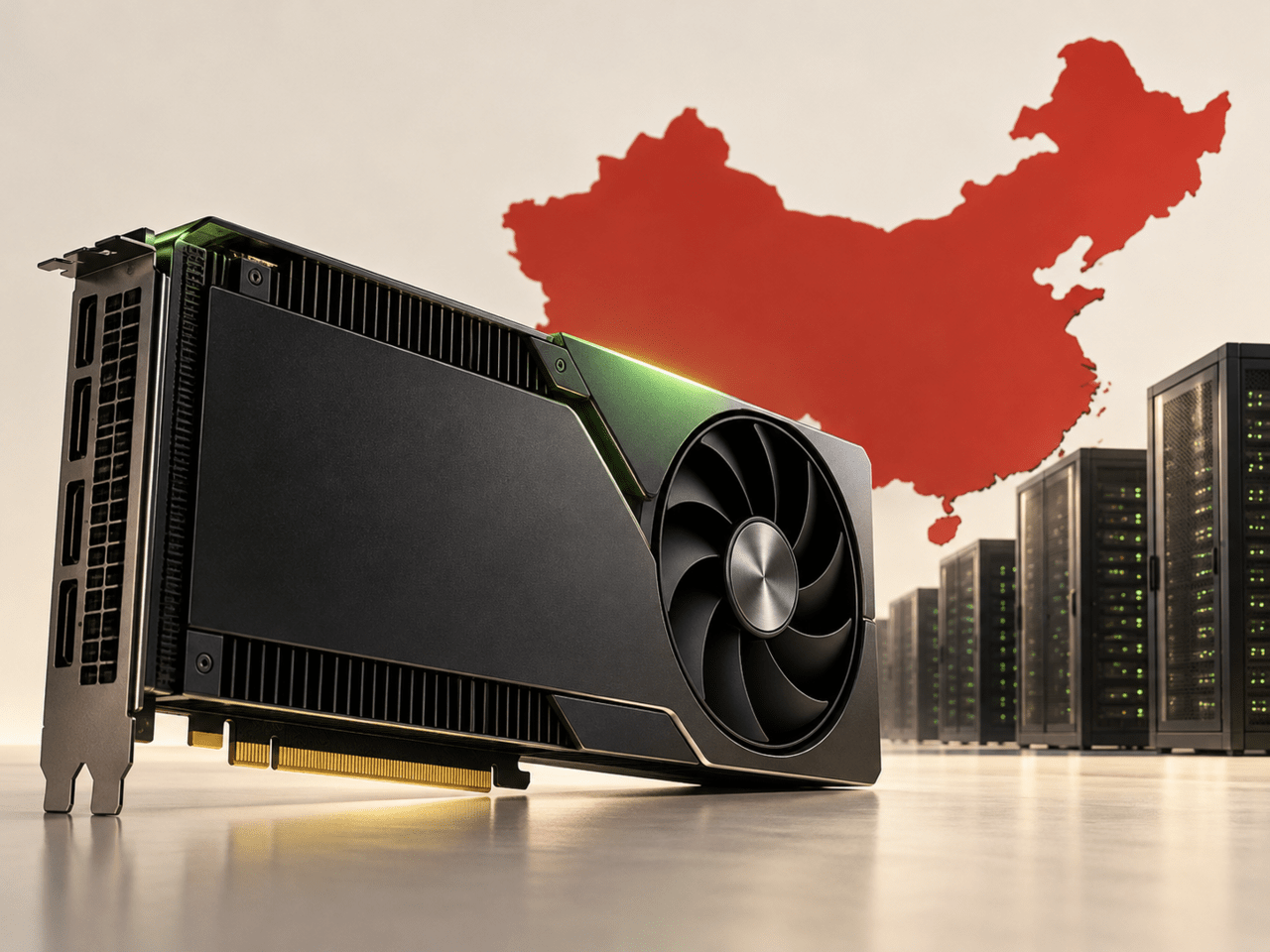
The Financial Times reported on the 3rd, citing five people familiar with the matter, that Nvidia had asked cloud service providers to sell at least 51% of their services to companies outside China. The requirement is intended to keep the share of Chinese customers at 49% or less—a condition that was not in place before.
The guidance was reportedly conveyed verbally by sales teams and regional representatives rather than in formal documents. It applies to partners worldwide, but not to existing contracts; it will be included in new contracts. It is unclear how Nvidia will calculate the share of services or determine whether providers have violated the condition.
Nvidia neither confirmed nor denied the report. Instead, it said that data centers and clouds built with U.S.-made semiconductors support the ability of American AI companies to compete globally, adding: “If U.S. AI infrastructure cannot win around the world, the United States cannot win the AI race.”
Renting computing power instead of buying chips
The United States has restricted exports of advanced AI semiconductors to China since 2022. With Nvidia’s high-performance GPUs also subject to controls, Chinese AI companies have turned to overseas cloud services as an alternative. When data center operators in the United States or Southeast Asia buy Nvidia GPUs, Chinese companies can connect over the internet and rent their computing power.
This approach has become a major way for Chinese companies to obtain the computing resources needed to train AI models without bringing semiconductors into China. Using overseas cloud services is not categorically illegal, but the U.S. government views it as a channel that undermines the effectiveness of export controls and has been considering ways to regulate it.
The move is drawing attention because it makes the composition of end users, not just the eligibility of semiconductor buyers, part of the terms of a transaction. Cloud providers heavily dependent on Chinese customers may have to find more customers outside China or adjust their business with Chinese companies to secure new contracts.
Nvidia has already tightened its screening of semiconductor buyers in Asia. According to the FT, in July the company revised its list of approved buyers, focusing on Singapore, Malaysia and Japan, and cut the number of eligible companies by more than half. New cloud providers that buy GPUs and rent computing power to other companies were among the main targets of the review.
Charges also filed in case involving smuggling through AI server deals
The U.S. government is also stepping up efforts to crack down on the smuggling of advanced semiconductors to China. On March 19, the U.S. Department of Justice charged three people with conspiring to violate export controls: Yih-Shyan Liaw, co-founder of server manufacturer Supermicro; Rui-Chang Chang, an executive at the company’s Taiwan branch; and outside broker Ting-Wei Sun.
According to prosecutors, the three were involved in transactions in 2024 and 2025 in which Nvidia GPU servers were purchased through intermediaries in Southeast Asia and illegally shipped to China. The companies involved bought about $2.5 billion worth of servers. Prosecutors specifically detailed a shipment worth about $510 million in April and May 2025.
Prosecutors said the defendants falsified transaction documents to conceal the servers’ actual destination and placed dummy servers in warehouses in anticipation of inspections by authorities. They also allegedly transferred serial-number labels. Liaw resigned from Supermicro’s board after being charged, while the company itself was not charged. The allegations against the defendants have not yet been proven in court.
China seeks to develop its domestic semiconductor industry
The Chinese government is also pursuing policies to reduce reliance on foreign AI semiconductors. It is encouraging data centers backed by state funding to increase their use of domestically produced chips, while supporting Chinese semiconductor companies such as Huawei. As the United States restricts supplies of advanced semiconductors to China, the country is accelerating efforts to build its own supply chain.
Asked about Nvidia’s new terms, Chinese Foreign Ministry spokesperson Mao Ning said she was unaware of the reports. She added that companies in every country should be provided with a fair, transparent and nondiscriminatory business environment.
The actual impact of the move will depend on how Nvidia applies the 51% threshold. The FT did not disclose which cloud providers would be affected, how the share would be calculated or what action Nvidia might take if the terms were not met.
Renting GPUs overseas has not been banned outright for Chinese companies. But by making the customer mix of cloud services part of its commercial terms, in addition to its restrictions at the semiconductor-purchasing stage, Nvidia is creating a new obstacle for Chinese AI companies seeking computing power abroad.