
Low-cost plans and localization drive user growth… OpenAI steps up advertising and payments businesses
Key points
▶ India has overtaken the United States to become ChatGPT’s largest market by weekly active users. Its user base has doubled since January this year.
▶ OpenAI is attracting users with low-cost plans and free access, while expanding support for local languages such as Hindi and improving service on entry-level Android phones.
▶ To turn user growth into revenue, OpenAI is also expanding into advertising and payments. It has partnered with local payments company Razorpay and said further announcements related to India’s Unified Payments Interface (UPI) are coming.
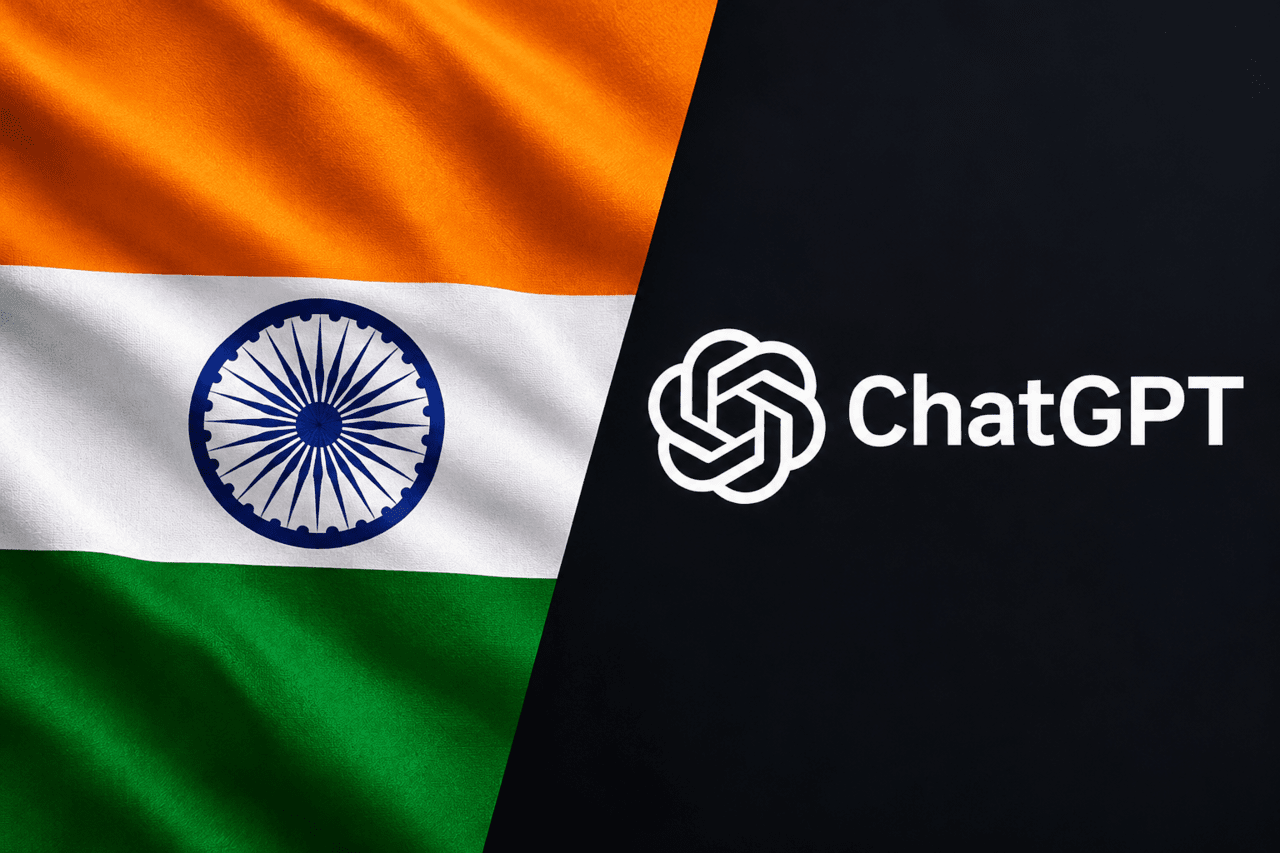
India has replaced the United States as the country with the most ChatGPT users. Prabhjit Singh, head of OpenAI India, said in an interview with The Economic Times published on November 3 (local time) that India had become the world’s largest market by weekly active users. The number of users in India has doubled since January this year.
“It has doubled in less than a year,” Singh said, explaining that users are beginning to find practical ways to use ChatGPT in their daily lives and at work. The interview was his first with the media since joining OpenAI in August. He reports to Kiran Mani, OpenAI’s Asia-Pacific chief.
◆ India ranked second to the United States in February… the two switched places in nine months
As recently as February, India was the country with the second-highest number of ChatGPT users, behind the United States. At the time, OpenAI CEO Sam Altman said India had about 100 million weekly users and more student users than any other country. Weekly active users are people who use the service at least once in a week, and include both free and paid users. OpenAI has not disclosed the current number of users in India.
Low prices and localization have fueled the growth. In August last year, OpenAI launched ChatGPT Go in India for 399 rupees a month (around 6,000 won). The plan costs less than Plus, which is $20 per month, while offering more messages and file uploads than the free plan. In November that year, the company also began offering Go free to users in India for 12 months. The promotion ended on January 21 this year.
OpenAI opened its first office in India, in New Delhi, last August and began hiring locally. In February this year, it announced the OpenAI for India program and plans to expand its presence to Mumbai and Bengaluru. Altman said at the time that nearly half of ChatGPT users in India were between 18 and 24 years old. The country’s young population and low-cost access have helped it grow into OpenAI’s largest market by users.
◆ Targeting entry-level Android phones
OpenAI’s next target is the large share of India’s population that does not yet use ChatGPT. Singh said that many Indians do not speak English as their first language, and that the company is focusing on support for regional languages, including Hindi. It is expanding voice features for Indian languages and improving the service so it runs smoothly even on entry-level Android phones with limited memory and processing power.
The company is also adjusting its product development priorities to suit local conditions. Rather than developing features for iPhone first and then bringing them to Android, it is giving Android priority—a strategy that reflects the widespread use of relatively inexpensive Android phones in India.
OpenAI is also investing in infrastructure to attract business customers. It is working with HyperVault, a data center business operated by Tata Group IT services company TCS. The project is part of OpenAI’s global AI infrastructure initiative, Stargate. It is expected to begin at an initial capacity of 100 megawatts (MW), with the potential to expand to as much as 1 gigawatt (GW) over the long term. OpenAI is set to be HyperVault’s first customer.
Securing data center capacity in India is also important for winning corporate and public-sector customers. Banks, insurers and government agencies, among others, have strict requirements for data storage locations and security. OpenAI also offers local AI inference through Amazon Bedrock.
Singh said Indian companies are moving beyond AI pilot projects and beginning to use the technology in actual business operations. He cited JioHotstar and used-car marketplace Cars24 as examples. The coding agent Codex is also growing quickly in India, he said, with developer adoption increasing beyond the country’s major cities.
◆ No guarantee that leading in users means leading in revenue… Claude is growing too
India is a fast-growing market in terms of users, but user numbers do not necessarily translate directly into revenue. According to app-market research firm Sensor Tower, consumer spending on mobile apps in India totaled $345 million (about 477.8 billion won) in the second quarter of this year, up 35% from the same period a year earlier.
This was the highest growth rate among major markets. Over the same period, consumer spending in the U.S. app market fell 3%. These figures cover consumer spending across India’s entire mobile app market, not just generative AI apps.
ChatGPT is among the most-downloaded apps in India, with cumulative downloads exceeding 358 million. Anthropic’s competing service, Claude, is also growing rapidly in the paid market. Sensor Tower data show that Claude ranked fifth among generative AI apps in India by downloads in the second quarter of this year, but second by revenue. Claude’s revenue in India grew more than 19-fold from a year earlier.
Singh said he expects paid subscriptions to increase as users experience the value of the service. For now, however, he said the priority is expanding AI use rather than converting users to paid plans. Advertising and payments are the areas OpenAI is focusing on to generate revenue from its user base.
At the end of August, OpenAI expanded the sale of ChatGPT advertising to India and other markets. Ads are shown to adult users on the free and Go plans. Singh said advertising could help support free and low-cost plans, stressing that advertisers cannot access users’ conversations and that ads do not influence ChatGPT’s answers.
To bring local advertisers on board, OpenAI has also partnered with Indian payments company Razorpay. On October 5, Razorpay announced that it was working with OpenAI to help Indian businesses run ChatGPT ads through its Engage marketing platform. The platform organizes product information, manages advertising campaigns and analyzes their performance. AI agents automate some tasks, while people review the key decisions.
Businesses taking part in the initial phase include jewelry brand Tanishq, fashion brand Fastrack, e-commerce service Tata Neu and insurer Axis Max Life. Rahul Kothari, Razorpay’s chief operating officer, predicted that shopping habits could shift, with consumers asking AI assistants what products to buy instead of searching for products themselves.
◆ Shopping and payments inside ChatGPT
Payments are another business OpenAI is pursuing alongside advertising. Singh said further announcements related to India’s UPI system would be made in the coming weeks. UPI, operated by the National Payments Corporation of India (NPCI), is a real-time bank transfer system widely used for sending money and paying for goods by smartphone.
Last October, OpenAI launched a pilot for “agentic payments,” which lets users select and pay for products within ChatGPT conversations, in partnership with NPCI, Razorpay and others. When a user asks an AI to buy a product, the AI helps with the purchase process, and payment is made within limits approved in advance. Axis Bank and Airtel Payments Bank took part in the pilot, with grocery delivery company BigBasket joining as an initial merchant.
Singh stressed that user trust and clear regulation are necessary for AI agents to take part in actual financial transactions. OpenAI is consulting with government agencies, banks and financial companies to prevent misuse of AI agents and ensure the safety of financial infrastructure.
South Korea and India are different kinds of markets for OpenAI. When it established its South Korean subsidiary in May last year, OpenAI said South Korea ranked second in the world after the United States in paid subscribers. India, by contrast, has become the world’s largest market by total users, but OpenAI has not disclosed country-by-country figures for paid subscribers or revenue.
In India, OpenAI is seeking to convert the user base it has built with low-cost plans into advertising and payments revenue. If the strategy succeeds, it could be applied in other emerging markets where the share of paid subscribers is low.