
Following an analysis by the Korea Customs Service and Chung-Ang University, products from India blocked during customs clearance were determined to be counterfeit based on an assessment by the trademark holder.
The medicines, which require refrigerated storage at 2–8°C, were shipped without a cold chain. “For injectable drugs, ensuring sterility is crucial.”
Cases of illegal smuggling rose from four in 2024 to 5,030 through August this year, with international mail accounting for 80% of the total.
Key points
▶ The Korea Customs Service said on September 17 that it is strengthening customs inspections of travelers’ belongings, express cargo and international mail as the illegal importation of weight-loss drugs such as Mounjaro and Wegovy increases.
▶ The number of cases rose from four in 2024 to 1,189 in 2025 and reached 5,030 by August this year alone—4.2 times the total for last year. Of the 6,223 cases recorded over the past three years, 4,961, or 80%, involved international mail.
▶ Mounjaro and Wegovy are harmful medicines reported to the Korea Customs Service by the Ministry of Food and Drug Safety. They can clear customs only when accompanied by required documents, such as an exemption recommendation for import requirements. If the requirements are not met, customs clearance is suspended and the products are returned or destroyed.
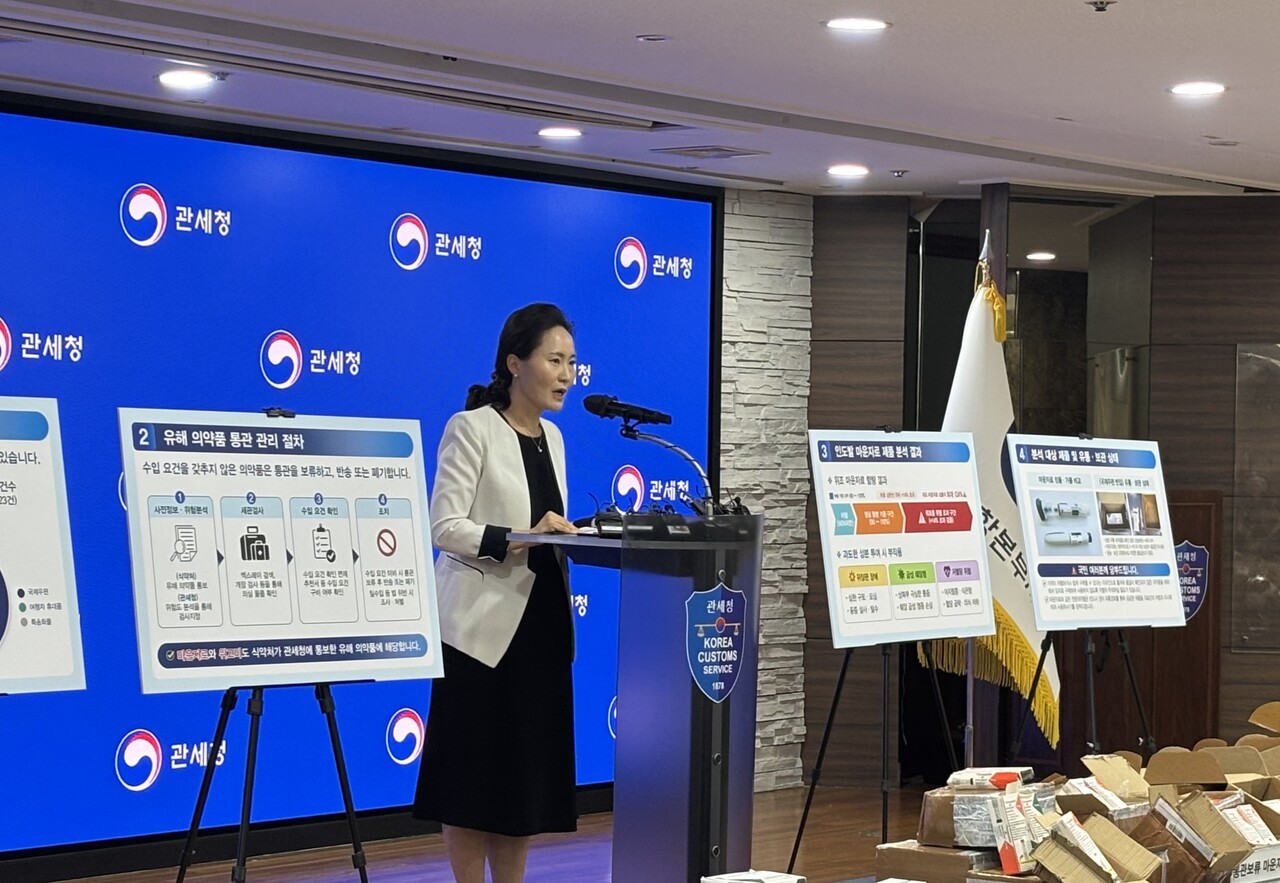
The Korea Customs Service, headed by Commissioner Lee Jong-wook, said on September 17 that it is strengthening customs inspections along major entry routes as the domestic inflow of weight-loss drugs such as Mounjaro and Wegovy has increased significantly. It also disclosed that an analysis of Mounjaro from India intercepted during customs clearance confirmed that it was counterfeit.
Two years ago, four cases became 5,030
There were four seizures in 2024. The figure increased to 1,189 in 2025 and reached 5,030 by August this year alone. That is 4.2 times last year’s total and 1,257 times the number recorded in 2024.
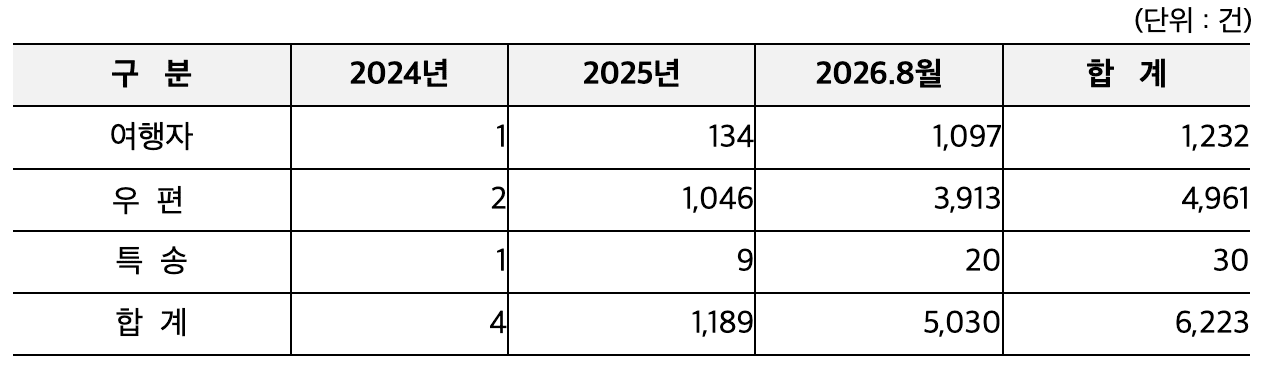
A total of 6,223 weight-loss drug seizures were recorded over the past three years. By entry route, international mail accounted for 4,961 cases, or 80%. Travelers’ belongings accounted for 1,232 cases, followed by express cargo with 30 cases. This year alone, there were 3,913 cases involving international mail, 1,097 involving travelers and 20 involving express shipments.
Seizures from travelers’ belongings increased from one case in 2024 to 1,097 cases this year. International-mail seizures rose from two cases to 3,913. The primary route was purchasing products from overseas websites and receiving them by mail—in other words, direct overseas purchasing.
The issue is not limited to weight-loss drugs. The Korea Customs Service seized approximately 60,000 cases of illegal medicines over the past three years, including about 21,000 cases through August this year.
Mounjaro and Wegovy are harmful medicines reported to the Korea Customs Service by the Ministry of Food and Drug Safety. They can clear customs only when they meet specified import requirements, such as having an exemption recommendation for import requirements. Customs officials identify the products through X-ray searches and inspections involving the opening of packages. If the requirements are not met, clearance is suspended and the products are returned or destroyed. When violations such as smuggling are confirmed, investigations and punishment are carried out under the relevant laws.
Inconsistent dosages and no refrigerated distribution
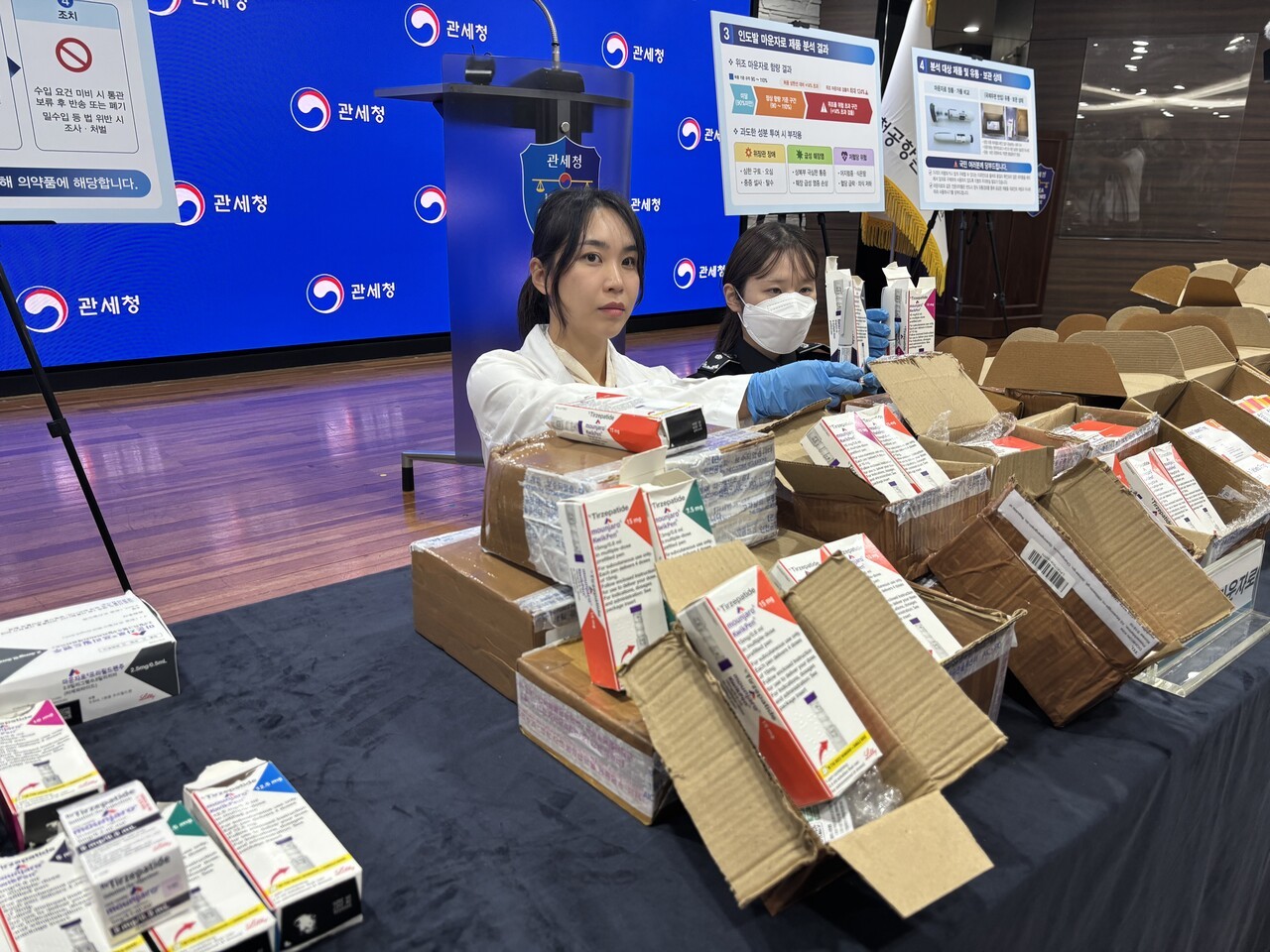
The Korea Customs Service operates a border-control system that combines on-site customs inspections with scientific analysis by the Central Customs Laboratory. The laboratory analyzes the ingredients and characteristics of goods seized or held during customs clearance, supporting customs clearance decisions, enforcement and criminal investigations.
This time, researchers from Chung-Ang University’s College of Pharmacy worked with the laboratory to analyze Mounjaro from India that had been blocked at the customs-clearance stage. The Central Customs Laboratory measured the concentration of the active ingredient tirzepatide using an analytical method established by the National Institute of Food and Drug Safety Evaluation.
Tirzepatide acts simultaneously on GIP and GLP-1 receptors, which help regulate blood sugar and suppress appetite. The Chung-Ang University researchers—Kim Soo-hyun, Choi Jong-woo and Byun Soo-bin—conducted an intensive analysis focused on impurities.
The concentration of the active ingredient varied significantly from product to product, and multiple unidentified impurities were detected in some products. Based on these findings, the Korea Customs Service said the Mounjaro samples analyzed could not be considered products whose quality and safety as medicines were assured.
The distribution process was also problematic. The products were transported without the refrigerated distribution system, or cold chain, required to maintain pharmaceutical quality. Mounjaro is generally required to be stored under refrigeration at 2–8°C. This means quality control is important not only during manufacturing but also during transportation and storage.
The products were subsequently confirmed to be counterfeit following an assessment by the trademark holder.
Professor Na Dong-hee of Chung-Ang University’s College of Pharmacy said, “This analysis found that the amount of active ingredient was inconsistent between products and that unidentified impurities were present. Injectable drugs require strict manufacturing and quality control not only to manage active ingredients and impurities but also to ensure sterility. It may be dangerous to purchase and use products of unverified origin and quality on one’s own.”
Weight-loss drugs are prescription medicines that require a doctor’s prescription. Whether treatment or administration is necessary, and which product is appropriate, should be determined through a medical consultation.