
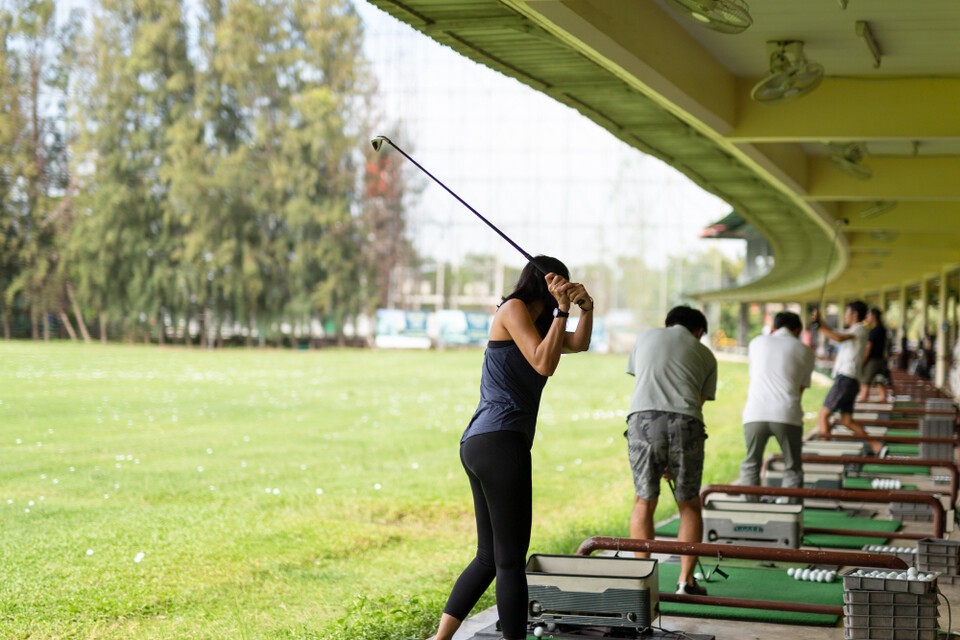
As golf balls that fly out of outdoor driving ranges continue to strike nearby homes and vehicles, the government has moved to tighten safety standards.
The Anti-Corruption and Civil Rights Commission said on the 28th that it had prepared a “plan to secure safety at outdoor golf driving ranges” and recommended it to the Ministry of Culture, Sports and Tourism. The aim was to revise the overall management system so that both nearby residents and users can be protected.
Golf balls that shattered car windows and fell into yards
Damage caused by golf balls flying out of driving ranges is nothing new.
One complaint filed in June last year described the concerns of a family with a five-year-old child. Golf balls launched from a nearby range had landed all over their home, leaving them afraid their child might be struck. In March this year, a parked vehicle was hit by a golf ball, breaking the rear window and molding. The complainant said, “If a car window can be broken, a person struck could suffer serious injury or even die.”
What is more serious is the repetition. One resident said they had been requesting corrective action every year since 2018 because golf shots from a range next to their home kept falling onto the property, but the damage continued because the operator did nothing. A survey conducted by a county in 2022 also found numerous cases in which people were nearly hit and property was damaged.
Self-inspections were poorly managed from the start
While the damage piled up, the safety inspection system remained flimsy.
Operators of outdoor golf driving ranges are required to conduct self-inspections every six months and register the results on the Sports Facility Information website. However, authorities found that many operators did not upload their inspection results at all.
The bigger problem was the inspection checklist itself. The steel towers supporting the netting are core structures exposed to rain, wind and temperature changes, but they had been excluded from the self-inspection items.
There was also no manual for responding to extreme weather. Safety management guidelines that specify step-by-step responses to severe conditions such as strong winds or heavy snow were missing. The commission said this gap has increased the risk that small problems could escalate into major accidents.
Double netting, tower inspections and extreme weather manuals
The latest recommendations are built around three measures. First, outdoor golf driving ranges located near residential areas or buildings will be required to install double netting to prevent golf balls from escaping. This reflects field experience showing that a single layer of netting is not enough to stop strongly hit balls.
The self-inspection management system will also be strengthened. A new measure will encourage operators who have not registered their inspection results by sending text messages and similar reminders. Steel towers, which had been left out until now, will be explicitly added to the inspection items so their condition is checked regularly.
The recommendations also include the creation of manuals for responding to extreme weather. They will contain step-by-step actions and facility management rules for situations such as strong winds and heavy snowfall, with the goal of improving on-site response capability.
“Through this regulatory improvement, we will be able to address the safety and property damage concerns that residents around outdoor golf driving ranges have been experiencing,” said Kim Gi-seon, director of the Rights Improvement Policy Bureau at the commission. “We will continue to develop institutional improvements to protect public safety.”
What remains to be seen is when and how the Ministry of Culture, Sports and Tourism will accept the recommendation. The scope of mandatory double-netting installation, whether existing facilities will be subject to retroactive application, and the severity of penalties for operators who fail to register self-inspections are expected to be determined in the follow-up institutionalization process.