
After Jensen Huang’s resignation, U.S. lawmakers are pressing to tighten chip export controls on China; Chinese expert calls the move a “miscalculation.”
U.S. government says the Nvidia controversy is not a negotiating issue, as tensions rise ahead of the U.S.-China summit in Shenzhen on Nov. 19.
Key points
▶ A Chinese expert has warned that China could respond to tighter U.S. semiconductor export controls by restricting rare-earth exports.
▶ The U.S. government says the Nvidia controversy will not have a substantive impact on the U.S.-China summit scheduled for Nov. 19.
▶ Observers say a renewed clash between the two countries could also affect South Korea’s semiconductor, automotive and electronics industries.
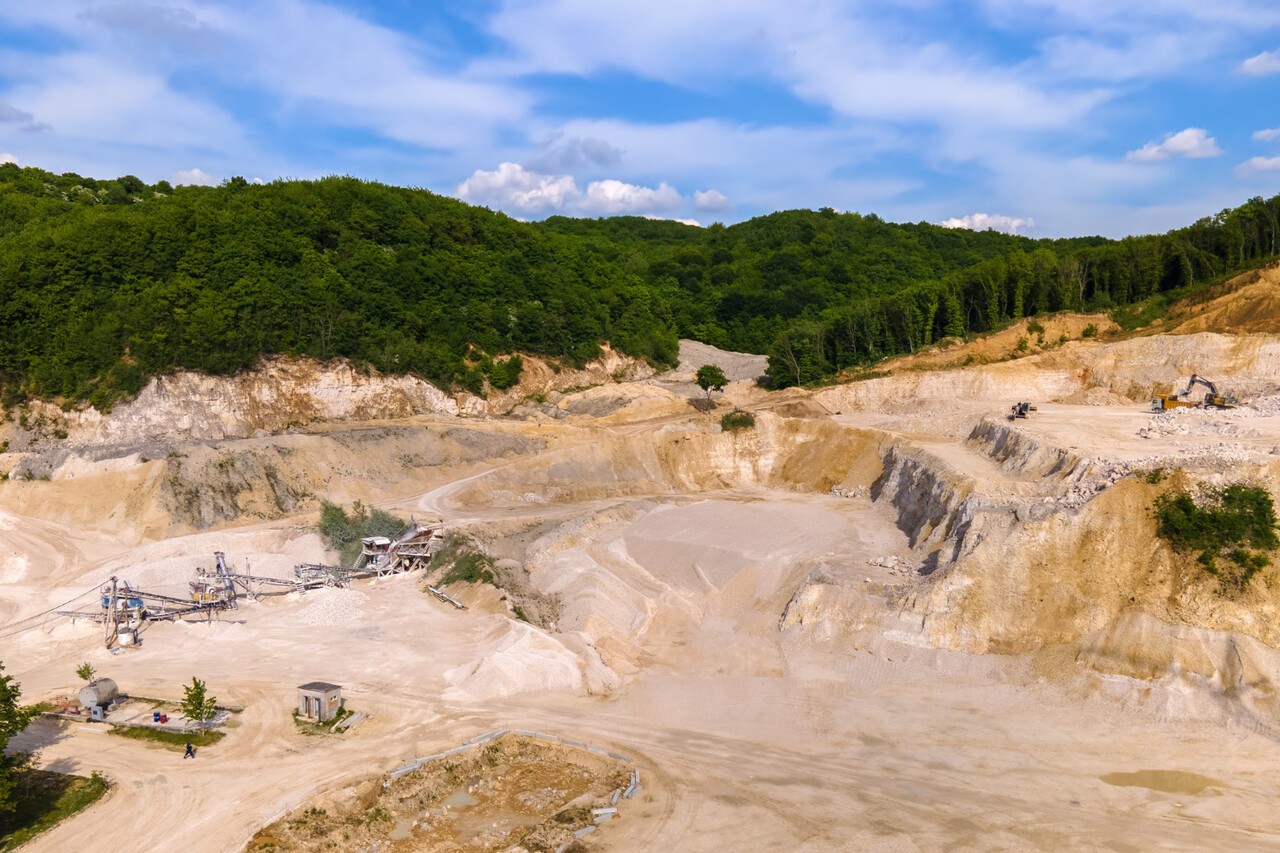
A warning has been issued that China could retaliate with restrictions on rare-earth exports if the United States tightens semiconductor export controls on China in response to the Nvidia controversy. Tensions between the two countries over semiconductors and critical minerals are rising again ahead of the U.S.-China summit in Shenzhen on Nov. 19.
Hong Kong’s South China Morning Post reported on Nov. 13 local time that Victor Gao, vice president of the Center for China and Globalization, a Chinese think tank, had strongly criticized the possibility of additional U.S. semiconductor restrictions.
Gao said U.S. politicians were making a poor judgment by seeking to use the controversy surrounding Nvidia as a means of pressuring China. If the United States expands restrictions on semiconductor exports, China could tighten controls on rare-earth exports in response, he said.
He argued that U.S. restrictions would ultimately encourage China’s semiconductor industry to become self-reliant. He also said China could achieve semiconductor self-sufficiency within a few years and become a major exporter.
Gao’s remarks are the views of an individual affiliated with a private think tank, not an official statement by the Chinese government. They have drawn attention because they set out a potential response China could use to counter further U.S. restrictions.
◆ Calls in Congress to tighten restrictions on China after Huang’s resignation
The controversy surrounding former Nvidia CEO Jensen Huang has fueled calls in U.S. political circles for tighter semiconductor export controls.
Huang resigned as CEO and from Nvidia’s board on Nov. 12, 33 years after co-founding the company, following reports that he had a personal relationship with someone suspected of having ties to Chinese intelligence services.
Huang had previously acknowledged a relationship with Alice Huang, a former executive at Singapore-based Megaspeed. Further allegations involving Nvidia executives later emerged, leading to his resignation.
Nvidia appointed Chief Financial Officer Colette Kress as interim CEO. The board, led by Chairman Harvey Jones, began searching for a permanent successor. Nvidia shares fell more than 14% at one point on Nov. 12, the day Huang’s resignation was announced.
In Congress, some lawmakers are now calling for a review of licenses for exports of advanced semiconductors to China in light of the controversy.
Three House committees have asked Huang to provide explanations. Some lawmakers have also called for a halt to licenses allowing Nvidia to sell H200 chips to Chinese companies and for restrictions on Chinese companies’ remote access to U.S.-made AI chips.
The “Remote Access Security Act,” which would regulate the use of U.S.-made semiconductors by Chinese companies through data centers overseas, has also become a major point of debate. The bill passed the House in January but is still awaiting consideration in the Senate.
◆ China’s rare-earth export controls as a countermeasure
Rare earths, cited as a potential Chinese countermeasure, are essential materials for advanced manufacturing, including electric vehicles, industrial motors and defense equipment.
China introduced an export licensing system for certain medium and heavy rare earths in April last year. It has since managed tensions over supplies of critical minerals and exports of advanced semiconductors while conducting trade negotiations with the United States.
Gao argues that if the United States further tightens semiconductor restrictions, China could use its influence over critical-mineral supply chains.
Wang Yingliang, editor of Chinese economic outlet Sharp Voice, also suggested that the United States could turn the Nvidia controversy into a national security issue and use it to justify semiconductor export restrictions. China could respond through sanctions on U.S. companies, rare-earth export controls and trade negotiations, he said. He added that China could withstand a short-term supply shock given its semiconductor inventories and level of domestic technological development.
Chinese experts believe that U.S. semiconductor restrictions could instead accelerate the development of domestic technologies by Chinese companies and strengthen the independence of their supply chains.
◆ U.S. says export controls are not a subject for negotiations
The U.S. government says it will treat the Nvidia controversy and the U.S.-China summit as separate matters. A senior U.S. official said at a briefing on Nov. 13 that the Nvidia issue would not have a substantive impact on President Donald Trump’s visit to China. The official also emphasized that semiconductor export controls and national security matters are decided through internal government procedures and are not subjects for trade negotiations with China.
The issue involving Huang was reportedly not discussed at the first meeting of the U.S.-China Trade Council, held the same day by the Office of the U.S. Trade Representative and the Treasury Department with a Chinese delegation.
The two countries are pursuing a leaders’ meeting on the sidelines of the Asia-Pacific Economic Cooperation (APEC) summit, which will be held in Shenzhen, China, on Nov. 18 and 19. Trump and Chinese President Xi Jinping are scheduled to meet on Nov. 19.
Topics expected to feature at the meeting include China’s purchases of U.S. agricultural products, its commitments on critical-mineral supplies, cooperation in AI and tariffs.
Trump has previously praised Huang’s business acumen and pursued a policy allowing some sales of Nvidia semiconductors to China.
Some observers expect Trump to maintain the existing export policy even after Huang’s resignation. It remains uncertain whether congressional calls for tighter restrictions will translate into actual administration policy.
◆ Renewed tensions over semiconductors and rare earths could affect South Korean industries
If U.S. semiconductor restrictions and Chinese rare-earth export controls are both tightened, the impact could spread to major South Korean manufacturers.
If the United States further restricts Nvidia’s supply of AI semiconductors to China, the supply arrangements for high-bandwidth memory (HBM) from Samsung Electronics and SK Hynix could also change. The volume and composition of AI semiconductors supplied to the Chinese market may shift.
If China tightens rare-earth export controls, supply-chain uncertainty could also grow for the automotive and electronics component industries. Rare-earth permanent magnets are used in electric-vehicle drive motors and a range of industrial equipment.
On Nov. 9, the South Korean government told the National Assembly that there would be no disruption to the schedule for Nvidia GPU deliveries. The U.S. government continues to maintain that it will keep the Nvidia controversy separate from the summit. China, for its part, has not officially announced any additional restrictions on rare-earth exports.
How the two countries manage semiconductor and critical-mineral issues at the U.S.-China summit on Nov. 19 is expected to be a key factor shaping future technology and trade tensions.