
▶ SK Group Chairman Chey Tae-won had lunch in Seoul on October 31 with OpenAI CEO Sam Altman, who was visiting South Korea. Senior executives from SK hynix and SK Telecom also attended.
▶ The discussions were not disclosed. Business circles expect the two sides to have focused mainly on existing areas of cooperation, including high-bandwidth memory (HBM) supplies and AI data center construction.
▶ On October 1 last year, SK and OpenAI signed a letter of intent (LOI) on memory supplies and a memorandum of understanding (MOU) to cooperate on an AI data center in southwestern Korea.
▶ SK hynix said it would establish production capacity to meet OpenAI’s request for up to 900,000 DRAM wafers per month.
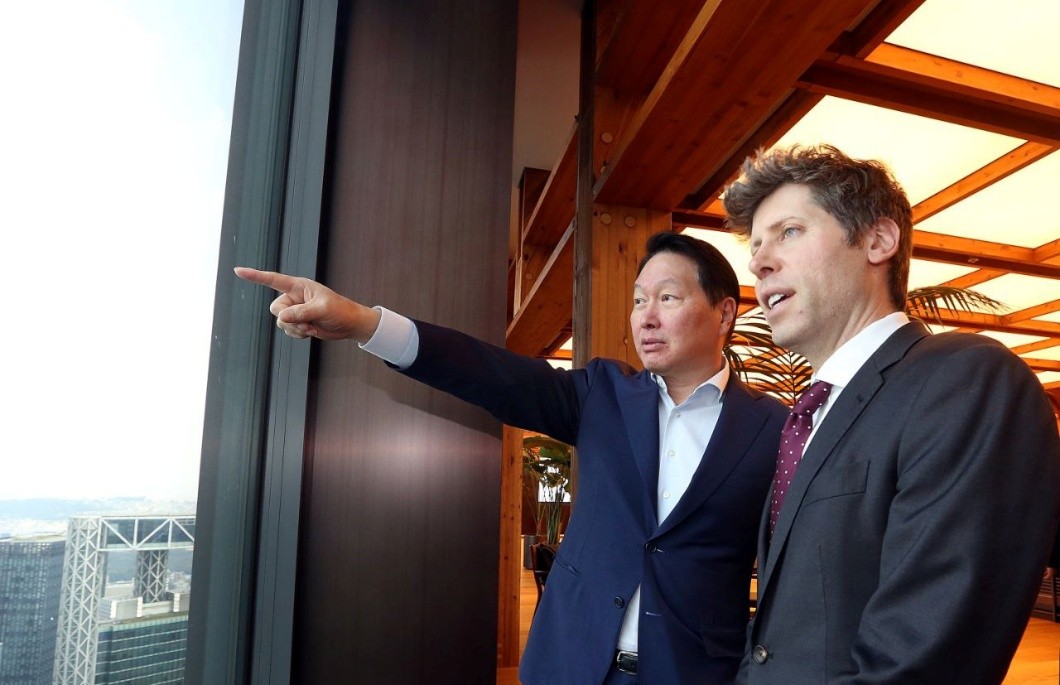
SK Group Chairman Chey Tae-won had lunch in Seoul on October 31 with OpenAI CEO Sam Altman, who was visiting South Korea. Senior executives from SK hynix and SK Telecom also attended. The topics discussed were not made public.
Business circles believe the meeting focused mainly on cooperation projects agreed upon a year ago, including supplies of high-bandwidth memory (HBM) and the construction of AI data centers.
Altman was in South Korea for a two-day, one-night visit. On the same day, he also met with more than 50 presidents of Samsung affiliates at the Samsung Human Resources Development Center in Yongin, Gyeonggi Province. OpenAI Hardware Vice President Richard Ho and others accompanied him.
A year-old pledge: 900,000 wafers a month and a data center in southwestern Korea
Cooperation between SK and OpenAI began on October 1 last year at SK’s Seorin Building in Jongno-gu, Seoul. That day, Chey and Altman signed an LOI on memory supplies and an MOU on cooperation to build an AI data center in southwestern Korea.
SK agreed to participate in OpenAI’s large-scale AI infrastructure initiative, Stargate. SK hynix said it would establish production capacity to meet OpenAI’s HBM demand—up to 900,000 DRAM wafers per month. This was a production-capacity plan, however; the actual supply volume, price and timing were to be negotiated later.
SK Telecom agreed to jointly build an AI data center with OpenAI in southwestern Korea, identify AI use cases for businesses and consumers, and develop next-generation data center technologies. OpenAI also signed a separate LOI that day with Samsung Electronics and other Samsung affiliates.
The data center still has no site
A year later, construction has yet to begin on the AI data center in southwestern Korea. When the cooperation was announced last October, the companies discussed building an initial 20-megawatt data center in South Jeolla Province, as well as a facility of similar size in Pohang with Samsung. So far, however, no specific site, investment amount or construction schedule has been announced. Industry sources say the companies are struggling to find a location with reliable access to the electricity and water needed to operate a large-scale data center.
OpenAI’s role in the project is also unclear. Asked about its investment plans and level of involvement, OpenAI said discussions were still underway. South Korea is not included on the list of global Stargate projects officially announced by OpenAI, and related reports describe expanding data center capacity in the country as something being “explored” or “considered.” Projects have also encountered delays overseas: Stargate initiatives in the United Kingdom and Norway were reportedly put on hold temporarily earlier this year.
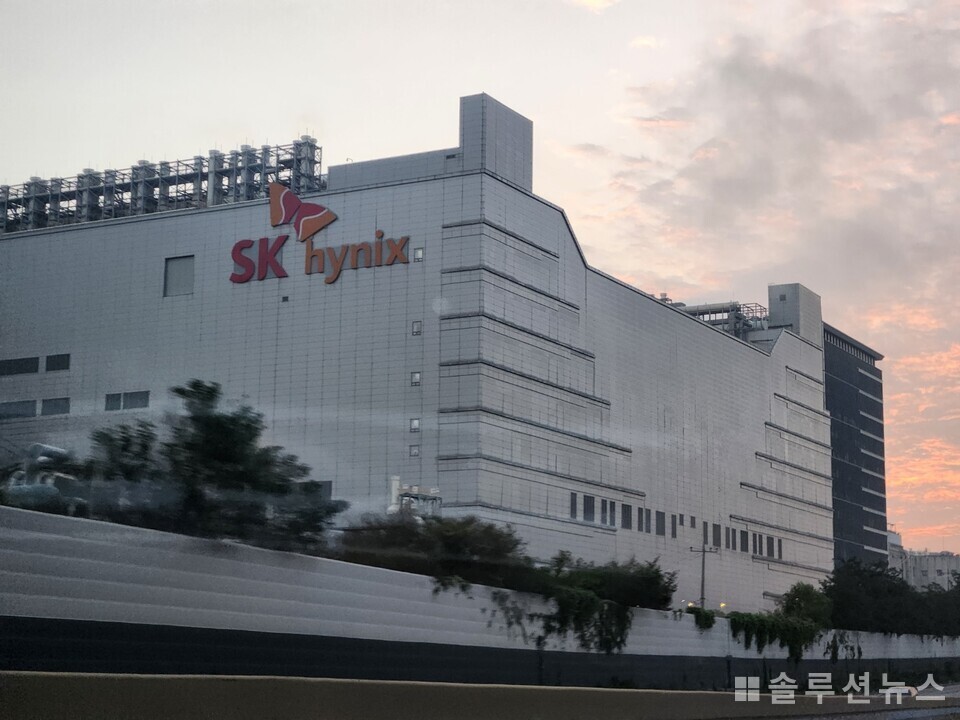
By contrast, there has been tangible progress in memory chip supplies. At its third-quarter earnings briefing on October 28, SK hynix said its DRAM and HBM production for the next three years, through 2029, was effectively sold out.
Through long-term supply contracts, the company has already secured more than 50% of its production capacity for 2027 and 2028. Its customers include 14 companies, among them global cloud service providers. It has not disclosed whether OpenAI is among those customers or how much of last year’s proposed supply of 900,000 wafers per month has translated into actual contracts.
The fourth meeting, with Samsung’s presidents also on the same day
This was the fourth meeting between Chey and Altman. They previously met at OpenAI’s headquarters in San Francisco in June 2024, in Seoul in February last year, and at the AI Summit in San Francisco this July, where they discussed cooperation on AI infrastructure, including HBM and DRAM, as well as the SK Group’s AI transformation.
On October 31, Altman met with Samsung’s presidents to discuss corporate strategy for the next decade. The meeting followed an AI training session for Samsung’s presidents in June. “Simply using AI does not, by itself, create a sustainable competitive advantage,” he said, emphasizing execution and product competitiveness.
Samsung has completed AI training for about 2,300 executives and plans to finish training all employees by next February.
Neither SK nor Samsung announced new contracts or investments during Altman’s visit to South Korea.