
Key points
A letter circulating on social media claimed that senior NVIDIA executives were threatening to resign unless former CEO Jensen Huang returned. It was confirmed to be a forgery, adapted from a protest letter OpenAI employees wrote when Sam Altman was ousted in 2023.
NVIDIA executives named in the letter said it was fake. At the same time, some people inside the company have voiced concern about Huang’s departure. His exit after 33 years at the helm has fueled unease both inside and outside the organization.
After founding NVIDIA in 1993, Huang turned it from a graphics-chip company into a central player in the global AI industry, building on GPUs and CUDA. The company now faces the task of establishing a new leadership structure for the first time without its founder.
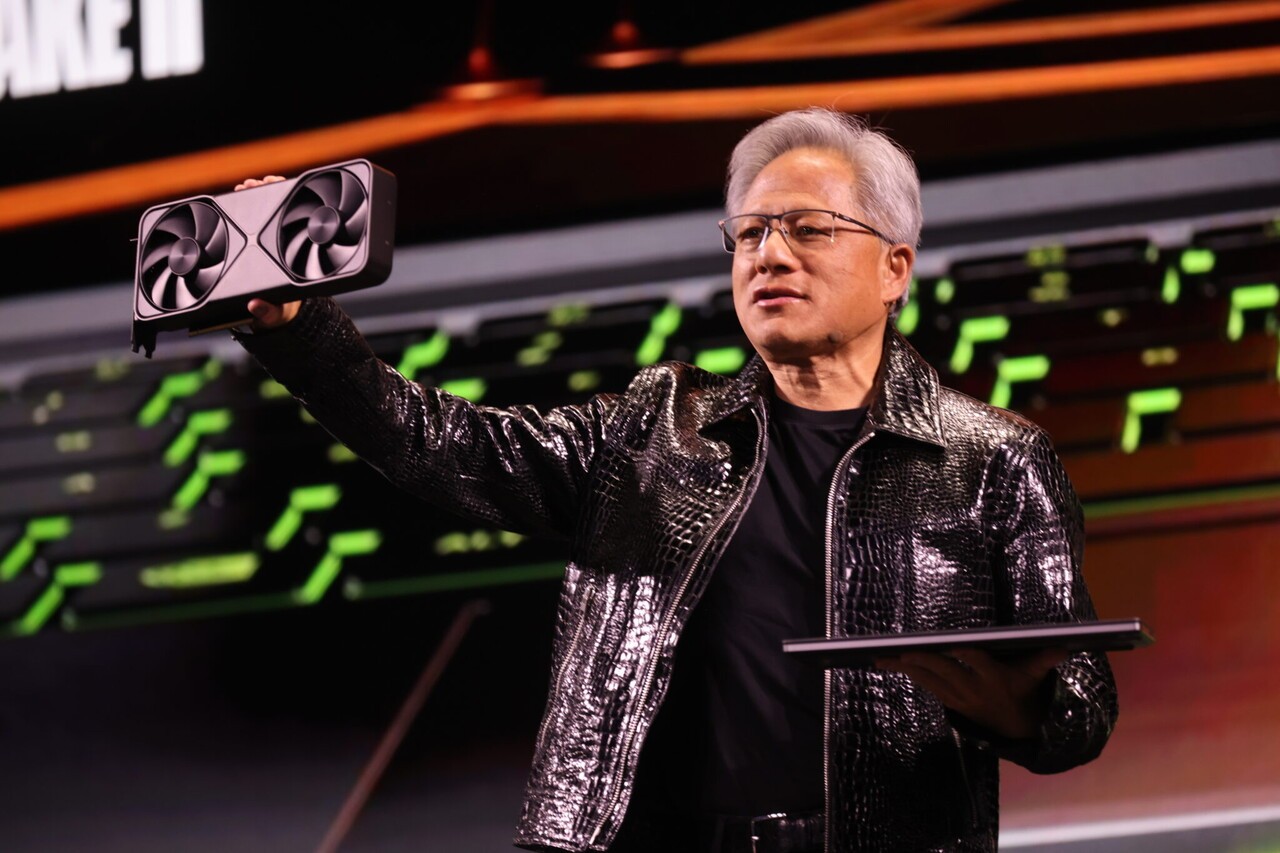
A letter claiming that senior NVIDIA executives had threatened mass resignations to demand the return of former CEO Jensen Huang spread online, but turned out to be forged. It was largely copied from a protest letter OpenAI employees sent in 2023 when CEO Sam Altman was dismissed.
The fake letter appeared shortly after Huang stepped down from NVIDIA, which he had led for 33 years. With some employees also calling for his return, attention has turned to the leadership vacuum and internal uncertainty facing the company after its founder’s departure.
On the 13th, a letter was posted on social media platform X claiming that senior NVIDIA technology executives had asked the board to reinstate Huang.
The document called for the entire board to resign, for new independent directors to be appointed, and for Huang to return as CEO. It also claimed that, if those demands were rejected, the executives would leave NVIDIA and join Terafab, a semiconductor manufacturing project being pursued by Elon Musk.
The list of signatories included the names of key NVIDIA figures, including Vice President Ian Buck, Chief Scientist Bill Dally, Chief Technology Officer Michael Kagan, and co-founder Chris Malachowsky.
However, the letter was found to be an altered version of a protest letter OpenAI employees sent to the board in November 2023. At the time, more than 700 OpenAI employees called for Altman’s return and the replacement of the board, saying they would move to Microsoft if their demands were not met.
In the latest document, NVIDIA replaced OpenAI, and Huang replaced Altman. A claim that Microsoft would guarantee jobs for the employees was also changed to refer to Musk and SpaceX.
Brian Catanzaro, NVIDIA’s vice president of applied deep learning research, whose name appeared on the list, said on X that the letter was an obvious forgery. He stressed that he had not signed it and would not have joined even if it had been genuine. Catanzaro said he regretted Huang’s departure but trusted and supported the board’s decision.
Calls for Huang’s return have also emerged independently of the fake letter
The reason the forged document drew attention is that real calls for Huang to return have been voiced inside NVIDIA.
According to U.S. technology publication WIRED, a longtime NVIDIA engineer posted on an internal feedback board that the company should listen to employees before making decisions about its leadership.
The post reportedly drew more than 1,600 comments, many of them expressing support for Huang’s return.
Calls for his return have also emerged outside the company. An online petition supporting Huang has been circulating, and some technology company executives have voiced their support. These efforts are separate from the forged letter’s claim that senior executives would resign en masse.
Employees’ calls for Huang to return cannot be explained by loyalty to the founder alone. He had served as CEO since founding the company, personally leading key technology developments and business shifts over the course of 33 years.
Much of NVIDIA’s current business structure and corporate culture took shape under Huang’s long tenure. That is why his departure represents a greater change than a typical CEO transition.
A restaurant in 1993
In 1993, Jensen Huang and co-founders Chris Malachowsky and Curtis Priem conceived the idea for NVIDIA at a Denny’s restaurant in San Jose, California.
Huang, then 30, believed graphics technology would play an important role in the personal computer industry. NVIDIA began developing chips designed for gaming and computer graphics.
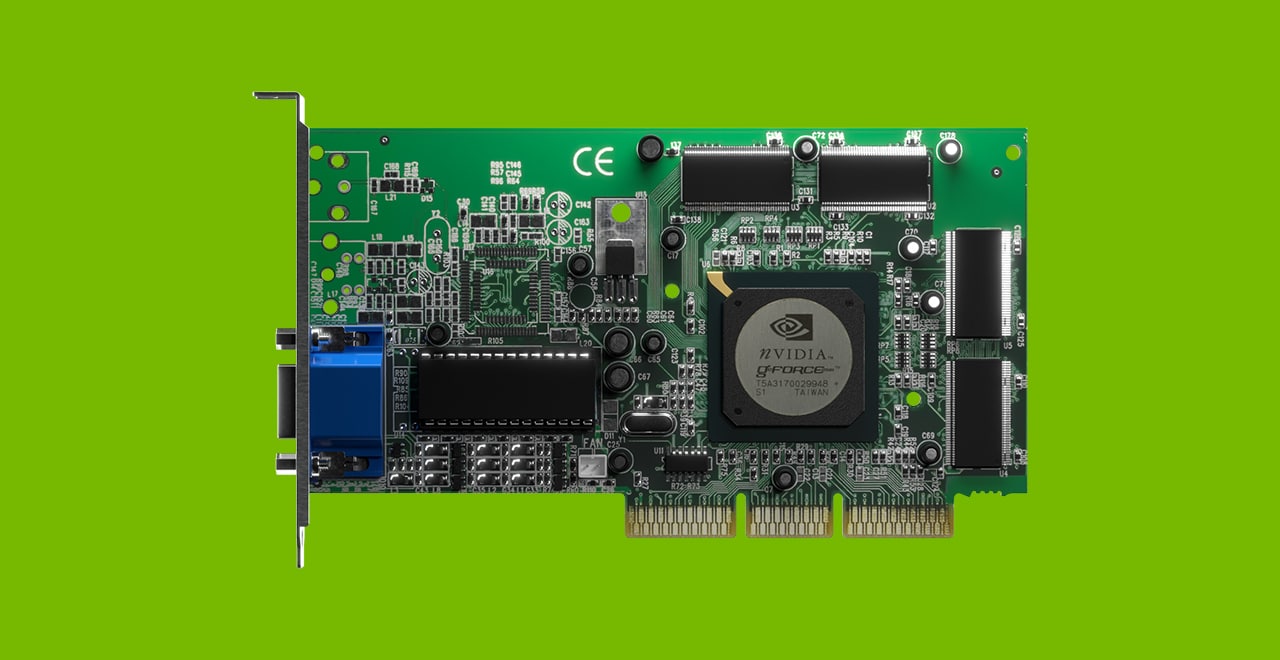
A major turning point came in 1999, when NVIDIA released the GeForce 256 and prominently introduced the term “GPU,” or graphics processing unit. The company presented a chip dedicated to complex 3D graphics calculations as an independent computing device. GPUs later evolved from components used to render video game graphics into computing devices capable of handling large-scale parallel processing.
Huang believed GPUs could be used for a range of calculations beyond graphics processing, including scientific research and data analysis. That vision took shape in 2006 with the launch of CUDA, or Compute Unified Device Architecture.
CUDA is a software platform that allows developers to use GPUs’ parallel-processing capabilities in general-purpose programs. It laid the groundwork for expanding GPUs from graphics-specific devices into general-purpose computing devices.
At the time, a market for general-purpose computing with GPUs had yet to take shape. NVIDIA invested for years in developing CUDA and building a software ecosystem. Those efforts later became a key source of the company’s competitive advantage as the AI industry grew.
That strategy paid off in the AI era
NVIDIA’s technology strategy began to attract attention as deep-learning research advanced rapidly. AlexNet, an image-recognition model developed by researchers at the University of Toronto in 2012, demonstrated the potential of using GPUs for deep learning.
The researchers used NVIDIA GPUs to train the model on a large image dataset, and it outperformed existing approaches in the ImageNet competition. The result helped establish GPUs as suitable processors for AI training.
Demand for NVIDIA GPUs increased as deep-learning research expanded. The developer tools and software ecosystem built around CUDA became an important reason research institutions and companies chose NVIDIA products.
The market for generative AI grew rapidly after ChatGPT launched in late 2022, giving NVIDIA another major boost. Training and running large AI models requires enormous computing power. NVIDIA expanded its market dominance by supplying data-center AI computing systems that combine GPUs with high-speed connectivity, networking, and software.
NVIDIA’s market capitalization surpassed $1 trillion in 2023, $3 trillion in 2024, and $4 trillion in 2025. In October last year, it became the first company in the world to exceed $5 trillion.
Founded in 1993 as a graphics-chip company, NVIDIA grew over three decades into a key infrastructure provider for the global AI industry.
A founder-centered company
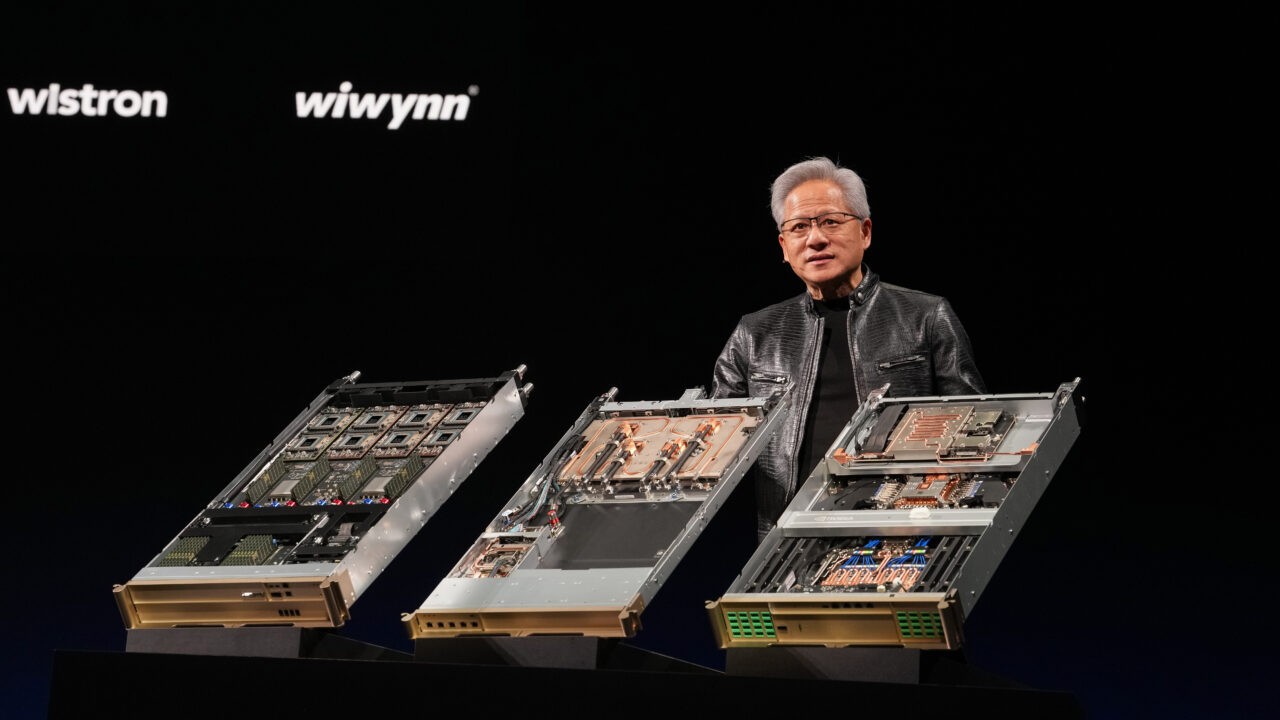
Huang was directly involved not only in setting the direction of technology development, but also in NVIDIA’s public strategy and product announcements. His appearances onstage in a black leather jacket to explain new products and technology roadmaps became an iconic image of the company.
At major developer events and product launches, he personally presented GPU architectures and AI computing strategies. Investors and customers looked to Huang’s presentations to understand NVIDIA’s long-term technology plans.
He also played a major role as NVIDIA expanded beyond GPU development into CUDA and AI data-center systems. His management style helped the company move quickly on technology shifts and make long-term investments.
With Huang’s departure, NVIDIA will establish a new leadership structure for the first time in 33 years. The next leadership team will have to preserve the company’s existing technological strengths while sustaining its growth in the AI chip market.
NVIDIA without Jensen Huang faces a test
NVIDIA officially announced on the 12th that Huang had stepped down as both CEO and a member of the board.
Earlier, he had acknowledged and apologized for a personal relationship with someone alleged to have ties to Chinese intelligence. After further reports about his private life emerged, the board launched an investigation.
NVIDIA did not give a specific reason for his resignation. According to a filing with the U.S. Securities and Exchange Commission (SEC), the board accepted his resignation on the 11th. The company made its official announcement on the 12th.
NVIDIA appointed Chief Financial Officer Colette Kress as interim CEO. Harvey Jones became board chair, and the company is considering candidates for the next CEO from both inside and outside the company.
The fake letter calling for Huang’s return was a fabricated document that surfaced shortly after his departure. But the episode also highlighted what the absence of the company’s founder could mean for NVIDIA.
GPUs, CUDA, and the AI computing ecosystem are among the key assets Huang leaves behind at NVIDIA. The company’s accumulated technology and development teams remain in place.
NVIDIA must now preserve the technological edge and market position Huang built without the founder who led it for 33 years. How the next leadership team carries forward the company’s long-term technology strategy and finds new engines of growth is likely to be a key measure of NVIDIA’s future performance.