
The provisional agreement reached just before midnight at the Gyeonggi Regional Employment and Labor Office in Suwon
The compromise between labor and management that tied together the same compensation package for profitable memory and loss-making foundry operations
The final hurdle is a ratification vote by union members after six months of conflict
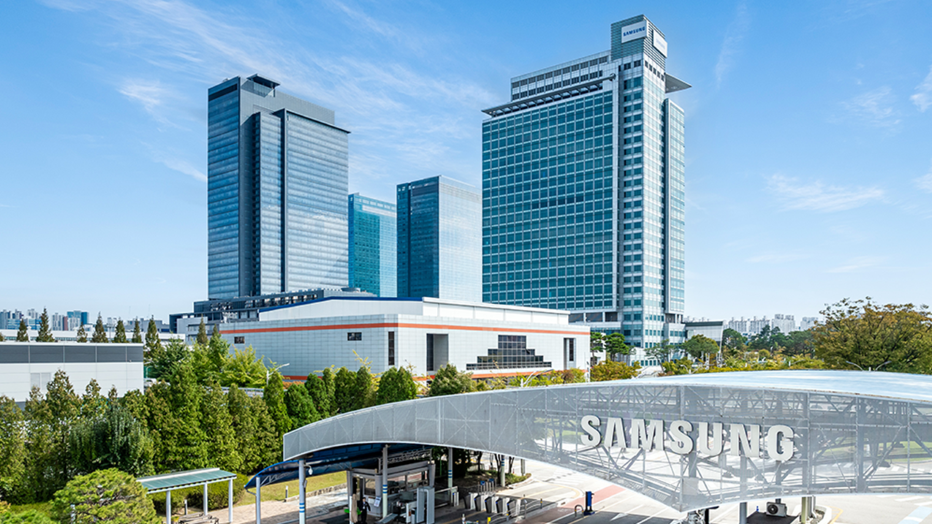
Samsung Electronics labor and management reached a tentative agreement on wages and the collective bargaining agreement on May 20, just before a general strike set for the early hours of the following day. With the union putting off the strike, a shutdown of semiconductor production lines was temporarily averted.
The significance of this agreement goes beyond merely stopping the strike. At its core, Samsung Electronics has designed a new performance-based pay system spanning 10 years. Labor relations that had been settled through annual wage negotiations have now been placed on a long-term timeline.
The deal was brokered through mediation personally led by Labor Minister Kim Young-hoon. Even after post-facto mediation by the Korea Labor Relations Commission fell through in the morning, additional negotiations chaired by the minister continued, and the agreement took shape around 10:40 p.m.
◆ How do you link together engineers in profit-making and loss-making divisions?
The central issue in this negotiation was how to treat profit-making and loss-making units within the same semiconductor division.
The organization that oversees Samsung Electronics’ semiconductor business is called the Device Solutions, or DS, division. Conditions within DS also differ sharply. The memory business is generating profits. In contrast, the foundry business and the System LSI business are in the red.
Management argued for differentiated payouts, invoking the principle that rewards should go where performance is. The union insisted that employees working in loss-making divisions are still semiconductor engineers like everyone else and demanded an allocation based on motivation. The two sides could not easily bridge the gap.
The agreement is the result of both sides stepping back one pace. The union accepted reducing the performance-based bonus funding from 15% of operating profit to 10.5% of business performance.
Management agreed to pay a certain level of performance bonus even to loss-making divisions. However, differentiated distribution for loss-making units has been postponed for one year and will be applied starting in 2027. In effect, the immediate clash has been deferred while time was bought.
◆ A 12% bonus and a 10-year timeline
The compensation structure outlined in the agreement has two tracks. The existing profit-sharing incentive (OPI) system remains in place. On top of that, a special management performance bonus for the DS division will be newly introduced. Combining the OPI at 1.5% and the special management performance bonus at 10.5% brings the total bonus scale to about 12%.
The special management performance bonus will be funded by 10.5% of business performance, as agreed by labor and management. There is no separate cap on the payout rate. The entire amount, after tax, will be paid in the form of company stock. Recipients cannot sell all of the shares immediately. One-third may be sold right away, but the remainder will be restricted for sale for one and two years, respectively.
The allocation ratio for the fund has been set at 40% for the division and 60% for the business unit. The payout rate for common organizations was aligned at 70% of the memory business unit’s payout rate. Loss-making business units will receive 60% of the common payout rate calculated using the division fund.
One notable point is the period of application. The special management performance bonus will remain in place for the next 10 years. However, conditions were attached.
From this year through 2028, the DS division must post annual operating profit exceeding 20 trillion won for the bonus to be paid. From 2029 through 2035, that threshold will be lowered to 10 trillion won in annual operating profit. The structure keeps the door to rewards open while fastening it with the lock of performance.
Employees in the DX division will separately receive 6 million won worth of company stock. The wage increase was set at 6.2%, consisting of a 4.1% base raise and a 2.1% performance-based raise. Labor and management also agreed on the in-house housing loan program, childbirth and congratulatory payments for employees’ children, and raising the salary cap. They plan to announce a fund-raising plan for mutual growth cooperation as well.
◆ Even after the agreement, the union’s internal arithmetic remains out of sync
The dispute over semiconductor performance bonuses has cooled. But this agreement has left a knot within the union that may be even harder to untie.
Over the past few months, the union’s bargaining power had been concentrated on the DS division’s performance bonus alone. During that time, the treatment of the DX division, which makes finished products such as smartphones and home appliances, was barely brought to the negotiating table.
This mismatch has already turned into an organizational rift. On the 4th, the Donghaeng Union, which is based in the DX division, withdrew from the joint bargaining team.
If the union cannot act as one, the burden on management could actually increase. It may become a reality that wages must be negotiated separately with the DS and DX divisions.
◆ The final gate is the members’ vote
The agreement is not yet the end. The tentative deal must still pass the final hurdle of a vote by union members. Samsung Electronics’ union will hold a vote from 2 p.m. on the 22nd to 10 a.m. on the 27th. The outcome will determine the direction of the wage conflict that has shaken Korean society for six months.
This agreement can be read as a sign that labor-management conflict over compensation systems will no longer end in annual negotiations. With a 10-year timeline now drawn, tensions between profitable and loss-making divisions are likely to persist throughout that period.
The one-year postponement looks less like a resolution of the conflict than a temporary delay. Whether labor and management will stand before the same question again in 2027, when differentiated distribution is actually applied, will only be known then.