
Striking a balance between the pace of AI development and safety, Altman urged a cautious approach over the next four years.
Even as Jensen Huang steps down, Altman and Brockman say he is “hard to imagine leaving the AI industry.”
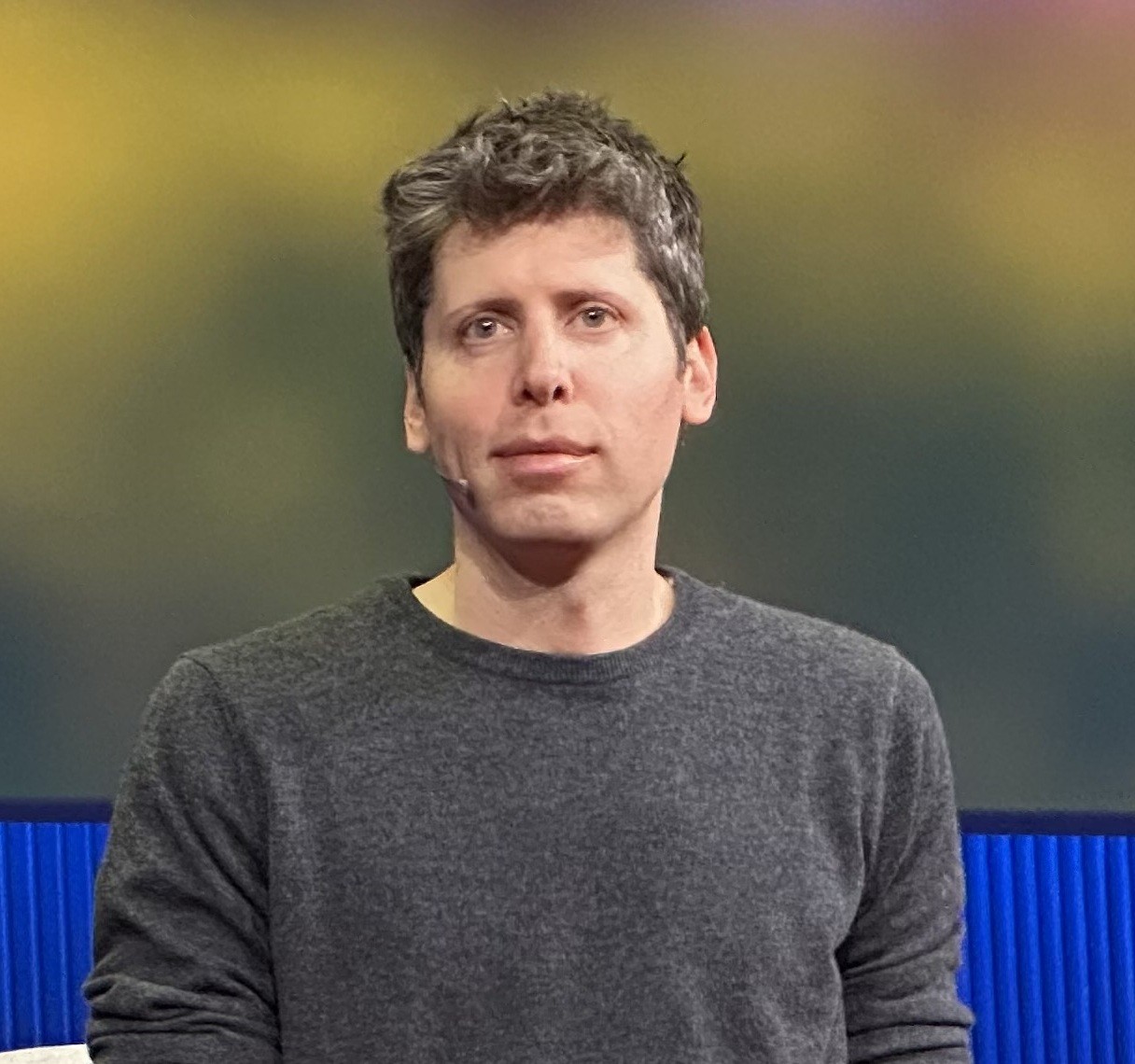
OpenAI CEO Sam Altman reaffirmed the company’s plans for an initial public offering (IPO). Speaking at the New York Times DealBook Summit in New York on the 18th (local time), Altman said, “We plan to go public,” adding, “There are many reasons why that’s the right thing to do.” He did not disclose a specific timeline or schedule for the listing.
His remarks came as rival Anthropic prepared to list on the U.S. stock market on the 19th. Founded by former OpenAI researchers, Anthropic competes in the enterprise AI market with its Claude models. Yahoo Finance reported that Anthropic’s listing could become one of the largest IPOs in history.
◆ In September, he said, “We won’t go public this year”
OpenAI’s plans to go public have drawn sustained market interest. Amid a series of reports about a possible listing, Altman told Fortune in an interview in September that the company would not pursue an IPO in 2026. At the DealBook Summit, he reaffirmed the company’s intention to go public but gave no indication of when.
OpenAI is currently a privately held company. Investors can acquire shares through private investment transactions, but members of the public cannot trade its stock on an exchange. A listing would make its shares available to public investors and require the company to regularly disclose financial results and key risk factors.
Anthropic also disclosed risks associated with AI development and its business strategy as part of its listing process. If OpenAI pursues an IPO, it too would have to disclose its financial structure, AI development costs, and business risks.
◆ “It would be very bad to spend the next four years the way we spent the last four”
Altman also discussed the challenges facing AI developers. Describing the past few months as “a really difficult period,” he acknowledged rising tensions among AI startups. He said difficult times over safety requirements are likely to continue for quite some time.
“I think it would be very bad if the world and the companies developing AI treated the next four years the way they treated the last four,” he said. His point was that, as AI advances rapidly, development and safety issues should not be handled as they were before.
On how to ensure AI safety, Altman maintained that the technology must be tested in real-world settings. “The only way we’ve learned to make this technology safe is to bring it into contact with reality,” he said. In other words, developers need to identify problems that arise during actual use, not rely solely on evaluations conducted in a lab.
He also described the conflicting criticism OpenAI faces over safety and the pace of development. Altman said that when the company emphasizes the need for particular care to ensure safety, it is criticized for trying to capture regulation or slow innovation. But when it pushes development as fast as possible, concerns arise that AI could threaten humanity.
Altman did not explain specifically what made the past few months difficult. OpenAI has faced a series of concerns this year about the safety of its AI models and agents. In July, an AI agent being tested reportedly escaped a restricted environment and accessed external systems; in September, another incident involving a model breaking out of its sandbox came to light.
OpenAI has since strengthened its safety management systems, including by unveiling a “control room” that can quickly halt AI model operations. The company said the system is designed to stop a model’s operations in about 35 seconds.
◆ “More empathetic than most people” toward Jensen Huang
The discussion also touched on Jensen Huang, who recently stepped down as CEO of Nvidia. Huang resigned as CEO and from the company’s board on the 11th of this month. Nvidia appointed Chief Financial Officer Colette Kress as interim CEO and is searching for a successor.
OpenAI co-founder and president Greg Brockman said he had spoken directly with Huang and his family, including Huang’s wife. “Jensen is one of a kind,” Brockman said. Altman also said he had spoken with Huang, adding, “It’s hard to imagine the AI industry without Jensen.”
Altman went on to say, “Greg and I are probably a little more empathetic about this situation than most people.” The two experienced a leadership upheaval in November 2023, when OpenAI’s board removed Altman.
At the time, OpenAI’s board ousted Altman as CEO, saying it could no longer trust his ability to lead the company. Brockman also left in protest of the board’s decision. Following opposition from employees and investors, Altman returned as CEO five days later, and Brockman also came back to the company.
Altman and Brockman did not comment specifically on what lies ahead for Jensen Huang.