
Delivery apps can cost 310,000 won a month even when you order only enough to meet the minimum; a kimchi stew set meal in Seoul comes to just under 200,000 won.
Cooking at home can be a burden starting with the grocery shopping; household food spending also rose in the second quarter of 2026.

Open a delivery app and a meal can easily cost more than 10,000 won. Cooking for yourself means shopping for ingredients and washing the dishes, too. The gym membership you bought with plans to exercise keeps ticking away, unused. You lie down to take a short break and scroll on your phone; before you know it, it’s time for bed.
Each day passes without anything particularly notable, but by the end of the month, we’ve spent more than we expected and can barely remember what we did for ourselves. Still, no one can be energetic and productive every day.
How do we spend our money and where does our time go in the hours after work? We ran the numbers to see how much the choices we make every day can add up over a month.
On the way home from work, you open a delivery app to order a bowl of stew. It costs 9,000 won, but the minimum order is 14,000 won. To place the order, you have to add another item. It’s a situation you might encounter when using a delivery app.
A survey by the Consumer Public Interest Network of 502 restaurant businesses listed on delivery apps in the second half of 2024 found that the average minimum order was 14,079 won on Baemin, 14,404 won on Coupang Eats and 14,724 won on Yogiyo. The results were released in June 2025.
Assume there are 22 weekdays in a month and that you eat dinner alone every day. Meeting Baemin’s average minimum order of 14,079 won each time would cost 309,738 won a month. The totals would be 316,888 won on Coupang Eats and 323,928 won on Yogiyo.
Delivery fees and discounts are not included in these calculations. The minimum order is not the same as the actual average amount paid. The calculations assume that you spend enough to meet the minimum order 22 times.
◆ What would it cost to eat kimchi stew 22 times?

What about dinner at a restaurant? According to Price at a Glance, the Korea Consumer Agency’s price information portal, the average price of a kimchi stew set meal in Seoul was 8,846 won in September 2026. Jajangmyeon cost 7,808 won, kalguksu (knife-cut noodle soup) 10,038 won, bibimbap 12,000 won and a roll of gimbap 3,923 won.
Eating a kimchi stew set meal every weekday would cost 194,612 won a month. Jajangmyeon would come to 171,776 won, and kalguksu to 220,836 won. Eating bibimbap 22 times would cost 264,000 won.
The difference between Baemin’s average minimum order and the price of a kimchi stew set meal in Seoul is 5,233 won per meal, or 115,126 won over a month. Compared with the price of bibimbap in Seoul, the monthly difference drops to 45,738 won.
This comparison uses the minimum order amount for delivery apps and average menu prices for restaurants. It does not compare the price of ordering the same food for delivery with eating it at a restaurant.
Prices also differ by region. In the same month, a kimchi stew set meal in Daejeon averaged 10,600 won, 1,754 won more than in Seoul. In Busan, it averaged 8,429 won. Monthly food costs depend on where you eat.
◆ What if you cook for yourself?
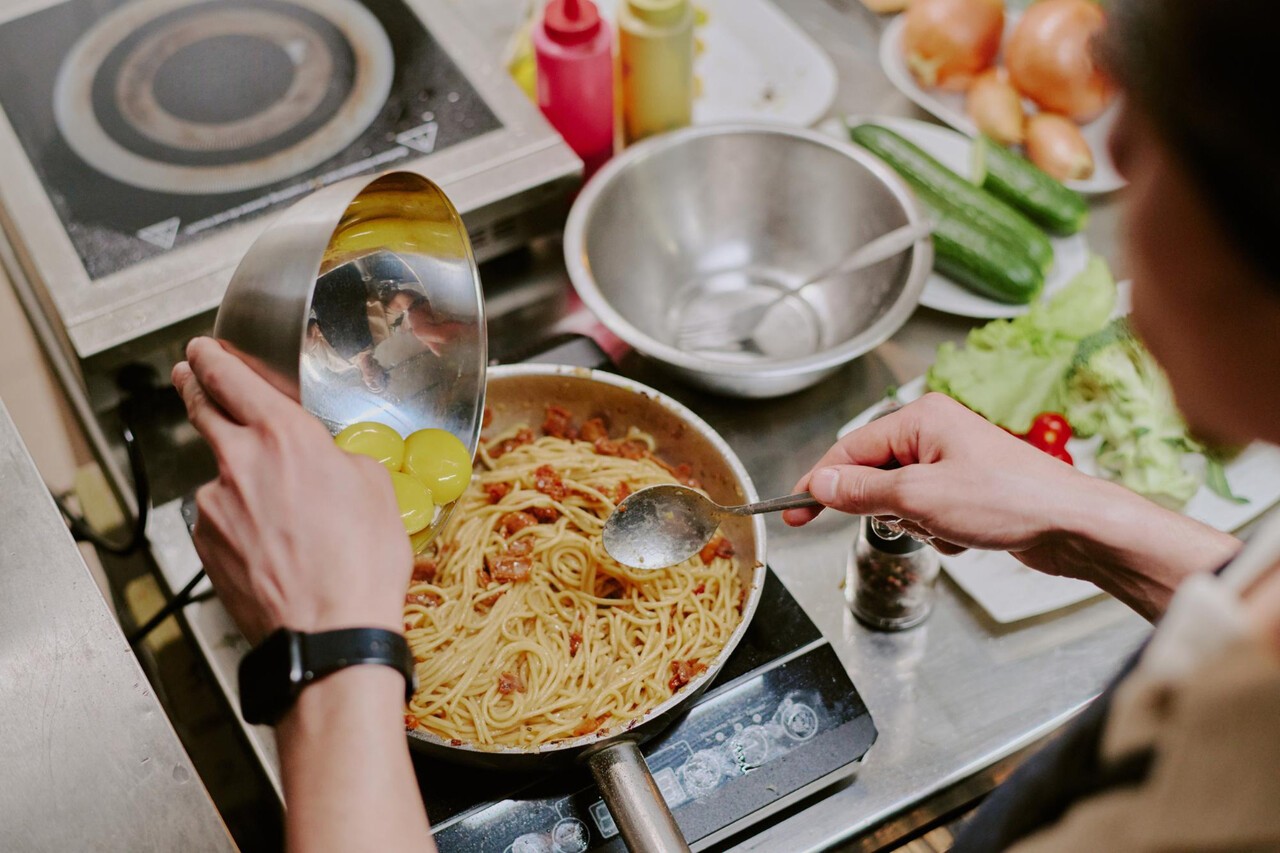
When you cook at home, you don’t pay just for a single meal as you do at a restaurant. To make stew, you have to buy meat, vegetables and seasonings. Ingredients can last for several meals, but some may also be left in the fridge.
The cost of samgyetang, or ginseng chicken soup, illustrates how the amount you buy affects the price. According to the Korea Consumer Agency’s Price at a Glance portal, the average price of samgyetang at restaurants in Seoul was 18,269 won in September 2026.
A July 2026 survey of traditional market prices by the Korea Price Information Association found that ingredients for four servings of samgyetang cost 35,260 won. This covered seven items, including young chicken, fresh ginseng and glutinous rice. That works out to 8,815 won per serving.
Compared with the average restaurant price, that is a difference of 9,454 won per serving. This calculation applies when four people share the meal or when it is divided into four servings. The cost would be different if one person bought the ingredients to make a single meal. The restaurant price and ingredient costs were also surveyed two months apart.
When cooking at home, how much of the ingredients you use matters. One grocery shop may cover two or three meals, or you may end up unable to use what is left. Divide your grocery bill by the number of meals you actually ate to work out how much each meal cost.
◆ Spending on both restaurants and groceries is up
According to the Household Income and Expenditure Survey for the second quarter, released by the National Data Agency in August 2026, average monthly consumption spending for households with one or more members nationwide was 2,932,000 won. That was up 3.4% from the same period a year earlier.
Monthly spending on food and non-alcoholic beverages averaged 434,000 won, an increase of 2.8%. Spending on restaurants and accommodations also rose 3.5% year over year. This category includes lodging costs as well as restaurant spending.
As household consumption spending increased overall, so did the cost of buying groceries to eat at home. Whichever you choose—eating out or grocery shopping—it is worth checking what you are actually spending.
◆ How much could you save by switching twice a week?
We assumed that someone who orders delivery every day instead eats dinner at a restaurant twice a week—a total of nine meals changed over the course of a month.
Using Baemin’s average minimum order of 14,079 won and the price of a kimchi stew set meal in Seoul, 8,846 won, the difference is 5,233 won per meal. Over nine meals, that comes to 47,097 won. The calculation does not account for delivery fees, discounts or price differences when ordering other menu items.
It’s not difficult to work out how much you actually spend on dinner. Check your delivery-app orders and card transactions for dinner over the past two weeks. Add up the cost of ten meals and divide by 10 to find your average cost per meal.
Average prices can be a useful reference, but we don’t eat the same thing every day. Some days we grab something simple from a convenience store; on others, we go to a restaurant with colleagues. We might shop over the weekend and eat home-cooked meals for several days.
If you want to know how much you spend on dinner in a month, it may be worth starting with your recent transactions. Looking back at the extra items you added to a delivery order without thinking, or the ingredients you bought and never got around to using, might reveal more ways to save than you expect.
After working all day, even putting together a meal can feel like a burden. There may be ingredients in the fridge, but it’s too much trouble to take them out; even though delivery fees feel like a waste, you still press the order button. It’s not that we don’t know how to save money. The desire to do nothing and simply rest, at least for today, is stronger.
But our paychecks aren’t large enough to let us order whatever we want every day, either. Saving money means being tired, while eating conveniently means worrying about the balance in our bank accounts. We have to go to work again tomorrow, so wouldn’t it be all right to make dinner a little easier tonight? After a full day’s work, making a meal for yourself shouldn’t have to feel like another task.