
Key takeaways
▶ Amazon is developing a next-generation home robot. Staff from its Astro development team are reportedly involved in the new project.
▶ Amazon acquired New York-based humanoid robotics startup Fauna Robotics in March.
▶ Fauna developed Sprout, a small humanoid robot about 1.07 meters tall. Amazon plans to use the acquisition to expand its personal robotics business.
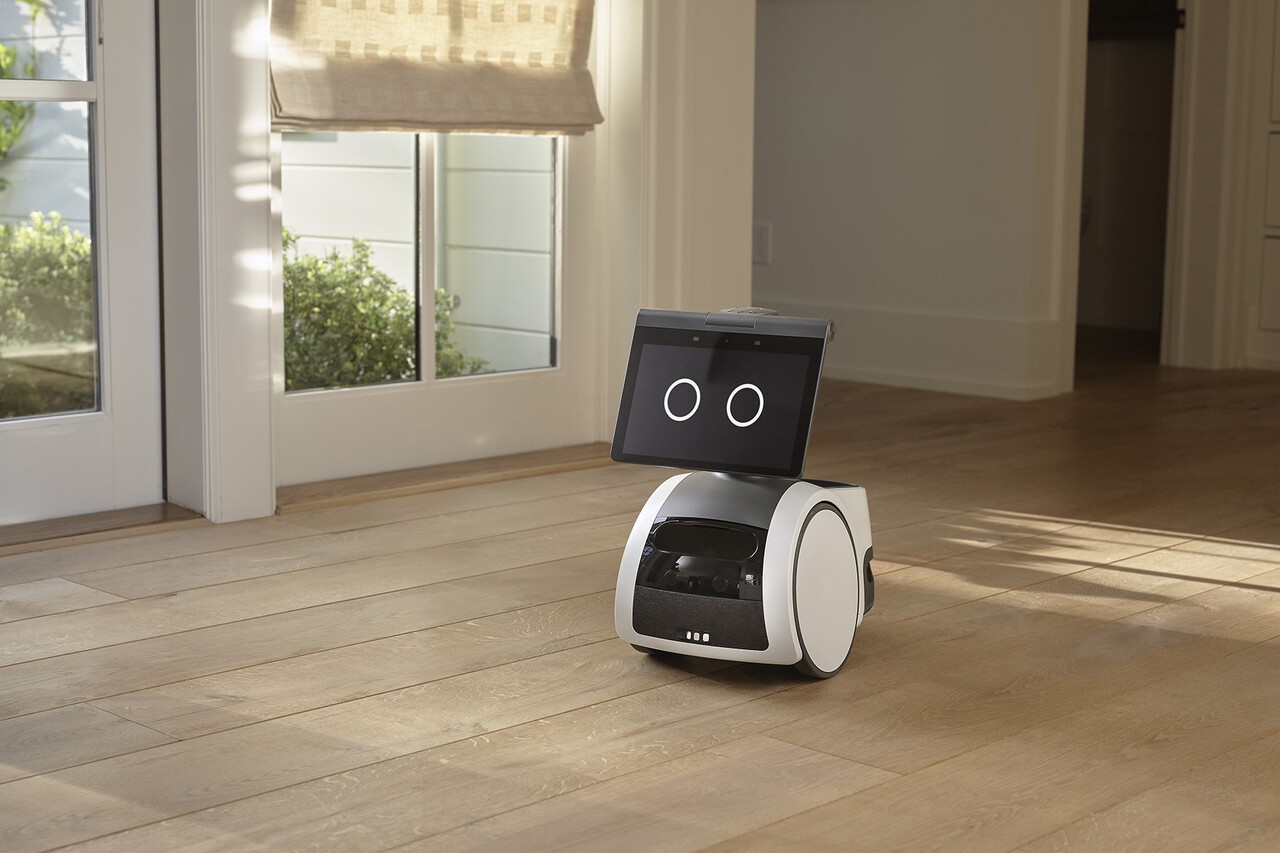
Amazon is making another attempt to enter the home robotics market. After its wheeled Astro robot, introduced in 2021, failed to gain widespread adoption, the company has secured humanoid technology and begun developing a new product.
CNBC reported on the 8th, citing an analysis of Amazon job listings, that the company has been operating a team to develop a next-generation personal robot for the past several months.
A now-deleted engineering job listing said the company was developing a new robot product. The goal is to create a robot that can navigate complex home environments autonomously and live alongside people.
Amazon is reorganizing its team by reassigning existing staff and bringing in outside robotics experts. Fauna Robotics, the humanoid startup it acquired in March, is also playing a central role in the new business.
◆ Astro, Amazon’s first home robot, failed to gain widespread adoption
Amazon unveiled its home robot Astro in September 2021. The product came about four years after founder Jeff Bezos directed the company to develop a home robot in 2017.
Astro is an autonomous robot equipped with a screen and wheels. It can move around the home, recognize people’s faces, and check on indoor activity while its owner is away. It also comes with the Alexa voice assistant.
Astro sold for $1,450 and was offered only to invited customers. It was criticized for failing to meet consumer expectations given its features and price. Although it could move around the home and provide video monitoring, it could not pick up objects or help with household chores.
Amazon also discontinued its business-focused Astro, launched in 2023, less than a year after its release. Some owners of the existing home model have complained about reduced support and delays in feature improvements. Amazon says it continues to support Astro customers.
◆ Acquisition of humanoid startup prompts development team overhaul
Amazon acquired New York-based Fauna Robotics in March. Founded in 2024, Fauna developed Sprout, a small humanoid robot.
Sprout stands about 1.07 meters tall and was designed to interact with people. It can express facial expressions and body movements, and has been supplied mainly to developers and research institutions. Fauna officially announced its acquisition by Amazon in March, saying it would continue selling its existing products and supporting customers while pursuing further technology development.
Amazon is expanding its personal robotics business by combining Fauna’s staff with its existing robotics team. Former employees of Lab126, the research and development organization behind consumer devices such as Kindle and Echo, are also reportedly involved.
Job listings have offered clues about the direction of product development. Amazon has been recruiting people to design the robot’s user experience and engineers to handle field maintenance. The company aims to develop a product capable of living alongside people at home.
Amazon spokesperson Brad Glasser told CNBC that the acquisition of Fauna was intended to help the company break into the new field of personal robotics.
◆ AI advances fuel robotics market growth as commercialization race heats up
In the past, robots focused on carrying out predetermined commands. More recently, technology that uses AI models to interpret their surroundings and generate actions appropriate to a situation has been advancing rapidly.
Key components such as cameras, sensors, batteries, and actuators are also improving. Actuators are mechanisms that move a robot’s joints, arms, and legs.
Colin Angle, co-founder of iRobot, which developed the Roomba robot vacuum, told CNBC that the technology used to develop the original Astro was very primitive by today’s standards. He said the robotics development landscape had changed dramatically over the past two years.
Investment is also increasing. According to PitchBook figures cited by CNBC, venture investment in robotics and physical AI reached $33.4 billion in the first half of this year, exceeding the full-year total of $28.7 billion last year.
In a report published in January, British investment bank Barclays projected that the global humanoid market would grow to about $40 billion by 2035. Under its most optimistic scenario, the market could reach $200 billion.
Major technology companies are also moving to establish an early lead. Tesla is developing its Optimus humanoid, while Boston Dynamics, Figure AI, and Apptronik are also pursuing robot commercialization.
Agility Robotics, which Amazon has invested in, completed a merger with a special purpose acquisition company (SPAC) on the 5th and began trading on Nasdaq. The company develops Digit, a bipedal robot for use in logistics and manufacturing.
◆ From warehouses to homes: safety and affordability are key
Amazon has already built up considerable operational experience in industrial robotics. After acquiring warehouse automation company Kiva Systems for $775 million in 2012, it expanded automation across its fulfillment centers. More than one million robots are now deployed across Amazon’s logistics network.
Home robots require different technology from industrial robots. In a warehouse, routes and the locations of goods can be managed consistently. Homes vary in layout, and furniture arrangements change frequently. Robots must also respond to unpredictable movements, including those of children and pets.
Because these robots operate close to people, preventing collisions and ensuring safety are essential. Handling appliances and furniture also requires sophisticated object-recognition and manipulation capabilities.
Price will also be a factor in whether home robots gain widespread adoption. Astro sold for $1,450, but the tasks it could perform were limited. A next-generation product will need to offer practical benefits that consumers can readily appreciate.
South Korea is also accelerating the development of related technologies. On the 3rd, the Korea Institute of Machinery and Materials opened an “AI Humanoid Data Factory” in Daejeon. The facility uses 12 humanoid robots to collect data on movements needed for everyday life and work, such as taking items out of a refrigerator and handling laundry.
To become competitive in the home robotics market, companies will need to advance not only AI models but also hardware technology and the real-world training data accumulated through practical use.
Amazon’s new project is expected to focus on addressing these challenges. Whether the company can extend its robotics operating experience and AI technology from its warehouses into the home will be a key factor in determining the business’s success.