
Alphabet announced two new TPU products on Nov. 9 (local time), expanding Google’s AI chip lineup.
▶ The new products are the TPU 8tx, designed for confidential computing, and the TPU 8i Max, built for AI applications that need to handle long context.
▶ The TPU 8tx keeps data encrypted even while it is being processed. The TPU 8i Max combines two chips in a single package and is designed for long-context AI.
▶ Both are variants of the eighth-generation TPU platform introduced earlier this year: the TPU 8t for training and the TPU 8i for inference. Google now has four TPU models. The 8i Max is scheduled to launch next year.
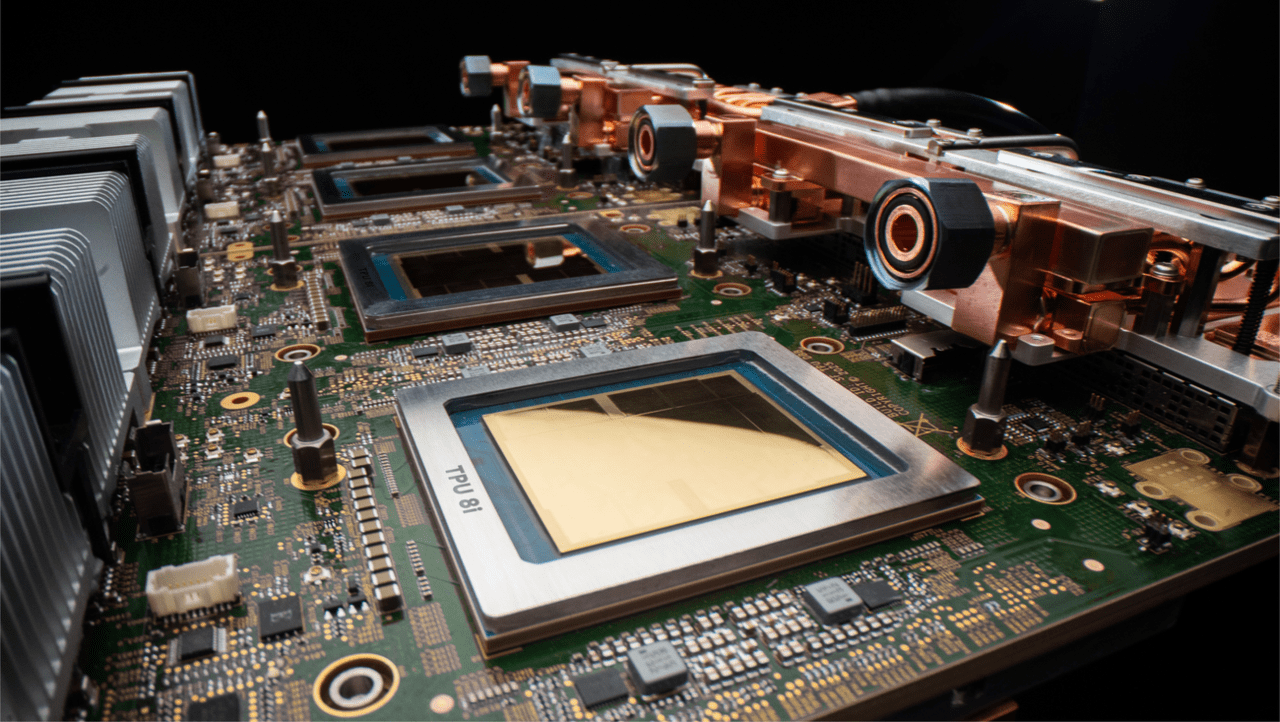
Google has expanded its push into AI chips. According to Bloomberg, Alphabet announced two new TPUs on Nov. 9 (local time): the TPU 8tx and the TPU 8i Max.
The two chips target confidential computing and long-context AI, respectively, bringing Google’s TPU lineup to four models. Amin Vahdat, who leads Google’s chip business, said, “The future lies in specialization. There is still a lot of value to unlock through further specialization.”
TPUs are AI-specific chips designed in-house by Google. While Nvidia GPUs began as general-purpose chips for graphics and later moved into AI, TPUs were built from the outset solely for AI computing. Google does not sell TPUs; it makes them available through its cloud service. Earlier this year, it introduced the eighth-generation TPU 8t for training and TPU 8i for inference, and has now added two more models.
What sets the two new products apart?
The TPU 8tx and 8i Max are not entirely new chips. They are variants of the eighth-generation TPU tailored to specific uses.
The 8tx focuses on security. It includes chip-level data encryption for heavily regulated sectors such as government, finance and health care. Data remains encrypted throughout processing and is decrypted only inside memory. Even if someone gains access to the chip, they cannot read the data. The chip operates alongside an AMD CPU.
The 8i Max focuses on capacity. It combines two chips in a single package to increase computing power and memory. It is intended for tasks that require large amounts of context, such as drug discovery, mathematical calculations and code generation. It is scheduled to launch next year.
The pace of releases stands out. Google used to introduce a new TPU every two years. This year, it released the 8t and 8i together, then added two variants in the same year. Google’s position as an AI software company as well as a chipmaker has helped make this possible. The TPU team gets early access to the latest Gemini models to optimize chip power efficiency and identify design flaws. Vahdat said AI has reduced the risk of major semiconductor-design mistakes that could cost hundreds of millions of dollars and months of work.
30% cheaper, attracting customers
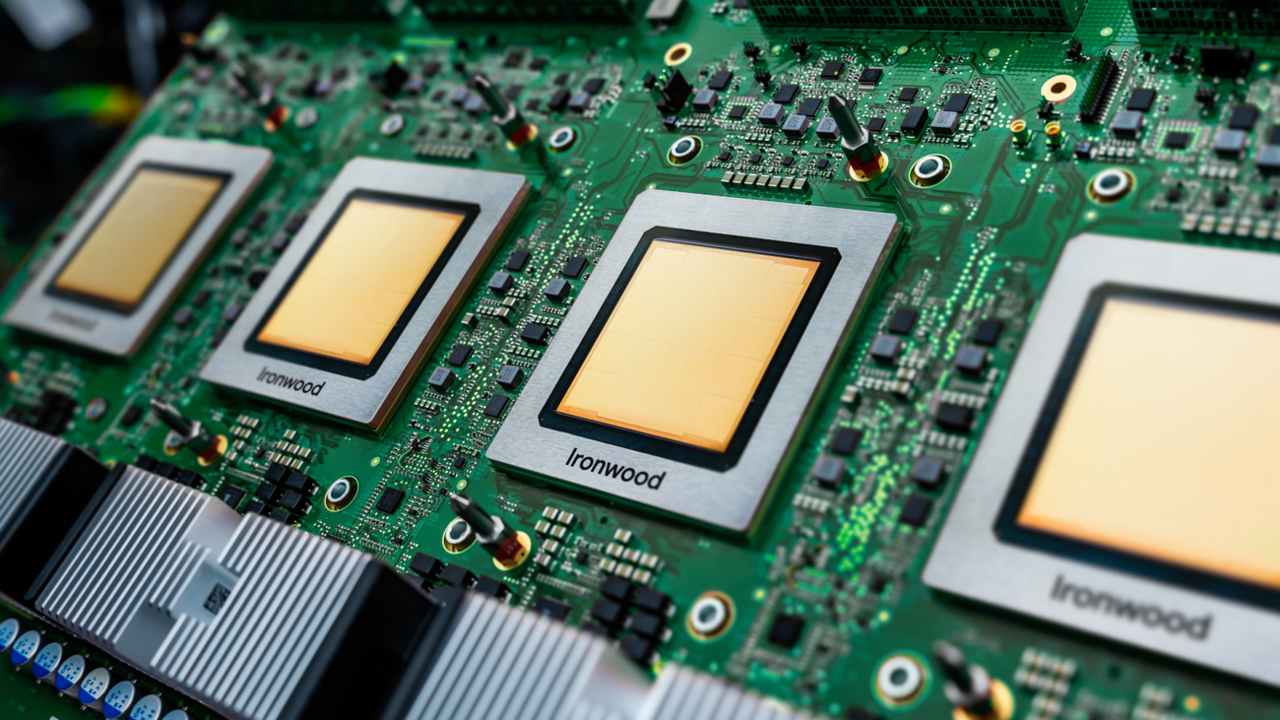
Price is where TPUs are making inroads. Bloomberg analyst Mandeep Singh estimates that TPUs deliver data throughput comparable to Nvidia GPUs while costing about 30% less. Bloomberg Intelligence forecasts that TPU-related revenue will rise from $12 billion this year to more than $135 billion in 2028.
The customer list is growing. Apple, Meta, Oracle, Anthropic and quantitative trading firm Jump Trading use TPUs. OpenAI is also planning to buy them. Jump Trading has deployed thousands of TPUs to train AI models.
Alex Davis, Jump Trading’s CTO, said Nvidia remains the company’s primary provider, but some employees have been impressed by TPU performance on specific tasks. “It’s not actually that hard to solve some problems in a different way, and there’s a lot to learn,” he said. Last month, Oracle announced a partnership with Google to offer TPUs to its cloud customers starting next year. Until now, Nvidia and AMD were the only AI chip options available to Oracle Cloud customers. “As AI workloads become more complex, we need more options,” said Karan Batta, an Oracle senior vice president.
Anthropic is the largest customer. According to disclosures by Anthropic cited by Bloomberg, the company has the option to buy up to $150 billion worth of TPUs between 2028 and 2031.
Nvidia is also moving toward specialization
Nvidia’s position is not under immediate threat. Demand for GPUs still exceeds supply, and that shortfall is creating room for competitors such as Google to grow. Nvidia itself is also changing.
The company has expanded its product range to include CPUs and acquired startup Groq’s technology to introduce chips focused on the inference stage. The industry is moving away from an era in which one chip handled everything, whether training or inference, toward one in which chips are tailored for security, long-context workloads and inference.
Google’s decision to divide its TPU lineup into four models and Nvidia’s introduction of a separate inference chip reflect the same trend.