
Samsung held a meeting with OpenAI CEO Sam Altman at the Samsung Human Resources Development Center in Yongin, Gyeonggi Province, on Oct. 31, inviting presidents of its major affiliates.
More than 50 executives from affiliates in electronics, finance and biopharmaceuticals attended. The meeting focused on “The Next 10 Years Shaped by AI: Choices for Businesses.” Samsung said it was part of executive training for its companywide AI transformation (AX), reflecting its view that how well leaders understand AI will determine corporate competitiveness.
▶ Samsung and Altman discussed where AI technology is headed, the markets and business opportunities it could create, and how AI may change corporate decision-making and organizational management.
▶ The meeting was one of the executive training programs Samsung has been holding as part of its companywide AI transformation, which began in June.
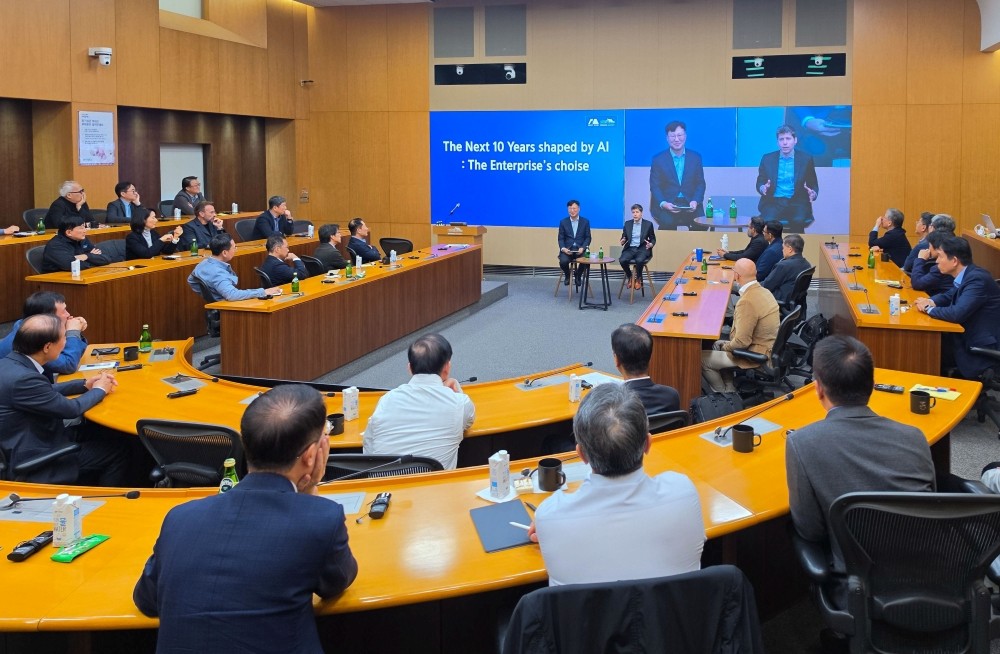
Samsung’s top executives sat down with OpenAI CEO Sam Altman. On Oct. 31, Samsung hosted a meeting with Altman for presidents of major affiliates, including Samsung Electronics, at the Samsung Human Resources Development Center in Yongin, Gyeonggi Province.
More than 50 executives from affiliates in electronics, finance and biopharmaceuticals attended. The theme was “The Next 10 Years Shaped by AI: Choices for Businesses.” Samsung said it organized the meeting as part of executive training for its companywide AI transformation (AX), believing that leaders’ understanding of AI will determine a company’s competitiveness.
What must business leaders be ready for over the next 10 years?
The executives and Altman discussed how AI technology is developing and the extent to which it can be applied. They also exchanged views on the new markets and business opportunities that may emerge, how AI could reshape corporate decision-making and organizational management, and what capabilities leaders will need in a changing environment. Samsung said it believes competitiveness in the AI era depends on leaders’ judgment and ability to execute, and that it is encouraging executives to learn about AI first and foster a culture of using it.
Samsung and OpenAI are already connected through business. In October last year, Samsung Electronics and OpenAI signed a letter of intent to cooperate on building global AI infrastructure and began pursuing the supply of memory chips for OpenAI’s Stargate project.
At the time, Samsung SDS agreed to work with OpenAI on AI data center construction and enterprise AI services, while Samsung C&T and Samsung Heavy Industries agreed to jointly develop floating data centers at sea. Samsung Electronics Chairman Lee Jae-yong visited OpenAI’s headquarters in San Francisco in July.
Executives get hands-on first
Before the meeting, the executives took part in practical training on generative AI. It was their first training session in four months, following an intensive AI program for executives in June. They practiced using AI to organize scattered management materials into personalized “knowledge repositories” and then using those materials to support decision-making.
Rather than simply having AI read reports aloud, the training had executives work directly with the tools. Samsung said it is continuing to train executives so they can learn AI firsthand and apply it to their work, with a focus on building practical skills rather than simply acquiring knowledge.
Training completed for 2,300 executives; all employees targeted by February 2027
Since June, Samsung has been pursuing an “AI transformation” to bring AI into every area of its business, including research and development, production, marketing and support functions. The company aims to boost productivity and competitiveness by incorporating AI into its products and services as well as its overall operations. Each affiliate is developing AI use cases suited to its business and work environment, while expanding access to AI tools for employees.
The training is rolling out from the top down. After executive training began in June, about 2,300 senior executives completed the program. General employees are next. Samsung aims to complete AI training for all employees by February 2027.
The company has also restructured its organization. Dedicated AI teams have been established at each affiliate to develop AX strategies tailored to its business and oversee data and AI model operations. Samsung is also expanding the range of external generative AI services employees can use for work.
Samsung said it will continue to review AX progress at each affiliate and specify implementation priorities to establish an AI-centered management system. Details of Altman’s remarks at the meeting, as well as any new contracts or investment announcements, were not disclosed.