
On Sept. 30 at the White House, U.S. President Donald Trump announced three strategic investment projects in the United States involving South Korea: a gas-fired power plant in Texas, eight large nuclear power plants in the U.S., and development of an Alaska liquefied natural gas (LNG) project. Their combined value is just under $200 billion.
Commerce Secretary Howard Lutnick said the eight nuclear plants would cost $120 billion, the Texas power plant about $22 billion, and the Alaska LNG project more than $50 billion. The nuclear project’s cost includes a $20 billion contingency fund.
The only project South Korea’s government has confirmed as the first investment is the Encinal gas-fired power plant in Texas. It has treated the nuclear plants and Alaska LNG as follow-up projects requiring further review of their commercial viability and investment terms. The U.S. announcement appears to have moved ahead of Seoul’s position.
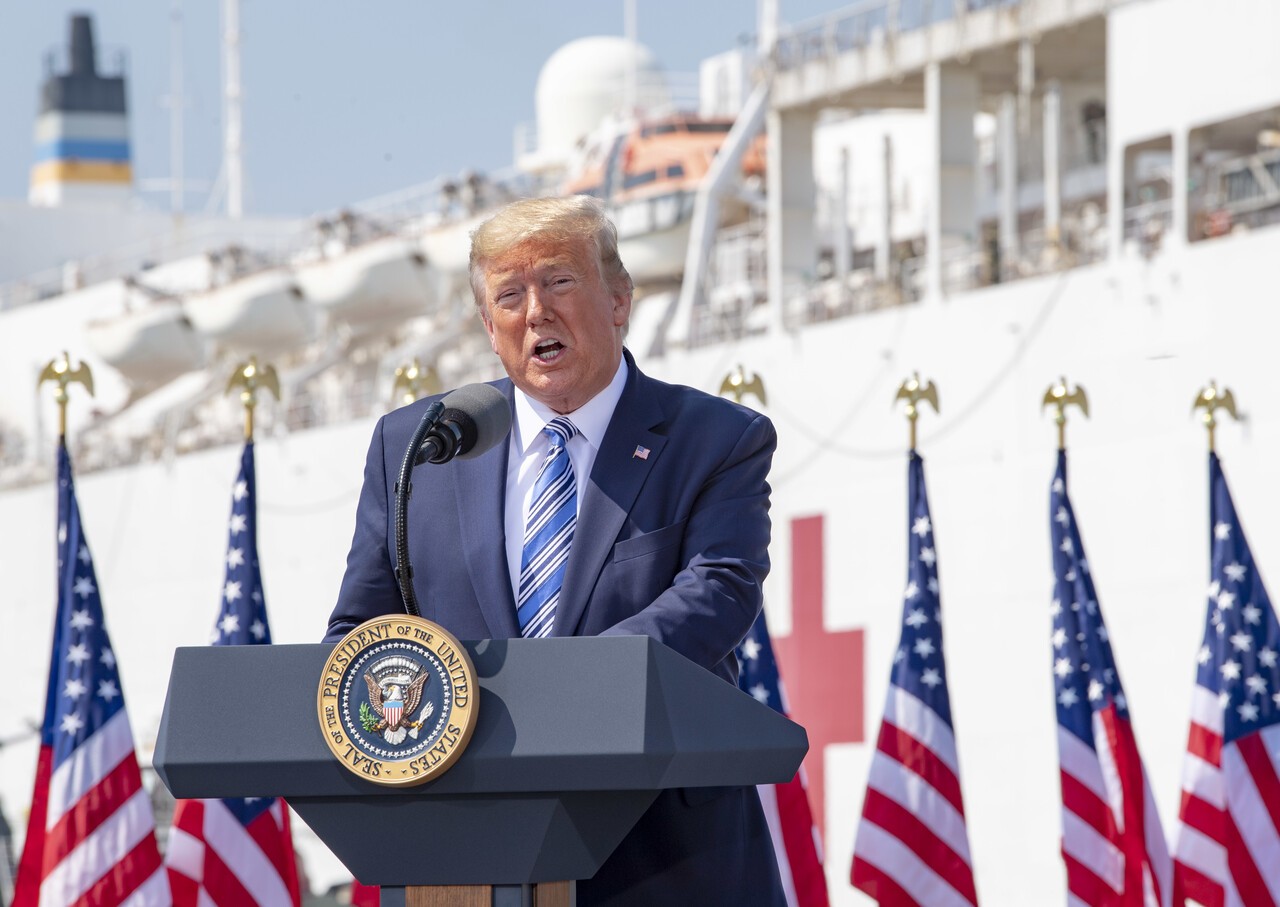
U.S. President Donald Trump has unveiled three strategic investment projects in the United States involving South Korea.
In addition to a gas-fired power plant in Texas, the projects include eight large nuclear power plants in the United States and development of an Alaska liquefied natural gas (LNG) project. South Korea’s government has so far confirmed only the Texas project, leaving the impression that the United States has announced plans ahead of Seoul.
Trump announced the projects on Sept. 30 (local time) in the Oval Office, alongside Commerce Secretary Howard Lutnick, Interior Secretary Doug Burgum, Energy Secretary Chris Wright and Sen. Dan Sullivan, a Republican from Alaska.
Trump said an agreement with South Korea had enabled him to announce one of the largest energy infrastructure investments in U.S. history. He said South Korea would invest up to $200 billion to build 6 gigawatts of power generation capacity, eight large nuclear plants and a gas pipeline for Alaska LNG.
The Commerce Department later identified the three projects as Project Star (Texas), Project Power (nuclear plants) and Project North (Alaska).
$120 billion for nuclear plants
Lutnick provided the cost estimates for each project. The eight large nuclear plants are expected to cost $120 billion, including a $20 billion contingency fund. They are to be built in Ohio, Tennessee, South Carolina and Kentucky. The Texas gas-fired power plant is expected to cost about $22 billion.
He said the Alaska LNG project would receive more than $50 billion in investment. Trump cited a figure of $54 billion. The three projects add up to about $196 billion, consistent with Lutnick’s estimate of slightly less than $200 billion.
The Alaska LNG project would transport natural gas from fields on the North Slope through a pipeline about 1,300 kilometers long to Nikiski in the south, where it would be liquefied and exported to Asia and other markets. The project has been discussed for decades but has yet to break ground because of its enormous upfront costs.
More than half of the project is currently owned by Glenfarne, a private U.S. company, which has not yet made a final investment decision. In South Korea, POSCO International formed a strategic partnership with Glenfarne last December that includes a 20-year LNG purchase agreement.
South Korean government has confirmed only Texas project
The announcement differs from the South Korean government’s account. Seoul has confirmed the Encinal gas-fired power plant in Texas as the first project under its $200 billion investment commitment to the United States. The project is expected to cost about $22.3 billion, with plans to build power generation facilities with a capacity of about 6.3 gigawatts in stages. A combined-cycle gas power plant burns gas to turn a turbine, then uses the resulting exhaust heat to generate electricity again.
The eight nuclear plants and Alaska LNG have been treated as follow-up projects whose commercial viability and investment terms require further assessment. Critics of the Alaska LNG project have pointed to its high upfront costs, the possibility of further construction cost increases and uncertainty over the competitiveness of LNG prices, arguing that its commercial prospects need careful scrutiny.
According to Alaska Public Media, South Korea’s minister of trade, industry and energy expressed doubts about the commercial viability of Alaska LNG on Sept. 22 and said that only the Texas investment had been finalized.
There are also differing views in Alaska. Governor Mike Dunleavy said at the White House event that the LNG project would revive Alaska. Some local politicians, however, have argued that the federal government should take direct control, warning that a foreign company could end up owning the pipeline.
The announcement follows last year’s South Korea-U.S. tariff negotiations. South Korea agreed to invest $350 billion in exchange for a reduction in tariffs on its exports to the United States from 25% to 15%. Of that amount, $150 billion was allocated to shipbuilding cooperation, while the remaining $200 billion was set aside for strategic investments, including energy and infrastructure.
Since a summit between South Korean President Lee Jae-myung and Trump in Gyeongju last October, the two countries have spent nearly 11 months discussing the details of the investments. The United States has now publicly specified the three projects first.