A smartphone that turns its head to follow people
Honor’s “Robot Phone” has a moving gimbal camera
Automatically adjusts framing to follow people, even when filming alone
Key points
▶ Honor’s “Robot Phone,” unveiled by the Chinese company, has a gimbal camera tucked into its back that rotates and extends outward.
▶ The camera moves like a robot’s head, not just for shooting. It turns its lens toward sounds, people, and gestures, and nods or shakes its head when the AI assistant “Yoyo Pro” responds.
▶ The phone starts at 9,999 yuan in China. At 9.59 mm thick and 248 grams, its portability and price are worth considering given the moving camera mechanism.
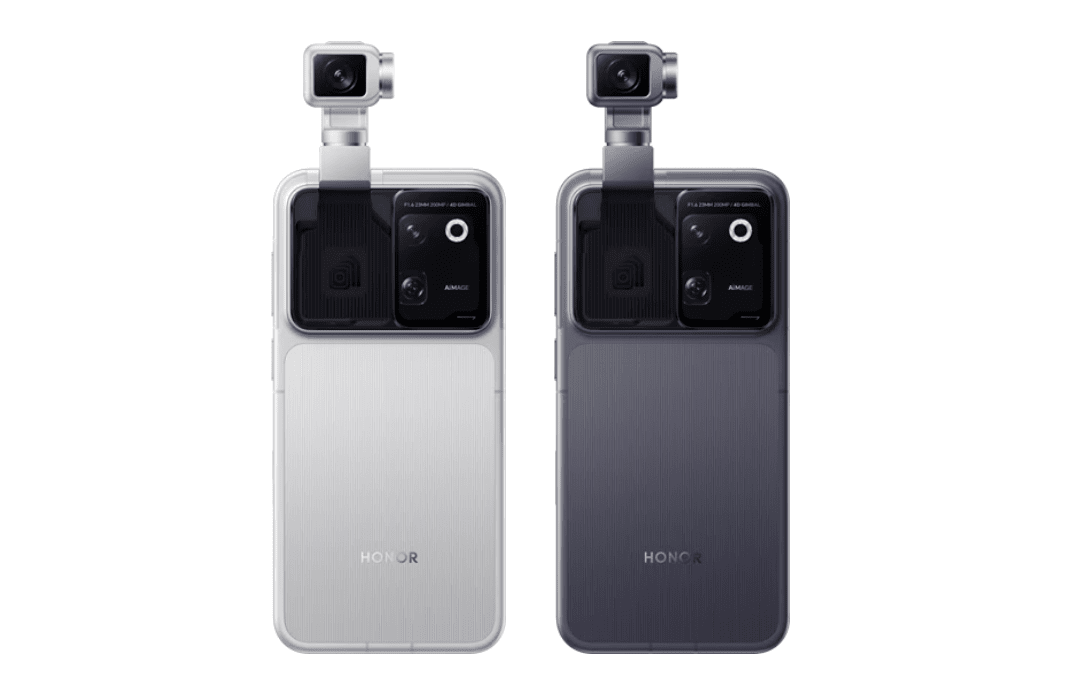
When filming yourself walking, your face can easily drift to the edge of the frame. If you set your phone down to record, you have to reframe the shot every time you move. China’s Honor has taken a different approach with its “Robot Phone”: instead of moving the phone, it makes the camera turn to follow you.
The product launched in China in August. Its standout feature is a gimbal camera that folds into the back of the phone. When unfolded, the lens faces forward, and once you select the person to film, it changes direction to track their movements.
◆ The camera follows as people move
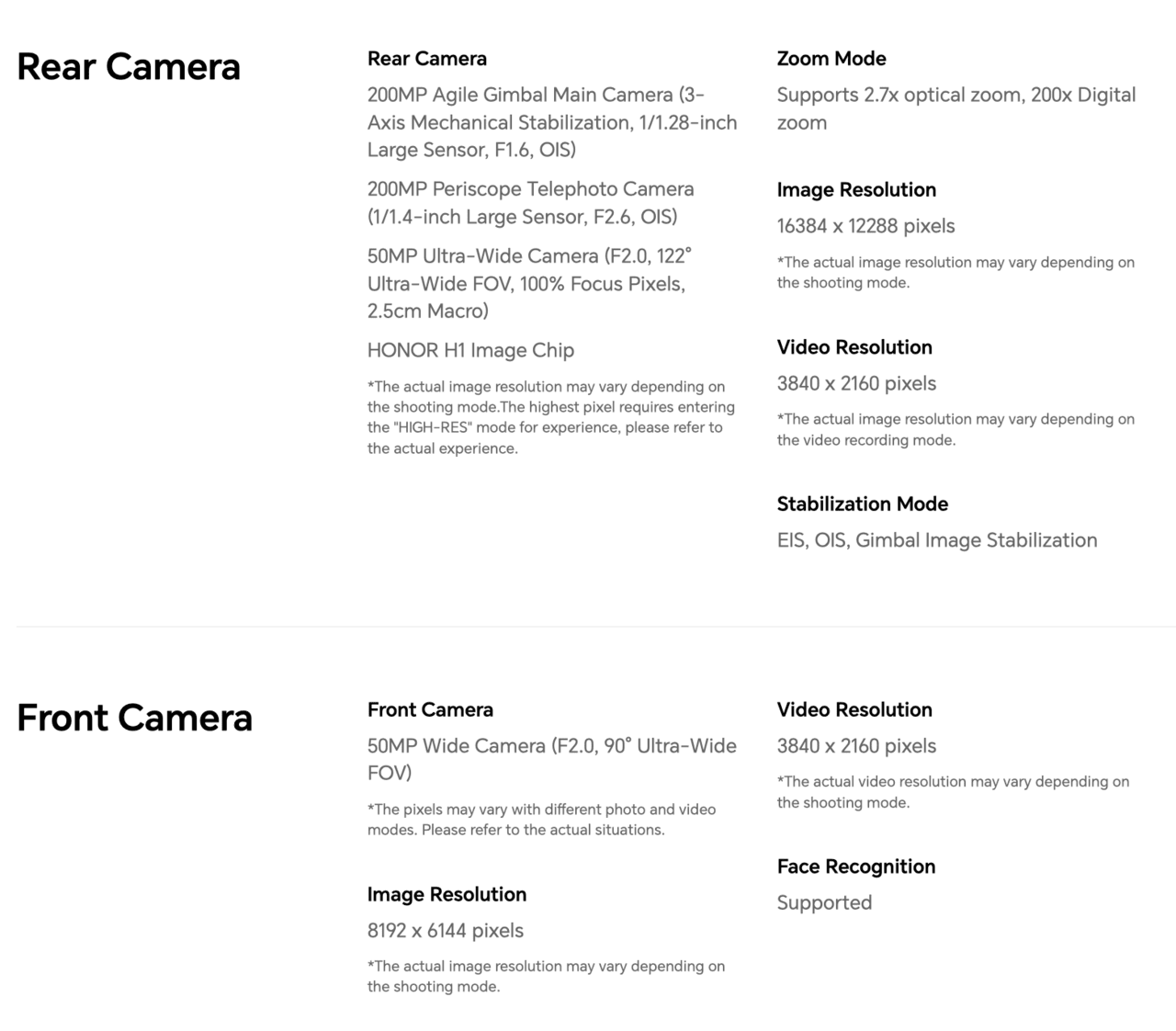
The Robot Phone combines a gimbal camera with AI-powered subject tracking. When someone moves within the frame, the camera adjusts its direction. Honor says the feature can be used for vlogging, livestreaming, and video calls. It is designed for situations where the person filming cannot keep holding the phone or ask someone else to operate the camera.
The lens can also be aimed manually using an on-screen control pad. The gimbal helps reduce camera shake while recording. For video production, Honor worked with German film equipment company ARRI to add 10-bit LogC3 recording and color-setting features.
◆ The AI assistant responds through the camera
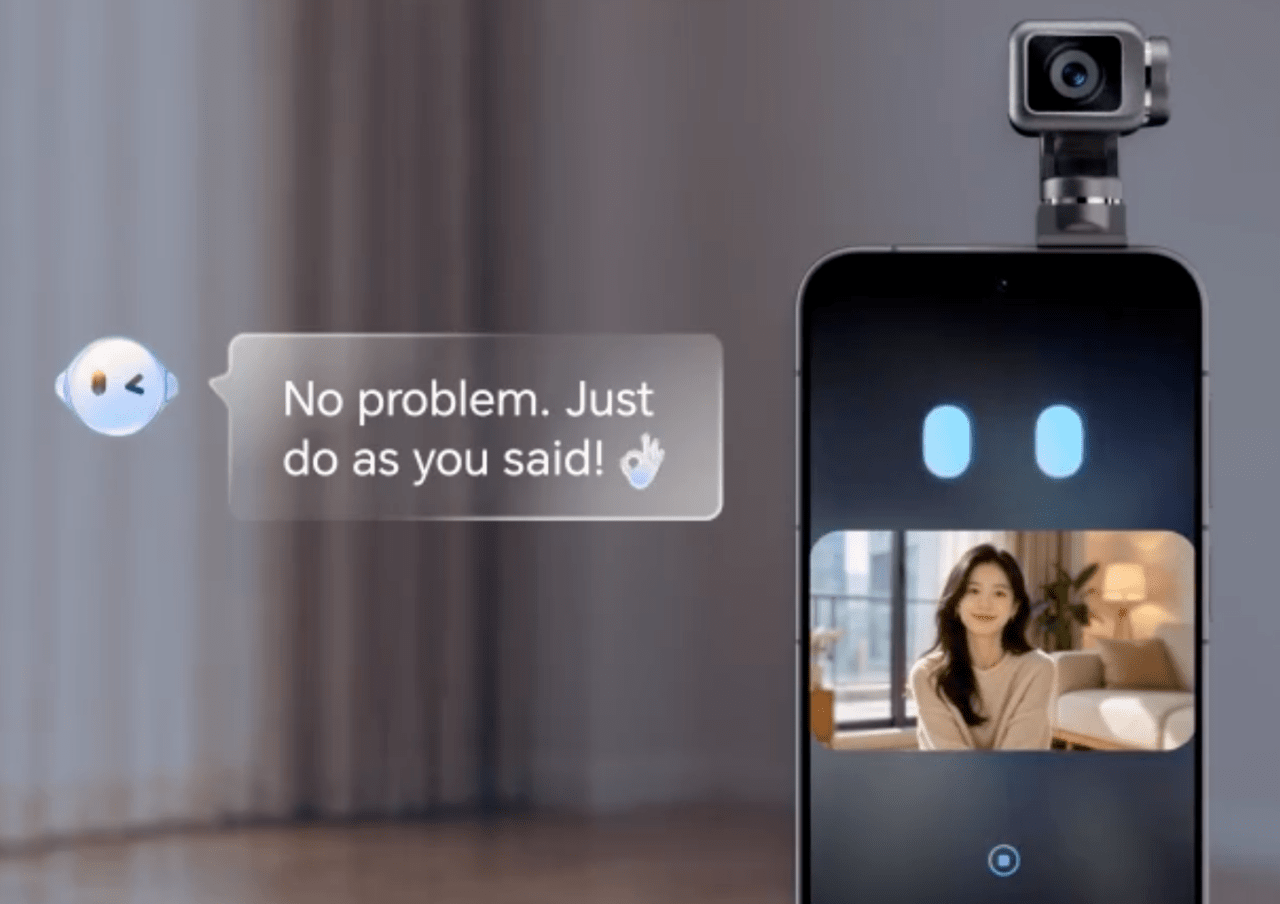
Honor also uses the moving camera for purposes beyond photography. When users talk to the AI assistant “Yoyo Pro,” the camera turns toward them or makes movements that resemble a nod. The phone can also be unfolded for filming with a hand gesture.
Smartphone AI assistants generally respond by displaying text or speaking. The Robot Phone adds physical movement to those interactions. Whether those movements are genuinely convenient in everyday use is another question, but the company’s aim to use the camera for both video recording and device interaction is clear.
◆ Size and price
The new design comes with trade-offs. The Robot Phone is 9.59 mm thick and weighs 248 grams. In China, the model with 12 GB of memory and 512 GB of storage costs 9,999 yuan, while the 16 GB/1 TB model costs 12,999 yuan. Honor has not yet announced a release schedule for other regions.
It remains to be seen whether a gimbal camera is a feature smartphones need. But the Robot Phone puts to the test how useful it can be to have a camera follow you when you are moving around while filming alone or on a video call.