
The central contract market opened on September 22, with bids accepted through November 11.
A total of 1,100 MW will be installed on the mainland and 80 MW in Jeju, with construction scheduled for completion by February 2029.
Additional substations requiring ESS will be included alongside substations designated for grid management.
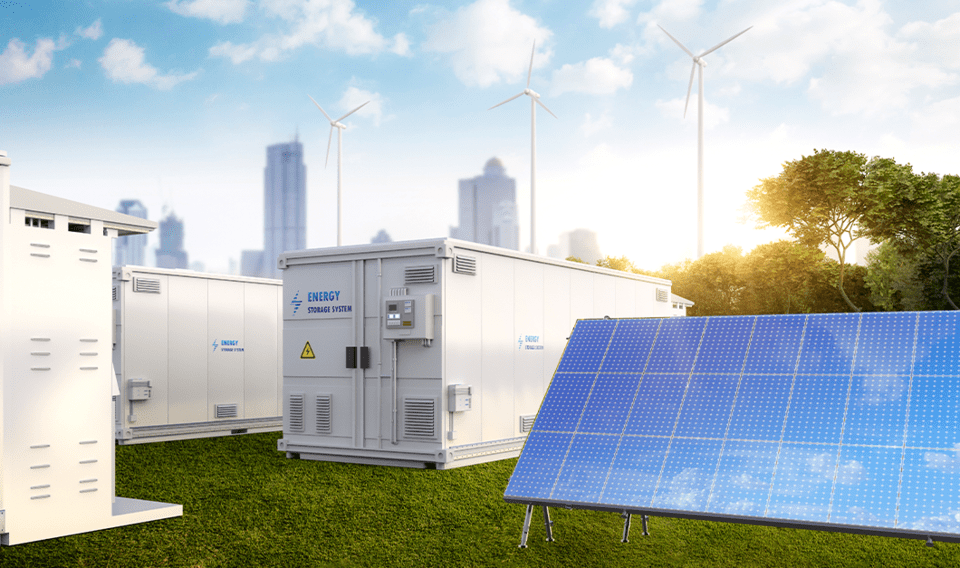
The government will select power generation operators for a total of 1,180 MW in this year’s Energy Storage System (ESS) central contract market.
The Ministry of Climate, Energy and Environment announced on September 22 that it had opened the 2026 ESS central contract market and would accept bids through November 11.
An ESS is a facility that stores electricity when power generation is high and supplies it when demand peaks. Since renewable energy sources such as solar and wind produce varying amounts of electricity depending on weather and time of day, ESS facilities help stabilize the power grid by bridging the gap.
This year’s allocation totals 1,180 MW, consisting of 1,100 MW on the mainland and 80 MW in Jeju. The government plans to select the power generation operators that will build the ESS facilities by February 2029. The capacity was determined after considering the ESS requirement calculated in the 11th Basic Plan for Electricity Supply and Demand.
From 2023 through the first half of this year, the government held three ESS central contract markets and selected power generation operators for a combined 1,196 MW.
Beginning this year, the scope of eligible sites for ESS installations will be expanded. Until now, projects in the central contract market were limited to substations designated for grid management. This year, substations that are not designated for grid management will also be eligible if an analysis of nationwide grid conditions determines that they need to be connected to an ESS.
The government will also disclose in advance which of the eligible substations would achieve the greatest reduction in grid overload if ESS facilities were installed. The aim is to encourage operators to install ESS facilities in areas where they can contribute most to grid stabilization.
The evaluation process will also be partially revised. The existing evaluation criteria of “output curtailment level” and “contribution to grid stabilization” will be combined into a single criterion, “contribution to grid stabilization.” The decision was based on the assessment that there was little practical benefit to evaluating the two items separately.
A new contract structure will be introduced in Jeju. While the existing contract period is 15 years, facilities capable of charging and discharging twice a day for 25 years will be eligible to choose a 25-year contract. The measure is intended to secure ESS facilities with long lifespans that can withstand repeated charging and discharging.
Jeju has a high proportion of wind power generation, which can create a need to charge ESS facilities even at night. The government explained that, given these characteristics of Jeju’s power grid, it is necessary to secure long-life facilities capable of frequent charging and discharging.
Bidding will continue through November 11, and the successful bidders will be selected in November. Further details are available in the notices section of the Korea Power Exchange website, the management agency for the ESS central contract market.