
The Seoul rental market is nearing the level of the ‘lease crisis’ of 2021. ‘No-look rent’, where contracts are signed without seeing the house, has become commonplace.
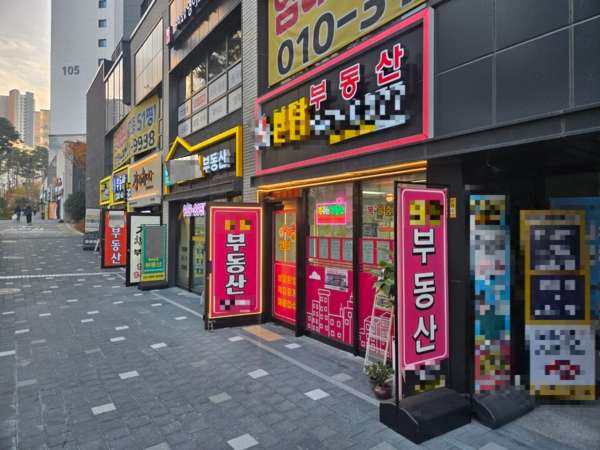
What’s happening now
The Seoul rental market is quickly freezing due to consecutive supply tax hikes on multiple property owners and loan regulations. According to the Korea Real Estate Board, the weekly apartment price trend indicates that the rental price change rate in Seoul rose rapidly, from 0.08% at the end of February to 0.12% on March 9, and to 0.15% on March 23 and 30. This year’s cumulative change rate is 1.61%, surpassing five times last year’s rate (0.32%) for the same period.
Cases where rental deposits soared by hundreds of millions are also emerging. In January, the exclusive 84㎡ Saehang Ovilisk Suite in Changjeon-dong, Mapo-gu, rose from 525 million won to 760 million won in just two months, an increase of more than 200 million won, with a jump of 130 million won alone last month. In Yongsan-dong, Dongdaemun-gu, the exclusive 84㎡ Cheongnyangni Station Hyundai Suaijin Graciel broke the record last month as it surpassed 900 million won from 770 million won in January.
The listings are vanishing fast. According to the real estate platform Asil, as of April 3, Seoul’s rental listings numbered 15,633. This was a 29.5% decrease from the 23, January, when the government declared regulations on multiple property owners. In the outskirts of Seoul, regions like Nowon-gu (-58.8%), Geumcheon-gu (-53.3%), Guro-gu (-52%), Jungnang-gu (-51.7%), and Gangbuk-gu (-47.2%) saw their listings virtually halved.
Analysis of Meaning
Currently, the Seoul rental market is entering a phase of structural supply collapse rather than a mere surge in prices. According to KB Real Estate, the rental supply-demand index for 14 districts in northern Seoul recorded 185.38 in April.
This is the highest figure in four years and seven months since the ‘lease crisis’ was dubbed on August 2, 2021 (185.86). Southern Seoul’s 11 districts also reached 168.00, the highest level since October 2021.
The closer the rental supply-demand index is to 200, the more severely insufficient the supply is. From the figures alone, the Seoul rental market is already in an ‘absolute shortage’ state. Field testimonies that it has become routine to make ‘no-look’ rental agreements without seeing the house show that these numbers are not just mere statistics.
There are structural gaps in policy design behind this. The increased transfer tax on multiple property owners exacerbated the phenomenon of locking down listings, and additional loan regulations blocked rental supply through gap investments. Policies to curb demand inadvertently squeezed rental supply as well.
Diverging Views
The government insists that the regulation of multiple property owners is an inevitable measure to block speculative demand, arguing that without stabilizing housing prices, protecting real demanders is also impossible.
Conversely, experts point out that the policy overlooked the side effects on the supply side. In the rental market, multiple property owners have essentially played the role of major suppliers, and if they are constrained all at once, it will reduce rental goods themselves.
Seoul Mayor Oh Se-hoon also warned on his social media on April 3 that “a monthly lease disaster is looming,” urging the government to re-examine complementary measures such as activating registered rentals.
Implications
This current rental crisis could become a testbed for the direction of future lease policy design. The path from regulatory demand suppression to a decrease in rental supply has already been confirmed during the Lease Dispute Hell period of 2020–2021. If the same pattern is repeating, it signals that policy learning has not been properly realized.
The situation where the rental supply-demand index is approaching the highest level of 2021 suggests that the market is entering a phase where tenant housing stability is threatened beyond short-term price shocks.
Especially, the rapid decrease in listings in the outskirts rapidly narrows the options for lower-income households, indicating considerable social repercussions.
Solution
The quickest card to produce results could be the conditional restoration of the registered lease business system. This system, virtually abolished in 2020, gave benefits in comprehensive property tax and transfer tax provided that the landlord adhered to a 4-year or 8-year rental obligation and an annual rent ceiling of 5%.
Since its abolition, the number of private lease registrations sharply declined, and the prevailing analysis is that this vacuum has led to the current supply cliff. Luring multi-homeowners into the rental market with tax incentives is recognized as a practical means to expand supply in the short term.
In the public sector, there is a call for speedy acquisition leasing. This is a method where the Korea Land and Housing Corporation (LH) directly purchases existing apartments and supplies them at a lower rental price than the market rate, but its progress is being impeded by current budget constraints and purchase procedure delays. Experts suggest that if the acquisition criteria are relaxed and budget priority is given to speed up, it can be a short-term response to the rapid decrease in external regional listings.
There’s also a suggestion to revise the regulation design itself. If transfer tax increases and loan regulations operate simultaneously, both sales and rental channels become blocked, doubling the supply shock.
One of the alternatives discussed is an ‘automatic safety valve’ based on rental market supply-demand indicators, which codes regulatory triggering conditions. The structure is set up to automatically ease lending regulation intensity if the rental supply-demand index exceeds a specific threshold. This is said to disperse both market shock and increase policy reliability.