
▶ Samsung Electronics is in talks to acquire U.S. data center cooling company Modine Manufacturing, Bloomberg reported on Nov. 12 (local time). A deal could be reached within weeks, the report said. No final decision has been made, and Samsung said it could not comment.
▶ Last month, Modine spun off its automotive business, leaving its data center cooling and commercial HVAC operations. Data center revenue totaled $439.7 million in the July–September quarter, up 95% from a year earlier.
▶ AI servers generate substantial heat and cannot operate without cooling systems. Research firms expect the data center cooling market to grow by 12% to 16% annually through the mid-2030s, while the liquid cooling market is projected to expand by around 30% a year.
▶ Samsung acquired Germany’s FläktGroup last year, but it lacked production facilities and a broad network of major customers in North America, its largest market. Modine has long-term supply contracts worth more than $4 billion for 2027–2029.
Issue Analysis
What’s happening now
Samsung Electronics is pursuing the acquisition of U.S. data center cooling company Modine Manufacturing. Bloomberg reported on Nov. 12 (local time), citing multiple sources, that the two companies were discussing a deal and could reach an agreement within weeks. No final decision has been made. Talks could still collapse, or another potential buyer could emerge. Samsung said it could not comment.
Founded in 1916, Modine is a thermal management company headquartered in Racine, Wisconsin. On Oct. 1, it separated its automotive thermal management business and combined it with U.S.-based Gentherm, leaving Modine focused on data center cooling and commercial HVAC. Revenue from its data center business was $439.7 million (about 587 billion won) in the quarter ended Sept. 30, up 95% from a year earlier.
The market reacted immediately. Modine shares closed at $106.10 on Nov. 12, giving the company a market capitalization of about $5.6 billion (roughly 7.5 trillion won), before rising around 28% in after-hours trading following the report. Analysts estimate that, including a control premium, the acquisition could be valued at $7.5 billion to $8 billion—comparable to Samsung’s roughly $8 billion acquisition of Harman in 2017.
Why it matters
Cooling is not merely an auxiliary system at an AI data center; it is essential to keeping the facility running. AI servers pack in GPUs and generate far more heat than conventional servers. If that heat is not removed promptly, chip performance can decline and equipment can shut down. Omdia, a market research firm, forecasts that the power capacity required by data centers worldwide will rise from 226 gigawatts this year to 334 gigawatts next year. More power means more heat that needs to be dissipated.
Market forecasts vary by research firm, but they point in the same direction. Global Market Insights estimates that the data center cooling market will grow at an average annual rate of 12.3%, from $20.5 billion last year to $68.7 billion in 2035. Liquid cooling, which circulates coolant directly to servers, is expected to grow faster. MarketsandMarkets projects that the market will expand at an average annual rate of 31.5%, from $4.07 billion this year to $27.65 billion in 2033.
North America has been a gap in Samsung’s HVAC business. Samsung lost out to Germany’s Bosch in the 2024 bidding for Johnson Controls’ HVAC business, then acquired Germany’s FläktGroup, Europe’s largest HVAC company, for 1.5 billion euros in November last year. This year, it decided to invest 240 billion won in a production line for data center cooling equipment at its Gwangju plant. Modine has long-term contracts to supply more than $4 billion (about 5.3 trillion won) worth of cooling products to major cloud providers between 2027 and 2029.
Samsung has ample financial capacity. Its consolidated net cash stood at 197.6317 trillion won at the end of September, more than double the 91.8 trillion won recorded a year earlier. “The acquisition of Modine would help Samsung diversify its business, which is heavily dependent on memory,” said Masahiro Wakasugi, an analyst at Bloomberg Intelligence.
Competing views
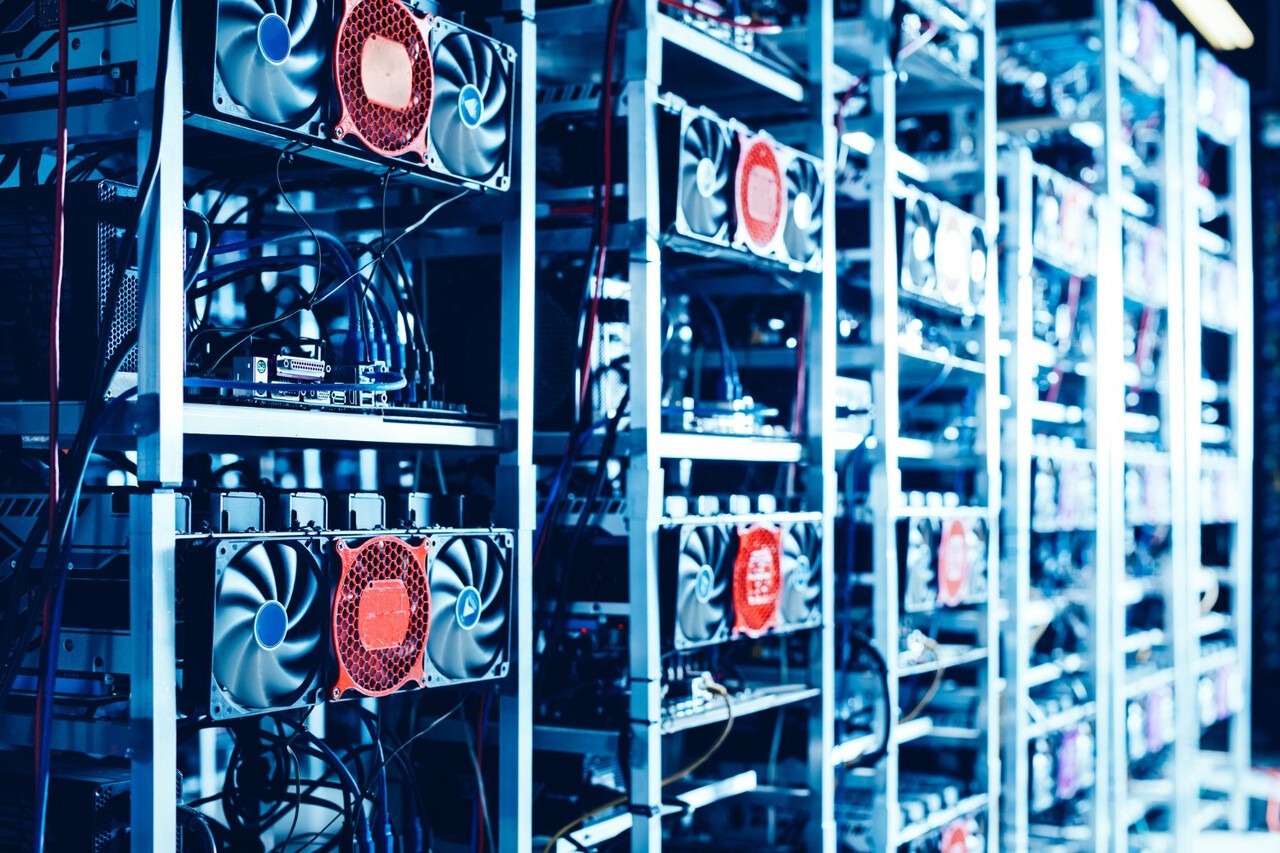
Industry observers say that if the acquisition goes through, Samsung would gain production and sales capabilities in North America, adding to its presence in Europe. U.S. investment bank Baird has said Modine became a more likely acquisition target after spinning off its automotive business, and expects consolidation in the data center cooling industry to continue for several years.
Price is a concern. Modine shares had fallen about 15% since the company announced its quarterly results earlier this month, before rebounding sharply on the acquisition report. Profitability has also come under pressure. A shortage of components cut production in April–June, bringing the data center division’s margin down to 14.8%. Earnings per share for July–September came in at $1.35, below the market estimate of $1.55.
The deal structure would also differ from the FläktGroup transaction. Samsung bought 100% of FläktGroup from a single private equity firm, while Modine is a publicly traded New York Stock Exchange company whose only shareholder with a stake above 5% is Vanguard, at 5.2%. A deal would require shareholder approval or a tender offer. Competitors are also moving ahead: LG Electronics has secured long-term contracts to supply cooling systems for 5 gigawatts of data center capacity in North America and has received Nvidia quality certification for its coolant distribution units (CDUs).
Implications
The key question in the acquisition talks is not simply whether Samsung can enter the cooling equipment market, but how the deal might reshape its business. Samsung operates semiconductor, home appliance and HVAC businesses separately. If it acquires Modine, it could increase the share of its business devoted to supplying cooling systems for AI data centers.
The business models also differ. Memory semiconductor results fluctuate significantly with prices and supply and demand. Data center cooling involves customer-specific design, equipment delivery and ongoing maintenance after installation. Securing long-term supply contracts can make future revenue more predictable, while maintenance can generate revenue after equipment is sold. Actual profitability, however, will depend on contract terms and operating costs.
Another asset Samsung could gain is its customer relationships. When selecting equipment, large data center operators assess not only performance but also a supplier’s delivery record, reliability and ability to provide long-term technical support. These are difficult for a new entrant to establish quickly. Modine’s track record of supplying customers could help Samsung expand its position in the market.
An acquisition could also usher in a new phase of competition between Samsung and LG Electronics. The two companies have long competed in home appliances and commercial HVAC. In AI data centers, cooling efficiency, installation time, operational reliability and maintenance capabilities all affect contract bids. Competition could extend beyond product sales to a broader contest over technology and services for large industrial facilities.
The deal will also be a test of whether Samsung can develop cooling into an independent growth business. Even if the acquisition is completed, revenue growth alone will not be enough to measure its success. The profitability of long-term contracts, customer retention and the speed at which Samsung recoups its investment are likely to be key indicators.
Ways forward
Some say Samsung should set a firm price limit before proceeding. When a target company’s share price rises as soon as acquisition speculation surfaces, the seller’s price expectations rise as well. Market observers say Samsung should set a ceiling based on confirmed orders and production capacity, rather than on the share price. Modine has forecast revenue of $3.1 billion to $3.2 billion for the current fiscal year, and its long-term supply contracts are reportedly equivalent to about half of its production capacity. Samsung should stick to that benchmark even if competing bidders emerge.
Samsung’s approach to FläktGroup could offer a model for post-acquisition operations. Since acquiring the company, Samsung has retained its brand and existing management and operates it as an independent subsidiary. Modine’s key asset is its supply relationship with major cloud providers. Given the customized nature of the business, preserving continuity in the existing organization could help maintain customer contracts. Samsung should also clarify early on how products and regional responsibilities will be divided among FläktGroup in Europe, Modine in North America and its Gwangju production line in South Korea.
Component procurement is seen as an area where Samsung could quickly address one of Modine’s weaknesses. Modine had to halt production lines in April–June this year because of component shortages, which hurt margins. The company is reportedly planning to increase the number of chiller assembly lines from 13 to 20 by March next year. The expansion will translate into higher revenue only if component supplies keep pace. Samsung’s global procurement network and experience in high-volume manufacturing could help fill that gap.
Liquid cooling is the key technology area. Its market is growing at more than twice the rate of the overall cooling market. Through U.K.-based Airedale, which it acquired in 2005, Modine has chiller, precision cooling and liquid cooling technologies. FläktGroup also supplies both air- and liquid-cooling equipment. In AI data centers, however, certification from chip makers can be a prerequisite for winning contracts. Overseas media have noted that Samsung could accelerate synergies by linking cooling technology with its semiconductor and server businesses.
Samsung should also keep alternatives open in case the talks fall through. Bloomberg has cited both the possibility of a breakdown in negotiations and the emergence of a third-party bidder. After failing to acquire Johnson Controls in 2024, Samsung shifted course and secured a European foothold through FläktGroup. It should continue developing its Gwangju production line and FläktGroup’s existing supply network independently of the acquisition talks, which would also help preserve its negotiating leverage.