
Key points
▶ On the 23rd, the Ministry of SMEs and Startups announced a call for companies to participate in its 2027 Smart Factory Deployment Support Program. The government will invest 269.6 billion won to support 1,021 small and medium-sized manufacturers.
▶ Applications will be accepted from December 7 through January 6 next year. Four programs that had previously been announced separately—General Government Support, Manufacturing AI Specialization, Autonomous Factories, and the Win-Win AX (AI Transformation) Leading Model—have been consolidated into a single announcement.
▶ A dedicated support category for physical AI will be introduced next year. The government plans to bring “AI Factory Manager for All,” developed through physical AI research and demonstration projects in North Jeolla and South Gyeongsang provinces, to small and medium-sized manufacturing sites.
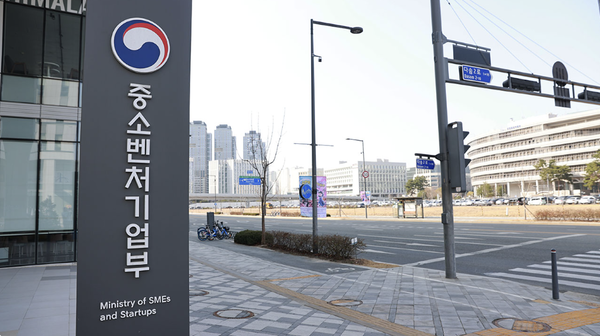
The Ministry of SMEs and Startups is recruiting companies for next year’s Smart Factory Deployment Support Program.
On the 23rd, the ministry announced the integrated call for applications for the 2027 program. Applications will be accepted from December 7 through January 6 next year. The total budget is 269.6 billion won, and 1,021 companies will receive support.
The program helps small and medium-sized manufacturers introduce artificial intelligence (AI) and information and communications technology at their production sites. The government subsidizes the cost of installing production management software, automation equipment, sensors, and other systems. The amount of support available to each company varies depending on the program and the level of digital and AI adoption.
◆ Four separate calls consolidated into one
Until now, calls for applications to the Smart Factory Deployment Support Program were issued separately for each program type. Starting next year, four programs—General Government Support, Manufacturing AI Specialization, Autonomous Factories, and the Win-Win AX Leading Model—will be covered by a single announcement. The recruitment process has been reorganized to make it easier for companies to compare programs and check application schedules.
General Government Support helps manufacturers install smart factory operating systems and automation equipment. Manufacturing AI Specialization focuses on applying AI technology at manufacturing sites. The Autonomous Factories program aims to increase automation and intelligence across production processes. Under the Win-Win AX Leading Model, large companies share their AI technology and infrastructure with smaller companies to support AI transformation across their operations.
Depending on the program and the level of digital and AI adoption, support can range from a maximum of 200 million to 1.2 billion won. Not all companies receive the same amount; actual grants vary according to the support category, project size, and the company’s required contribution.
Selected companies will also receive related assistance in addition to funding for smart factory deployment. Through lead organizations representing different industries and regions, they can access services supporting smart manufacturing innovation, exports, sales channels, technology, and certification.
The ministry also plans to focus support on emerging growth sectors, including K-food, K-beauty, medical industries, and defense. It will work with relevant ministries and local governments to promote smart manufacturing tailored to the characteristics of each industry.
◆ Physical AI added as a new support category
The most notable change to next year’s program is the introduction of a dedicated support category for physical AI. Physical AI refers to technology that combines AI with physical devices such as robots and machinery so they can carry out or control real-world tasks. In manufacturing, it can be used to operate production equipment, automate processes, and analyze work conditions.
The new category follows the government’s “Strategy to Expand Physical AI in Small and Medium-Sized Manufacturing,” announced at a National Policy Coordination Meeting on October 29. The aim is to spread physical AI among smaller manufacturers and improve productivity and manufacturing competitiveness.
The government will draw on results from physical AI research and demonstration projects conducted by the Ministry of Science and ICT in North Jeolla and South Gyeongsang provinces. One key support tool is “AI Factory Manager for All,” an AI-based tool that helps small and medium-sized manufacturers assess their operations and develop automation plans. It helps companies analyze conditions at their production sites and identify processes that need automation.
The Ministry of SMEs and Startups plans to make the tool available to small and medium-sized manufacturers and link it with consulting and training. This will allow companies with limited experience adopting AI to receive support, from on-site assessments to the development of automation plans.
◆ 19 large companies to support AI transformation at SMEs
The Win-Win AX Leading Model will also be expanded. The program supports the adoption of AI throughout smaller companies by having large companies with leading AI technologies share their technology and infrastructure with them.
Nineteen large companies are participating in this call for applications. They will recruit small and medium-sized companies to work with them on AI transformation. Participating companies will have the opportunity to apply the large companies’ technology and infrastructure to their manufacturing sites and broader operations.
The expansion is also connected to the “AI Transformation Win-Win Partnership Agreement” held on the 18th at Osco in Cheongju, North Chungcheong Province. At the event, the Ministry of SMEs and Startups, large companies, and related organizations announced plans to cooperate in supporting AI transformation among smaller businesses. The agreement was signed by 11 large companies and five related organizations. Samsung Electronics, Hyundai Motor, POSCO, and LG Electronics shared examples of their work. The government and private sector also set a goal of investing 2 trillion won from 2027 to 2031 to build smart factories at more than 2,000 small and medium-sized companies.
◆ Post-deployment monitoring extended from three to five years
Follow-up management after smart factory deployment will also be strengthened. The Ministry of SMEs and Startups plans to extend the post-deployment monitoring period from three years to five, to ensure facilities continue to operate reliably after installation.
A smart factory is not fully operational simply because equipment and software have been installed. Companies also need staff who can use the equipment and manage data on the production floor. The ministry plans to support on-the-job training for newly hired workers through its smart manufacturing workforce development program.
The system for managing manufacturing data will also be improved. Companies selected for support must develop plans for collecting and using manufacturing data as part of their smart factory projects. The government will strengthen guidance on implementation to promote data standardization and accumulation, drawing on a panel of experts.
The program will use AAS, a national standard for data management. AAS, or Asset Administration Shell, is a framework for representing information about industrial assets such as manufacturing equipment and components in a standardized digital format. It helps connect and use data generated by different equipment and systems.
The ministry plans to use these measures to reduce the problem of manufacturing data being scattered across individual companies and going unused, and to expand a data-driven smart manufacturing environment.
Kwon Sun-jae, the ministry’s director general for regional enterprise policy, said, “We have structured the smart factory deployment program by industry, region, and level to reflect the diverse needs of small and medium-sized manufacturers.” He added, “We will also work to revitalize the smart manufacturing innovation ecosystem by developing suppliers, creating a virtuous cycle for manufacturing data, and training skilled professionals.”
◆ What to check before applying
Applications for the program will be accepted from December 7 through January 6 next year. Companies interested in participating should first determine which support category best fits their manufacturing operations.
The program has four categories: General Government Support, Manufacturing AI Specialization, Autonomous Factories, and the Win-Win AX Leading Model. Since companies differ in their current levels of digitalization, AI adoption, and equipment needs, they should compare the eligibility requirements for each program.
Companies should also check the amount of support available. The Ministry of SMEs and Startups has set maximum support limits of 200 million to 1.2 billion won, depending on the program. However, the support rate and required contribution may differ by program. Companies should review the detailed announcement to determine whether the grant will cover the full cost of deployment.
Post-deployment requirements should also be considered. Since monitoring will be extended to five years starting next year, companies should review their plans for operating and maintaining equipment and securing staff. They should consult the relevant program guidelines for specific monitoring procedures and evaluation criteria.
Companies considering the Win-Win AX Leading Model should check which large companies are participating and which industries are eligible for support. Those interested in physical AI can also review the support offered through “AI Factory Manager for All” and the conditions for consulting and training.
Detailed information about the call for applications and eligibility requirements is available on the Ministry of SMEs and Startups website and the Smart Factory Business Management System.