
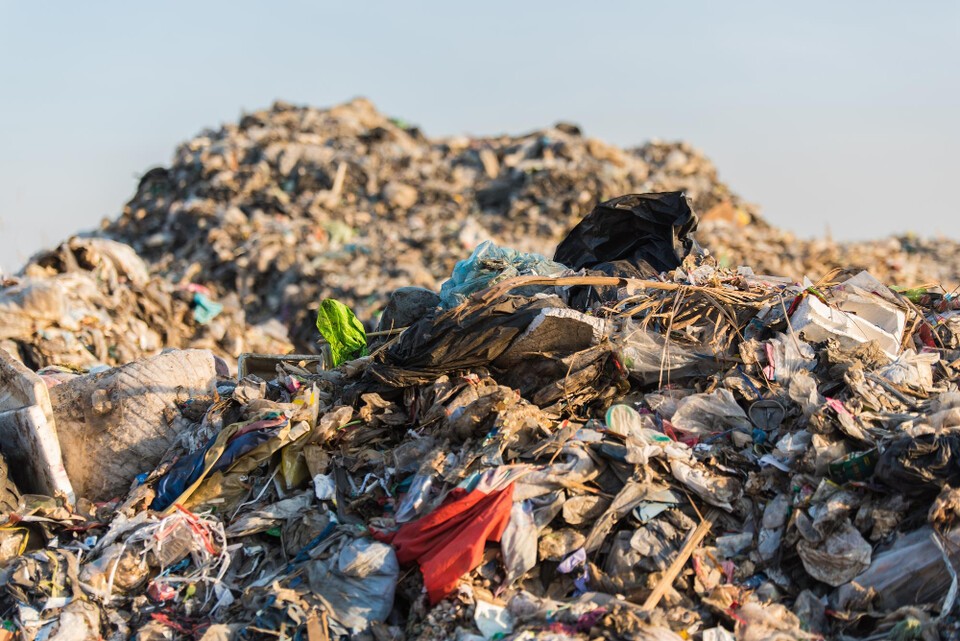
Regulations have outpaced reality. Since January 1 this year, direct landfill disposal of household waste — simply burying trash bags as they are — has been banned in the Seoul metropolitan area, meaning waste can now only be landfilled after incineration or recycling, with only the residues buried. The problem is that the incineration and resource-circulation facilities needed to handle that waste are stalled in many places.
The Anti-Corruption and Civil Rights Commission will hold a public hearing on “Sustainable Use of Resources” on the afternoon of the 24th in Room 1 of the Korea Chamber of Commerce and Industry in Seoul. Central and local governments, academia, civil society, and domestic and international experts will gather in one place. The timing is significant, with the launch of local governments for their 9th term on July 1 and the nationwide expansion of the direct landfill ban set for 2030 fast approaching.
◆ Regulations have advanced, but facilities have stalled
The purpose of the direct landfill ban is clear: extend landfill life, reduce greenhouse gases, and recover resources that were previously discarded. From an environmental standpoint, it is an unavoidable direction. Yet while the front wheel of policy — regulation — is moving ahead, the rear wheel — treatment infrastructure — is failing to keep pace.
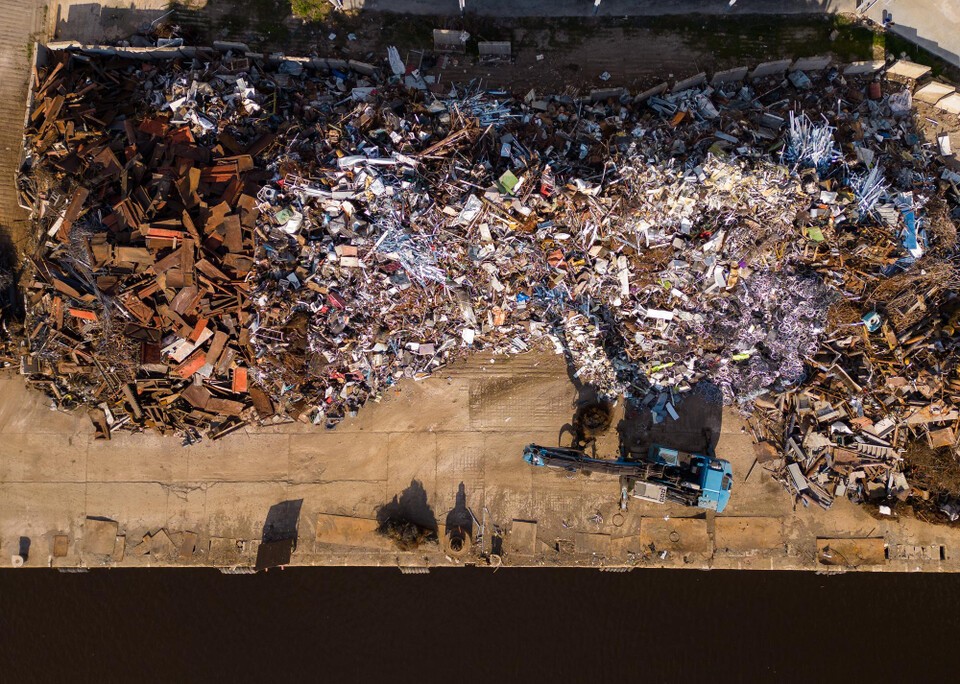
The numbers reveal the gap. Seoul sent about 210,000 tons of household waste to the metropolitan landfill site in 2024, accounting for 19 percent of total generated waste. Gyeonggi Province has been directly landfilling about 641 tons out of 4,735 tons generated per day. After the ban, all of that must be diverted to incineration and recycling. But most public incineration capacity expansions have been pushed back until after 2027.
The gap is being filled by private operators. Seoul districts lacking public facilities have no choice but to send waste to private treatment facilities outside their jurisdictions. Treatment costs are high, and transportation costs are added on top. The basic principle of waste management — treating waste where it is generated — is being undermined. This is why the term “outsourced incineration” has emerged.
◆ The root of the conflict is distrust
The real reason facilities are stalled is not money or technology. It is trust. In Seoul’s Mapo District, the city government and residents have long been at odds over the construction of a new incineration plant. Residents argued that preprocessing alone could reduce a significant portion of waste, while Seoul countered that waste composition analysis showed the share was not that large. Even the basic facts about the same facility diverged. In the end, the plan to build the incinerator was withdrawn in March.
Even when environmental impact assessments prove safety, public resistance rarely subsides. Incinerators and sorting facilities are still viewed as unwanted, disgusting installations. Conflict erupts from the very question of where to place them. Experts trace the source of that problem to a lack of communication in the early planning stages. They assess that a top-down approach, in which decisions are made first and residents are persuaded afterward, deepens distrust.
The direct landfill ban began in the Seoul metropolitan area first not by coincidence. That is where dependence on landfills is highest and conflicts are most acute. The success or failure of the capital region will serve as a preview of the nationwide expansion in 2030. Honam, where dependence on direct landfill disposal is high, and Daegu and North Gyeongsang, where siting conflicts are fierce, are all approaching the same critical juncture. If no answer is found in the capital region, the same clashes will be repeated nationwide.
◆ Deliberation builds facilities
The clues to a solution already exist in domestic and overseas examples. Gyeonggi Province’s Pyeongtaek resource-recovery facility is cited as a case where conflict was eased through a bottom-up approach that first listened to what residents wanted. By adding convenience spaces to the facility and offering usage benefits to local residents, the once-avoided site became a place people actually visited.
Abroad, some sites have been transformed into city assets. The Spittelau incineration plant in Vienna, Austria, became a tourist attraction thanks to its distinctive exterior, while the incinerator in Copenhagen, Denmark, opened its roof as a ski slope. The idea is to reveal facilities rather than hide them, and share their benefits with the local community.
There are also lessons in institutional design. Germany allowed more than 10 years of preparation before banning the landfilling of untreated waste. Before setting the regulatory deadline, it first secured treatment facilities for stabilizing waste and converting it into fuel. The current reality, paradoxically, shows what happens when policy sets a deadline without infrastructure in place.
This is why the upcoming public hearing is drawing attention. The Anti-Corruption and Civil Rights Commission is the body responsible for mediating conflicts and preventing collective complaints. Motoki Nagano, an associate professor at Tokyo Metropolitan University, will present cases in which local governments used deliberation to resolve conflicts. Asan City in South Chungcheong Province will directly introduce its experience in improving resident acceptance during waste treatment. Scholars and civil society experts will join in an effort to build a government-wide consensus.
In his remarks, Commission Chair Jeong Il-yeon said environmental policy is “a grueling process of persuasion for the public official in charge, and a sensitive issue involving the foundation of daily life for residents.” He stressed that “only by listening to the true intentions and concerns of residents hidden behind voices of conflict, and going through thorough deliberation and discussion, can we reach a consensus with high acceptability.”
The direct landfill ban is not simply a question of how trash is buried. It is a question of who bears the responsibility, and how it is shared. Regulation has begun, but the vessel to contain it is still empty. This discussion suggests that filling that vessel will not come from faster administration, but from deeper conversation.