
SK hynix is expanding the venue for capital raising in the memory semiconductor industry to the United States, driven by surging demand for artificial intelligence (AI).
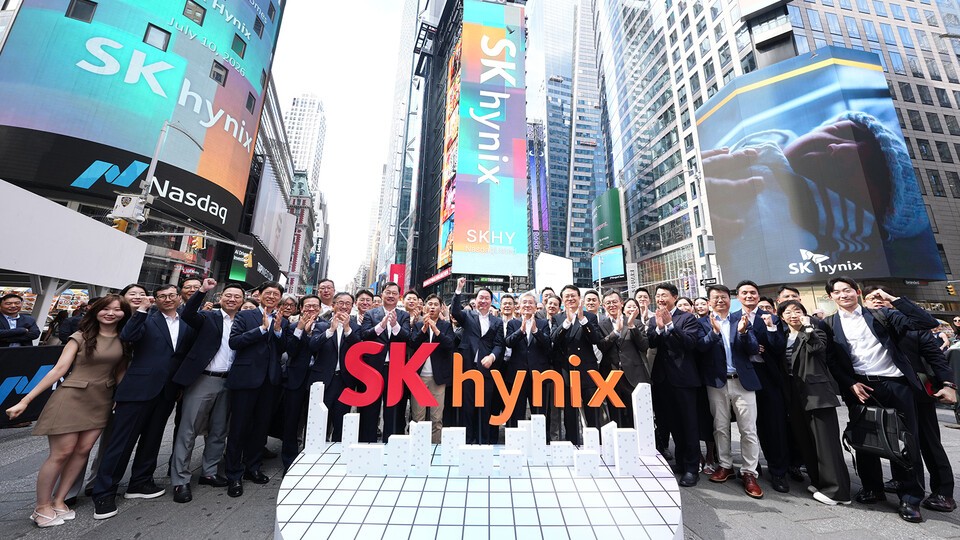
On the 10th (local time), SK hynix listed 177.9 million American depositary receipts (ADRs) on Nasdaq. The offering price was $149 per share, raising $26.5 billion, or about 40 trillion won. According to a compilation of foreign media reports, it is the largest U.S. IPO ever by a foreign company and the second-largest overall in the history of the U.S. stock market. It surpassed the $25 billion record set by Alibaba in 2014.
The offering price was set 2.9% above the equivalent ADR price based on the previous day’s closing price on the Korean stock market. That is unusual, given the customary practice of pricing large new share offerings at a discount to the existing share price. The book-building reportedly drew about $200 billion in orders, more than seven times the size of the offering. On its first day of trading, the stock opened at $170 and closed at $168.01, up 12.8% from the offering price.
◆ Customers complain of supply shortages despite expansion plans
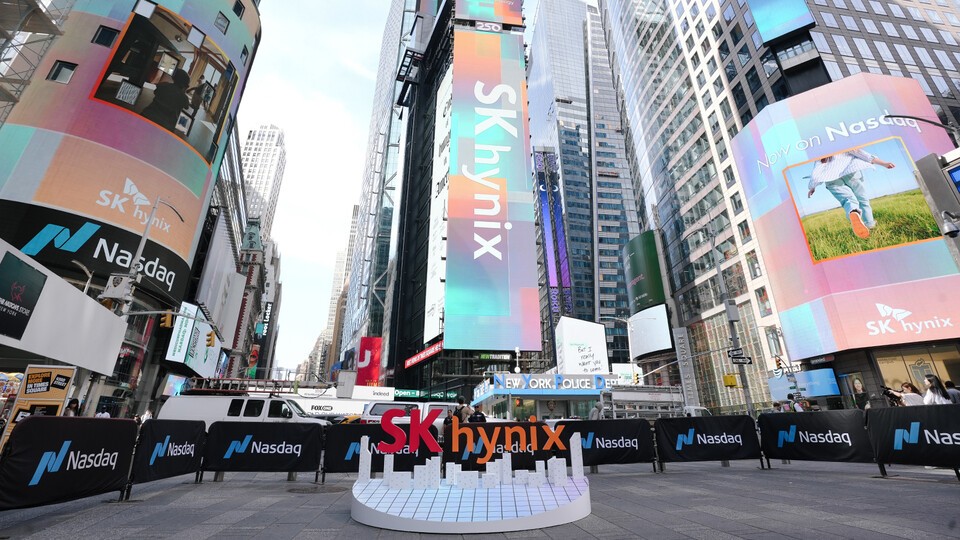
Immediately after the listing, Chairman Chey said in an interview with CNBC that, “We plan to expand production capacity twofold within the next five years,” adding, “Even so, all customers say that is not enough and that they need more chips.”
This is a situation in which customers are asking for more supply even as the supplier signals expansion. The backdrop is the spread of AI data centers. The performance of AI accelerators is determined not only by processing chips but also by high-bandwidth memory (HBM), which carries data. SK hynix is the world’s No. 1 HBM maker, with a 56.4% share of the global HBM market based on its U.S. securities filing. Nvidia is its largest customer.
Market expectations for demand were already reflected in the stock price. The company’s shares listed in Korea have risen more than sevenfold over the past year, and its market capitalization has swelled to around $1 trillion. Chey said, “In the past, memory demand was tied to the number of people and hardware units, but AI is breaking out of those constraints,” pointing to AI agents, physical AI, and robots as new demand sources.
◆ Long-term contracts are reshaping the memory cycle formula
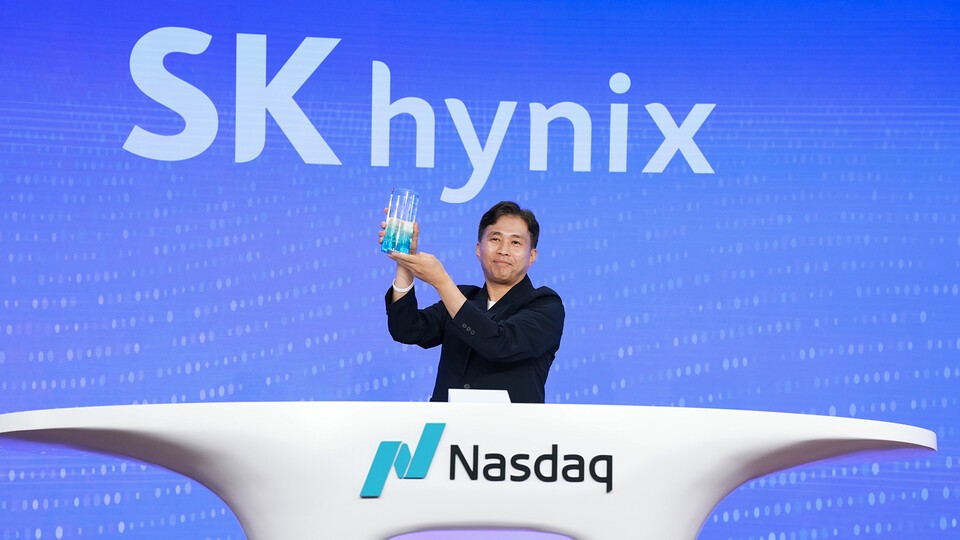
The key issue raised by this listing is whether the cyclical structure of the memory industry will continue. Chey emphasized, “This is no longer a business that rides cycles,” adding, “If you sign long-term contracts, you can maintain volume and a certain level of pricing even during market downturns.”
Unlike general-purpose DRAM, HBM is traded through customer-specific design and long-term supply contracts. That is why analysts say it differs from the traditional business model of producing inventory and waiting for prices to rebound.
Competition remains a variable. Micron announced on the 9th (local time) that it would invest $250 billion in the U.S. semiconductor sector through 2035, adding $50 billion to its previous plan. There is also a view that once each company’s expansion output reaches the market, the debate over oversupply could flare up again.
On the AI bubble debate, Chey said, “There is always overheating and cooling in the stock market,” and added, “You could call it an AI bubble, but that is a stock-market phenomenon. The AI technology itself is real, even if still immature.” The remark suggests that while technology demand is genuine, stock prices may pass through an overheated phase.
Foreign institutional investors have welcomed improved access. Richard Claude, portfolio manager at Janus Henderson, told Reuters, “This listing has for the first time opened a path for U.S. and global investors who could not access Korean stocks to invest in the world’s leading HBM company.” Sam Conrad, a manager at Jupiter Asset Management, said it could become an opportunity for Korean-listed shares, which were valued below Micron, to be re-rated.
◆ Challenges and solutions left for the Korean stock market
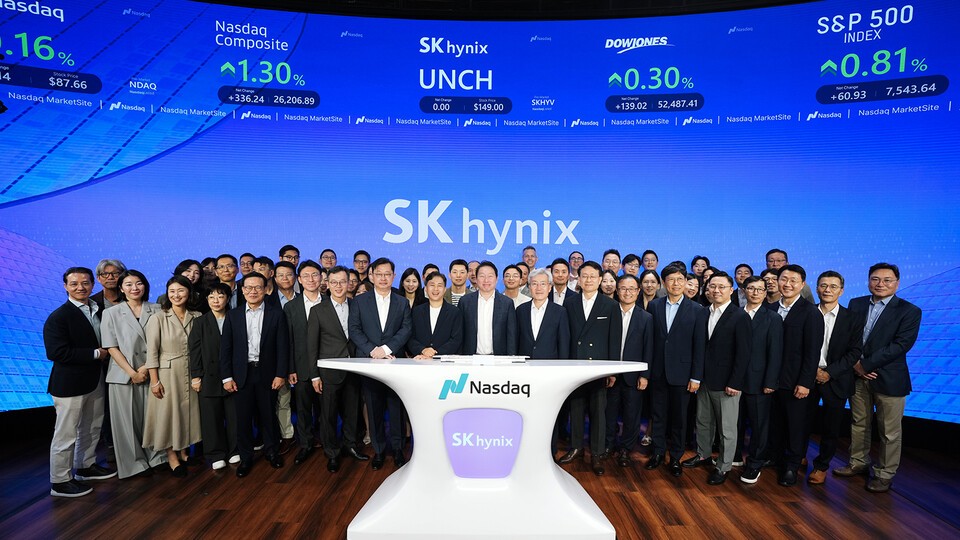
Concerns about capital outflows have also been raised. Global investment bank UBS recently issued a report recommending selling SK hynix shares in Korea and buying the ADR instead, citing U.S. market advantages in liquidity and trading convenience. There are concerns that if the valuation of leading companies shifts toward New York, capital could flow out of the domestic market.
One proposed solution is to improve the market’s fundamentals. In an editorial, Seoul Economic Daily called for the removal of poorly performing listed firms, better corporate governance, and improved access for foreign investors, while also proposing deregulation and the development of new growth engines as fundamental remedies. The logic is that rather than trying to stop companies from going to the U.S., Korea should first strengthen its stock market’s ability to properly value companies.
SK hynix plans to use the funds raised to expand its production base. Chey said the company is reviewing semiconductor plant investments in the U.S. and elsewhere around the world. He stated that U.S. investment is possible if power, water, skilled labor, and supply-chain conditions are met. He also said AI data centers will require about $1 trillion in investment over the next 10 years and set a goal of building 15 gigawatts in Korea and 5 gigawatts overseas.
He also said the listing effect would not be limited to fundraising. Chey said the ADRs could be used as a compensation tool such as stock options to recruit global talent, adding that bringing in shareholders from the U.S. and around the world would drive the creation of a new governance system. The newly issued common shares are expected to be additionally listed on the Korea exchange around the 29th.
Two points remain to be tested going forward: whether the plan to double production capacity within five years becomes a reality, and whether the long-term contract structure can defend prices in the next downturn. The outcome on these two points is expected to determine the next five-year landscape of the AI memory market.